IAMS IN
Why Is My Dog Shaking?

adp_description_block273
Why Is My Dog Shaking?

  • Share

We’re not talking about the “Sit. Shake.” kind of shake. Nor the fun way they shake off water starting from their nose all the way to the end of their tail. (FYI, dogs can shake off 70% of the water on their fur in just four seconds!)

No, we’re talking about that full-body trembling you’ve likely seen your pooch do from time to time. Why do they do it? And is it something you should be worried about? Let’s shake a leg and find out.


Why do dogs shake?

A majority of dog owners in an IAMS™ survey* (64%) think dogs shake because they’re cold. Other top responses were because they’re scared (57%) or anxious (54%).

High-fives all around because it turns out there are a number of reasons dogs shake, and all those are possible correct answers.
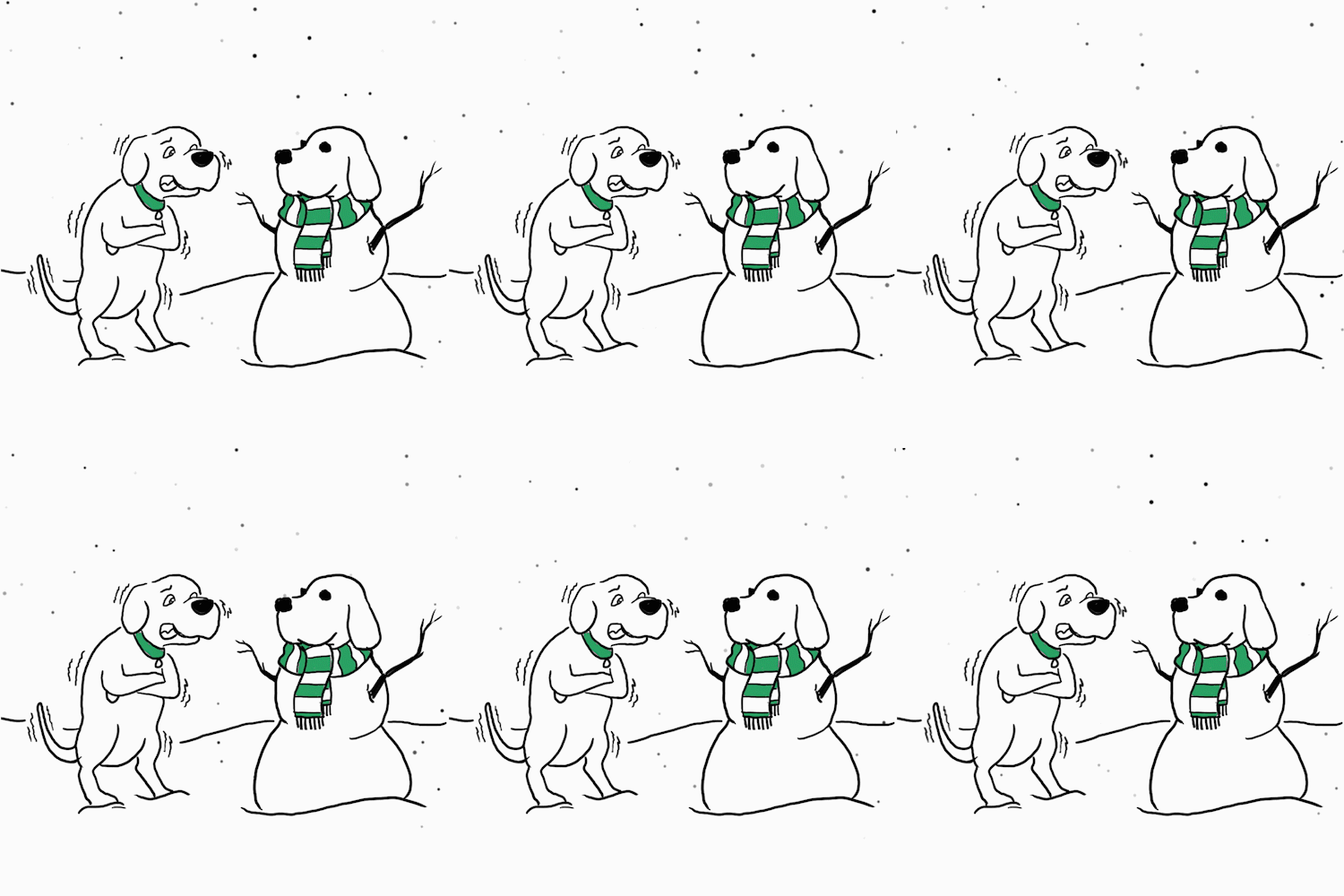
 

shake fr dogs
 

They're chilly

Just like their owners, dogs will often shiver when cold. 

Opens a new windowDr. Tammie King, Applied Behavior Technical Leader at Waltham Petcare Science Institute, says: “Dogs shiver in response to falling temperatures. Dogs with short or no hair are especially susceptible. You should get them warm, put coats on them or bring them inside.” Same goes for you.


shake fr dogs


They're anxious or scared

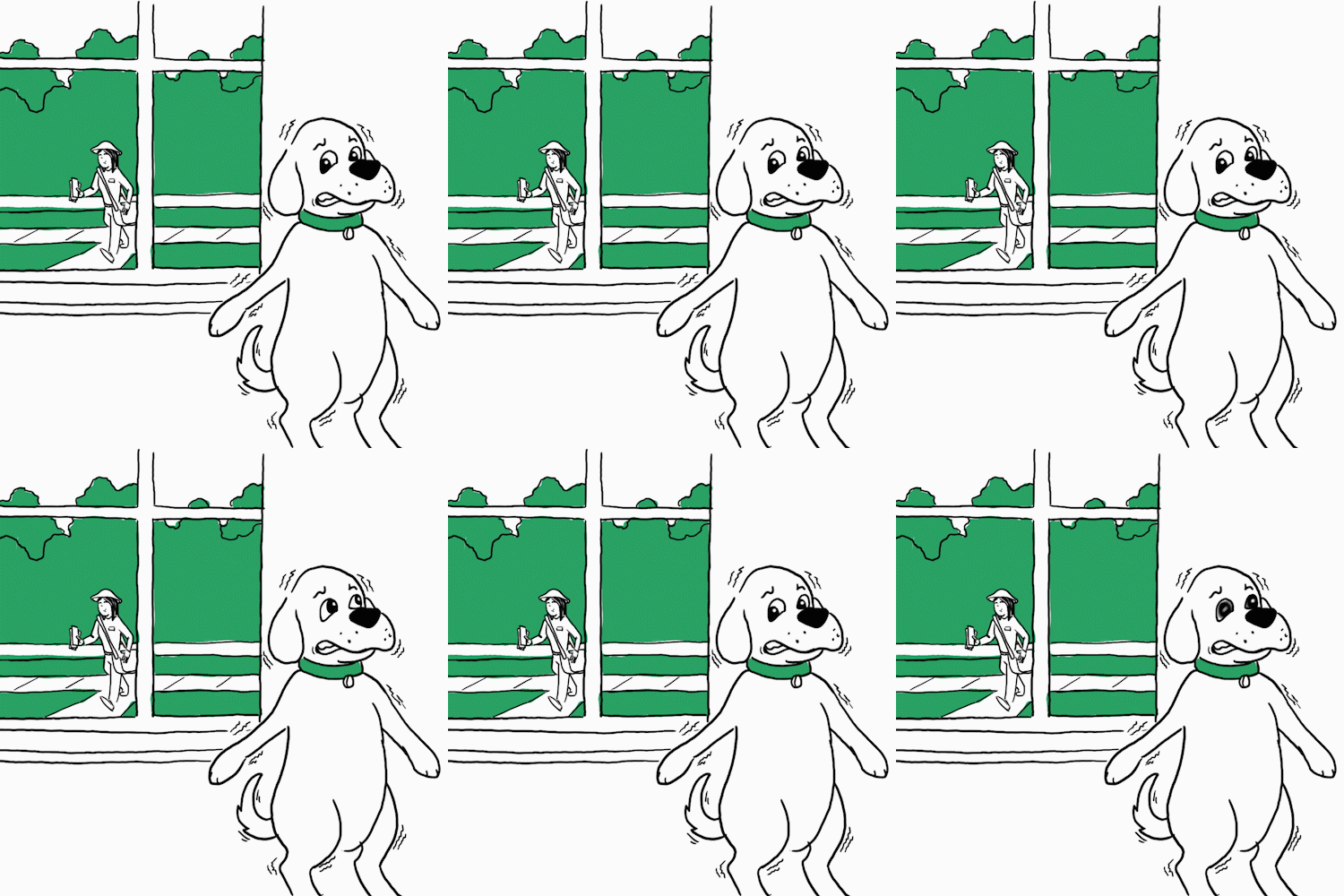
“Shaking is a response to epinephrine or adrenaline secretion — a sign of anxiety where the dog is on high alert,” says 

Opens a new windowJames Serpell, B.S., Ph.D., Professor of Humane Ethics & Animal Welfare at the University of Pennsylvania School of Veterinary Medicine. You may notice this when you’re at the vet or there’s a situation where they feel threatened. Dr. Serpell also offers a way to help in some cases: “Identify what’s triggering the behavior. Provide them comfort. Going forward, you can gradually desensitize your pet to the thing it’s afraid of.” Unless it’s clowns. Those are always scary.


They're not feeling well

Trembling can also be a sign of serious issues like injury, poisoning or kidney disease. Opens a new windowDr. Jo Gale, BVetMed CertLAS MRCVS, Senior Manager, Global Science Advocacy at Waltham Petcare Science Institute urges pet owners to be vigilant: “If a pet is unwell in another way, they could be trembling.” If their shaking is accompanied by symptoms like diarrhea, limping or vomiting, you should consult your vet straight away.
 

*Surveyed U.S. dog owners, age 18+ 

Sample Size: n=201 

Fielded May 8-10, 2020
  • Recognizing the Signs of Bloat in Your Dog
    Recognizing the Signs of Bloat in Your Dog-mob
    adp_description_block434
    Recognizing the Signs of Bloat in Your Dog

    • Share

    What Is Bloat?

    Bloat is a life-threatening condition that acts rapidly and can lead to death within hours if not recognized and treated immediately. Unfortunately, the cause of bloat remains unknown at this time.


    The scientific term for bloat is gastric dilatation-volvulus or GDV. Bloat is characterized by rapid and abnormal expansion of the stomach with gas (dilatation). This can be followed by rotation of the stomach (volvulus). This rotation closes both the entry to and exit from the stomach. The blood vessels also are closed down, and blood flow is restricted.


    What follows is an increase in pressure inside the stomach and compression of the surrounding organs. Eventually, shock will occur as a result of the restricted blood flow. Here are a few key facts about bloat:

    • Bloat should always be treated as a medical emergency.
    • Bloat can kill a dog within hours after onset.
    • The cause of bloat is unknown.
    • Bloat affects 36,000 dogs in the United States each year; 30% die as a result of this condition.
    • Bloat can occur in dogs of any age.
    • Certain breeds are more susceptible to bloat, particularly deep-chested dogs.
    • The stomach rapidly expands with gas then rotates on the long axis. Entry to and exit from the stomach is prohibited, causing blood vessels to close and restriction of blood flow.


    Signs of Bloat

    Bloat is a true medical emergency, and early identification and treatment is critical to survival.


    In the early stages of bloat, the dog will be very uncomfortable. You might see him pacing and whining or trying unsuccessfully to get into a comfortable position. He might seem anxious, might lick or keep staring at his stomach, and might attempt to vomit, without success.


    Other indications of bloat can include weakness, swelling of the abdomen, and even signs of shock. Signs of shock are increased heart rate and abnormally rapid breathing.


    If you notice these signs, call your veterinarian immediately!


    • Whining
    • Inability to get comfortable
    • Pacing or restlessness
    • Pale gums
    • Unproductive attempts to vomit
    • Abnormally rapid breathing
    • Increased heart rate
    • Anxiety
    • Pain, weakness
    • Swelling of the abdomen (particularly the left side)


    Helping Prevent Bloat

    These suggestions could help you prevent bloat in your dog. However, they are based on suspected risk factors and are not guaranteed to prevent the onset of bloat.


    • Feed small amounts of food frequently, two to three times daily.
    • Avoid exercise for one hour before and two hours after meals.
    • Don't let your dog drink large amounts of water just before or after eating or exercise.
    • If you have two or more dogs, feed them separately to avoid rapid, stressful eating.
    • If possible, feed at times when after-feeding behavior can be observed.
    • Avoid abrupt diet changes.
    • If you see signs of bloat, call your veterinarian immediately.


    Digestible Foods

    Another way you might help prevent bloat is to feed a high-quality, highly digestible food with normal fiber levels.


    Feeding management offers the best method available for reducing risk until the exact cause of bloat can be identified. Although not 100% effective, these measures can reduce the number of dogs that face this serious, life-threatening condition.


    High-Risk Breeds

    • German Shepherd
    • Bouvier de Flandres
    • Great Dane
    • Boxer
    • St. Bernard
    • Doberman Pinscher
    • Bloodhound
    • German Shorthaired Pointer
    • Irish Setter
    • Gordon Setter
    • Borzoi
    • Irish Wolfhound
    • Dachshund
    • Labrador Retriever
    • Basset Hound

Close modal