Enter a keyword below to search for articles and products.
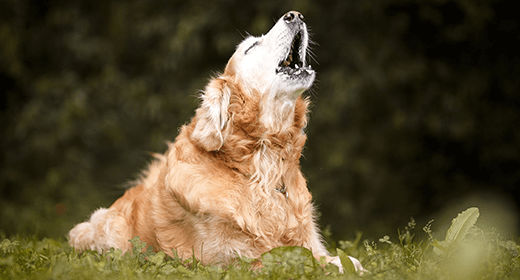
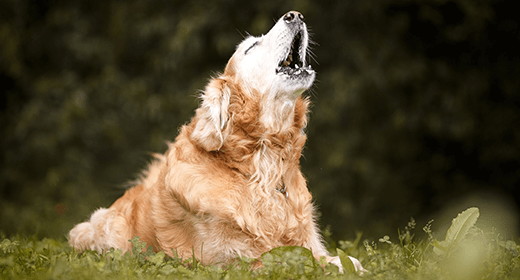
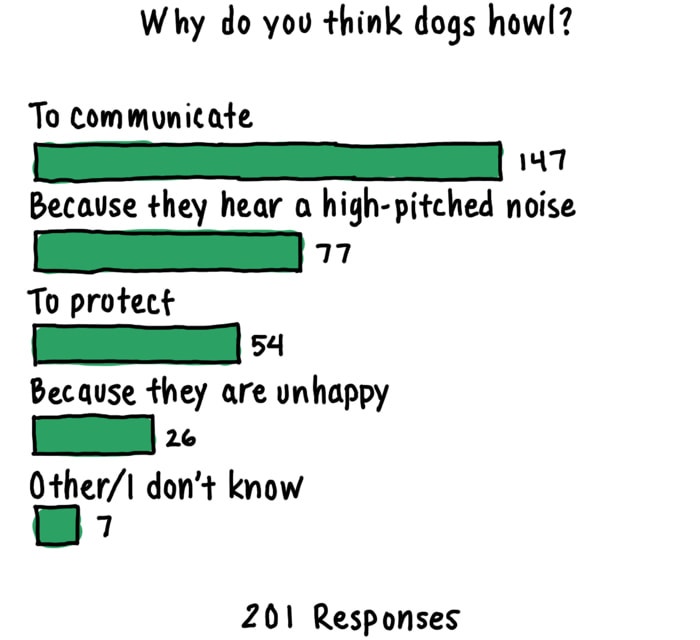
You’ve likely heard your dog let loose his inner wolf and belt out a few long howls. 73% of dog owners in a recent IAMS poll* believe they do this to communicate. This form of vocalization has a long history and is used for different reasons. Understanding more about howling will help you understand your pooch better.
Howling is an ancient trait wolves use to communicate with other members of their pack and other packs over long distances. They may be trying to locate a lost member, show off the size of their pack or warn of danger. It’s like a canine group text.
A wolf’s howl can be heard up to 10 miles away.
Each wolf has their own unique howl, so pack members know who they are, even miles apart.
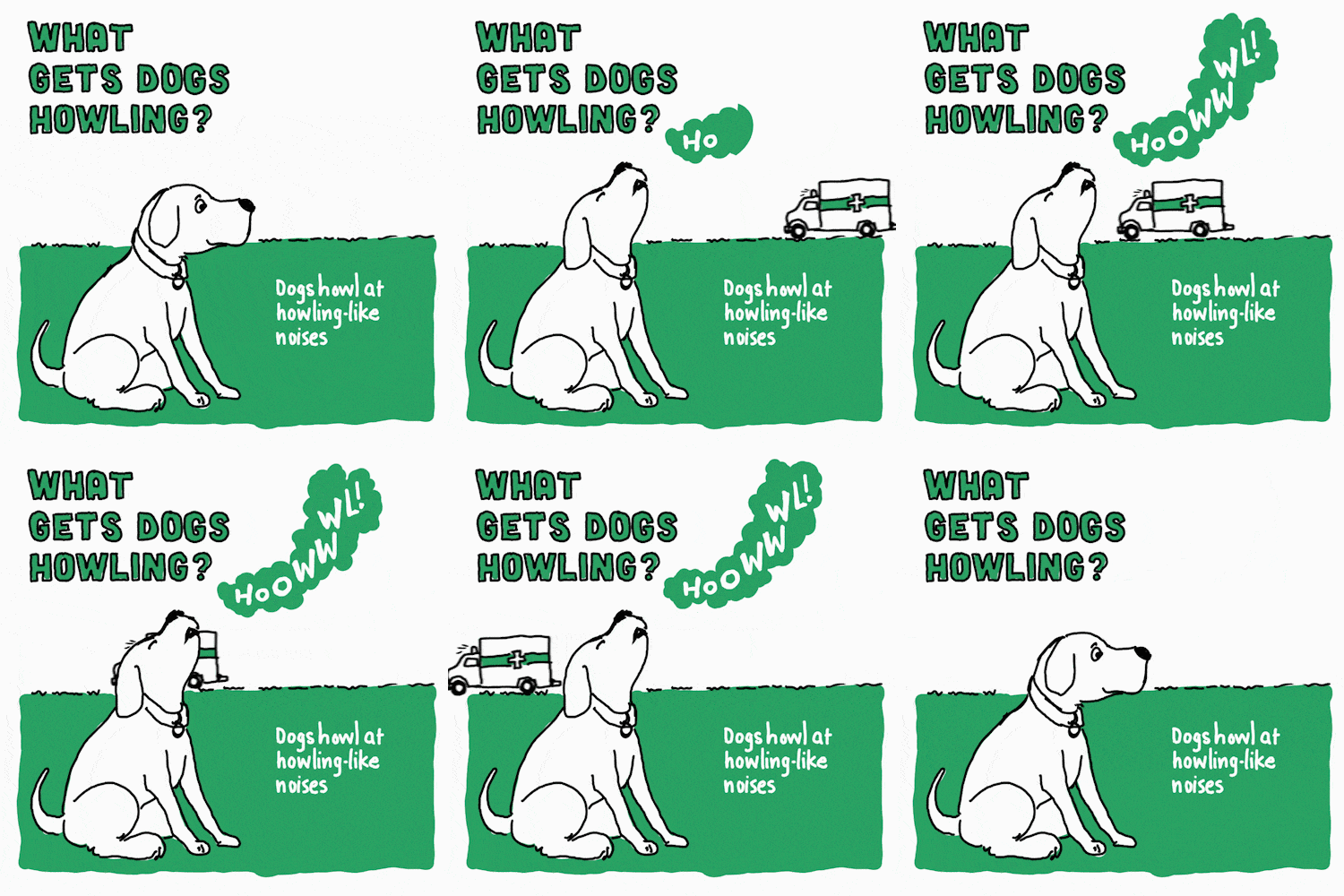
Dogs instinctually respond to howling-like noises by howling themselves. Sounds such as sirens, other dogs, singing or your kid learning the violin is usually enough to get them to sound off.
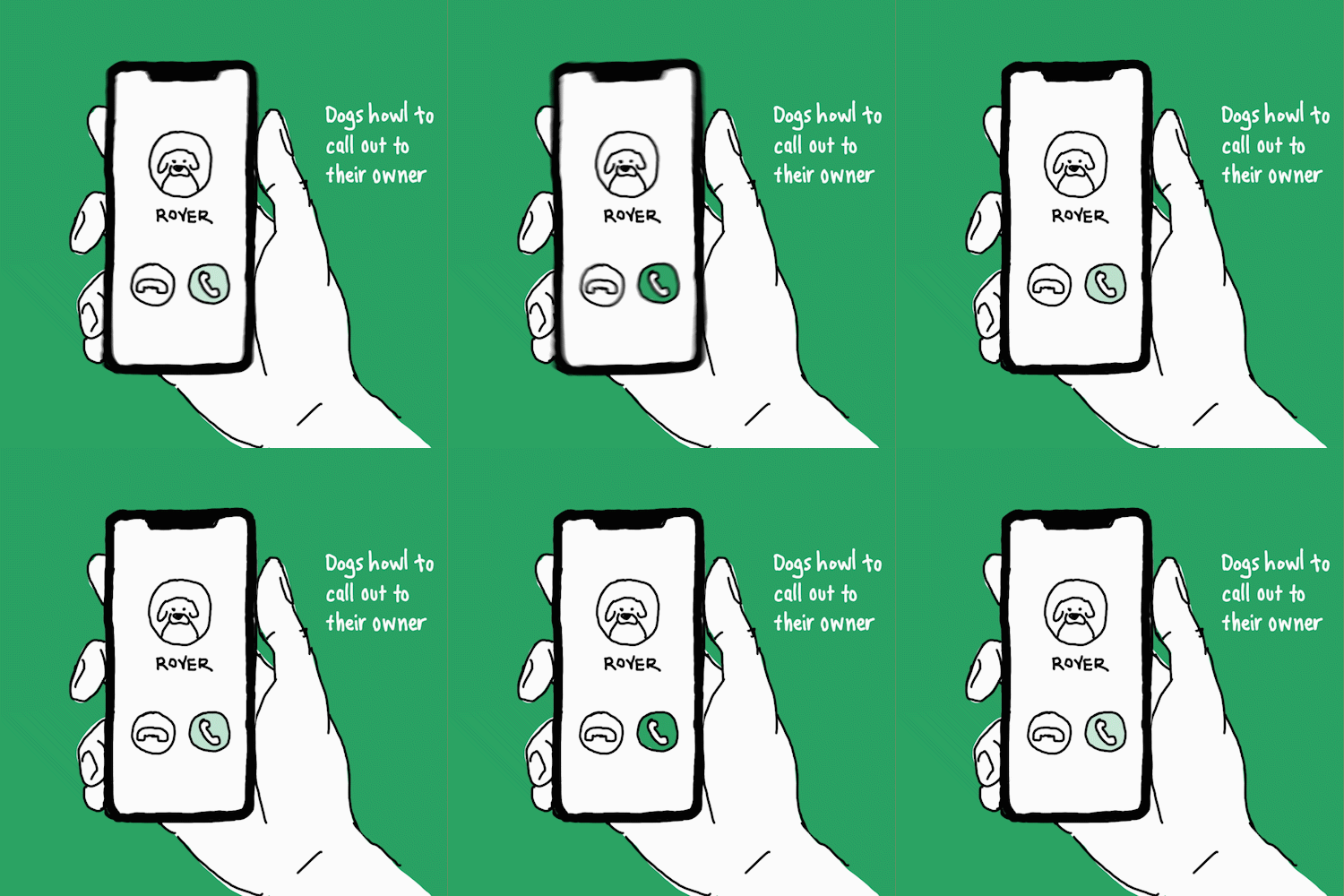
Dogs are still very social animals; it’s just that now we’re their pack. When they miss us, they’ll howl in hopes we respond.
Opens a new windowDr. James Serpell, BSc, PhD, Professor of Humane Ethics & Animal Welfare at University of Pennsylvania School of Veterinary Medicine, explains it this way: “That [howling] is an attempt on the part of the dog to ask the owner basically, ‘Where are you so that I can rejoin you?’”
Dr. James Serpell doesn’t believe so. “My own research has shown that it is common across breeds. People think huskies may be more prone to group howling.”
Dogs going through separation anxiety may howl excessively when left home alone. Dr. Jo Gale, BVetMed CertLAS MRCVS, Senior Manager for Global Science Advocacy at Waltham Petcare Science Institute, says, “If you reinforce quiet behavior, they are less likely to continue howling.” You can do this by quieting your dog and then leaving for a very brief time before returning and rewarding them when they stay quiet. Gradually increase the time you’re gone to reassure them you’ll always be back.
*Surveyed U.S. dog owners, age 18+
Sample Size: n=201
Fielded May 8 to May 10, 2020
Switching your dog to a new food takes some planning. Because dogs are creatures of habit, they tend to prefer their current food to a new food. Like us, they become accustomed to a food and might not be thrilled about a new routine. These useful dog-feeding tips will help you keep your dog satisfied.
When easing your dog into a change in diet, think “slow and steady.” Start by mixing 25% new food with 75% current food. Slowly change the proportions over the next three days or so by gradually increasing the new food and lessening the amount of the current food. Here’s a sample feeding schedule:
At the end of this weaning process, you should be feeding 100% of the new food. Your dog may want to eat only the old food, or not eat at all. Don’t worry — a healthy dog can miss meals for a day or two with no ill effects.
Bringing a new food into your home, pouring it into your dog’s bowl and declaring that he should eat it might cause your dog to go on a hunger strike. This is not the time to show who’s boss. It’s better to introduce the new food by using a pleasant tone of voice and gently encouraging him to try the new food.
Persistence is key! For the first two days of the food transition, don’t give your dog treats or table scraps. Dogs train us as much as we train them. Giving in to their demands only reinforces refusal behavior and makes it more difficult to make a nutritious dietary change.
Switching diets may be more challenging when changing from a moist food to a dry food. If your dog continues to resist eating dry food, mix in a little warm water. You might even want to put the moistened food in the microwave for a few seconds. If you mix the food with water, be sure to throw away the uneaten portion after 20 minutes to prevent spoilage. The same rule applies for canned and pouch food. After the dog has become accustomed to the moistened food, you can wean him onto completely dry food. To do this, follow the same mixing instructions outlined above.