Enter a keyword below to search for articles and products.
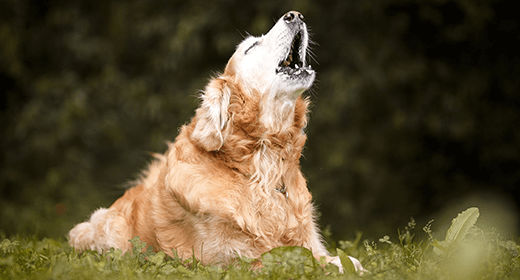
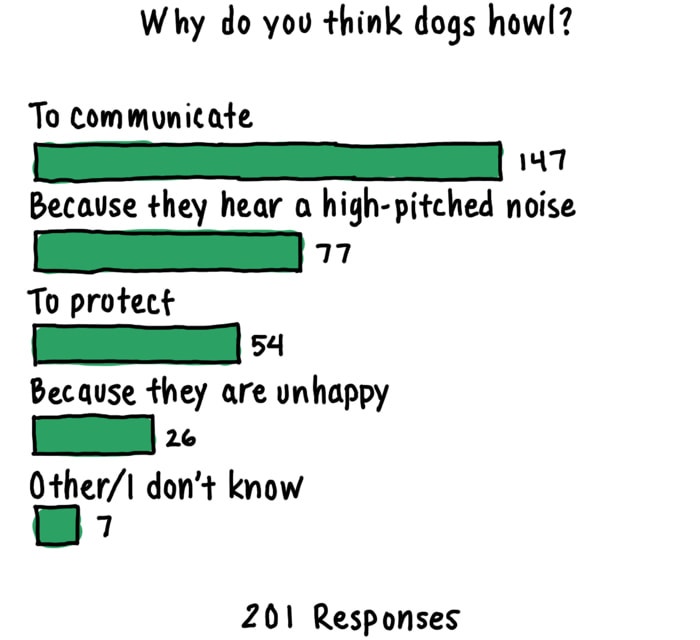
You’ve likely heard your dog let loose his inner wolf and belt out a few long howls. 73% of dog owners in a recent IAMS poll* believe they do this to communicate. This form of vocalization has a long history and is used for different reasons. Understanding more about howling will help you understand your pooch better.
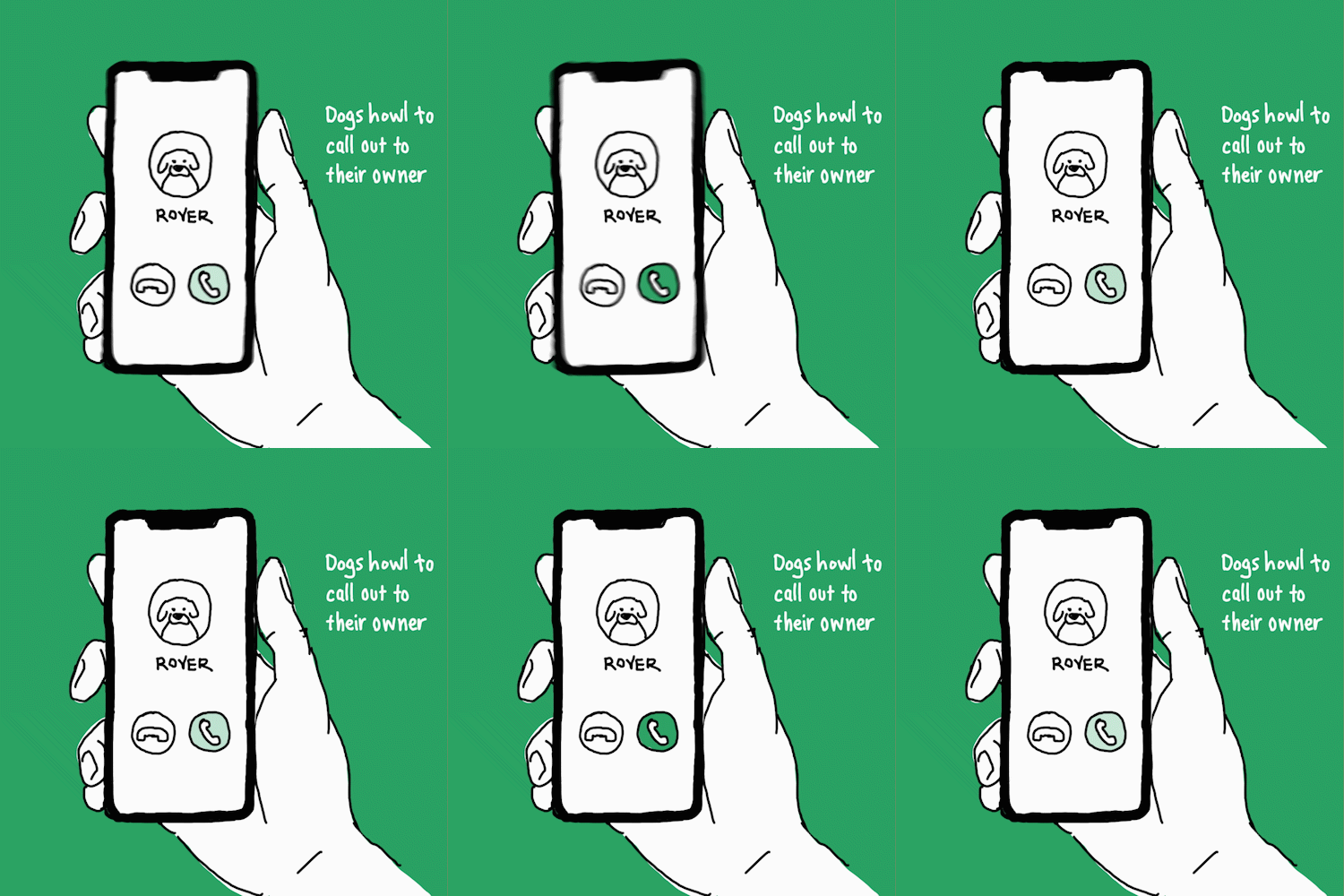
Howling is an ancient trait wolves use to communicate with other members of their pack and other packs over long distances. They may be trying to locate a lost member, show off the size of their pack or warn of danger. It’s like a canine group text.
A wolf’s howl can be heard up to 10 miles away.
Each wolf has their own unique howl, so pack members know who they are, even miles apart.
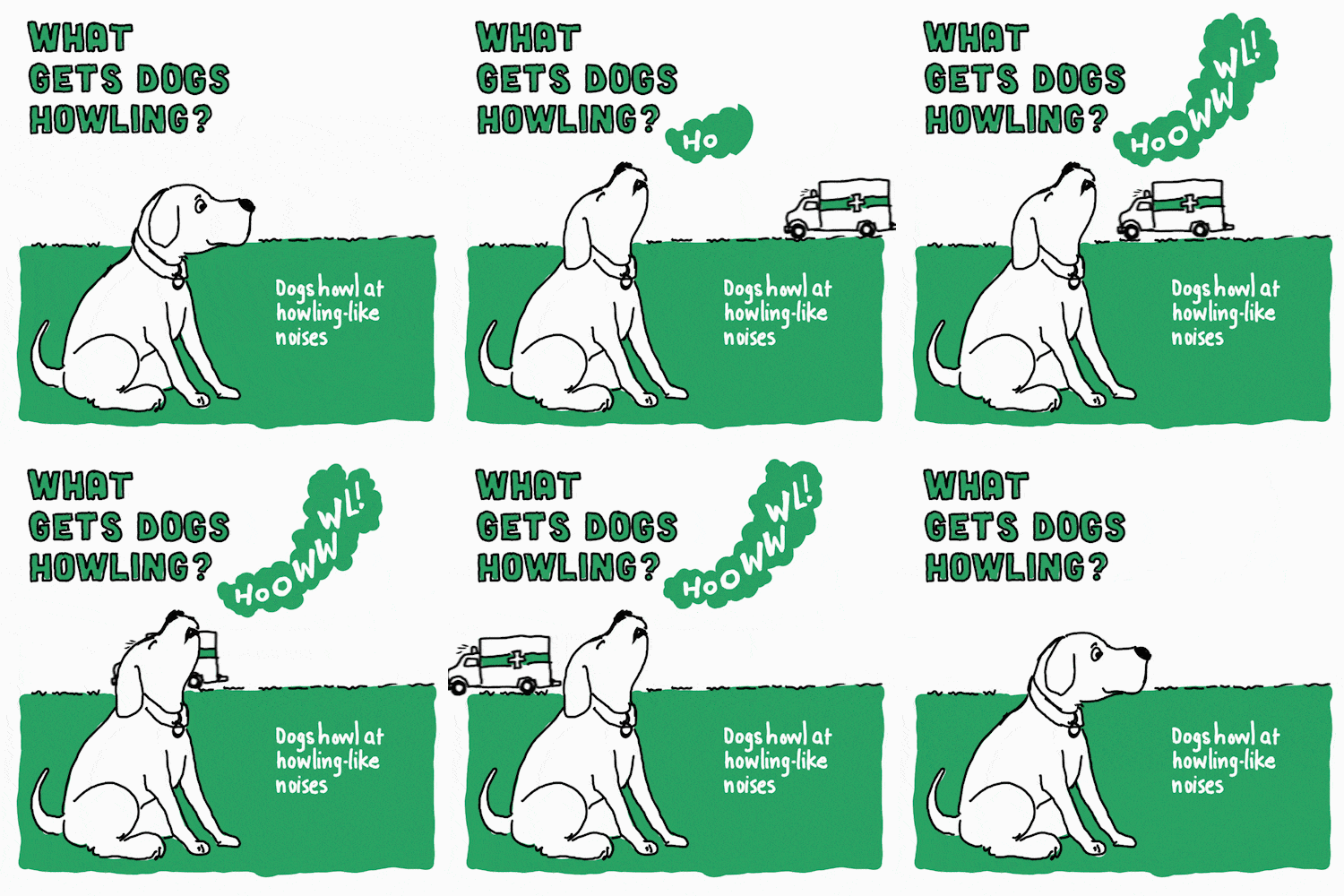
Dogs instinctually respond to howling-like noises by howling themselves. Sounds such as sirens, other dogs, singing or your kid learning the violin is usually enough to get them to sound off.
Dogs are still very social animals; it’s just that now we’re their pack. When they miss us, they’ll howl in hopes we respond.
Opens a new windowDr. James Serpell, BSc, PhD, Professor of Humane Ethics & Animal Welfare at University of Pennsylvania School of Veterinary Medicine, explains it this way: “That [howling] is an attempt on the part of the dog to ask the owner basically, ‘Where are you so that I can rejoin you?’”
Dr. James Serpell doesn’t believe so. “My own research has shown that it is common across breeds. People think huskies may be more prone to group howling.”
Dogs going through separation anxiety may howl excessively when left home alone. Dr. Jo Gale, BVetMed CertLAS MRCVS, Senior Manager for Global Science Advocacy at Waltham Petcare Science Institute, says, “If you reinforce quiet behavior, they are less likely to continue howling.” You can do this by quieting your dog and then leaving for a very brief time before returning and rewarding them when they stay quiet. Gradually increase the time you’re gone to reassure them you’ll always be back.
*Surveyed U.S. dog owners, age 18+
Sample Size: n=201
Fielded May 8 to May 10, 2020


Nutrients are divided into subcategories: protein, carbohydrates, fats, vitamins and minerals, and water.
Common dog-food protein sources include meat, poultry, fish, and some plant ingredients such as corn gluten and soybean meal.
Protein is best known for supplying amino acids, or protein subunits, to build hair, skin, nails, muscles, tendons, ligaments, and cartilage. It also plays a main role in hormone production.
Dogs, best fed as carnivores, require essential amino acids, that are not all found in the correct balance in single plant-protein sources such as soybean meal.
Common carbohydrate sources are plants and grains. Carbohydrates, also categorized as starches (sugars) and fibers, provide energy and bulk, respectively.
Starches are made up of various types of sugar, such as glucose or fructose. Through digestion, dogs can easily convert sugar into usable energy.
Fiber may or may not be fermented or broken down into short-chain fatty acids by bacteria in a dog's intestines. Highly fermentable fiber sources, such as vegetable gums, provide high amounts of short-chain fatty acids. Moderately fermentable fibers, such as beet pulp, provide short-chain fatty acids and bulk for moving waste. Slightly fermentable fibers, such as cellulose, provide mainly bulk for moving waste through the digestive tract and only a few short-chain fatty acids.
Fats are found in meats, poultry, fish, and plant oils, such as flax and vegetable oils. Fat, for all of its bad press, fulfills many vital body functions. Animal-cell membranes are made of fat. Fat also helps maintain body temperature, control inflammation, and more. Fat is the primary form of stored energy in the body, providing twice as much energy as carbohydrates or proteins.
Fats also provide the important fat subunits, omega-6 and omega-3 fatty acids. Omega-6 fatty acids are essential for skin and coat maintenance and proper membrane structure. Omega-3 fatty acids have been shown to be important in blood clotting and decreasing inflammation.
Vitamins are responsible for promoting bone growth, blood clotting, energy production, and oxidant protection.
Vitamins A, D, E, and K require fat for absorption into the body, while vitamins such as the B-complex vitamins and vitamin C need water to be absorbed into the body.
Minerals provide skeletal support and aid in nerve transmission and muscle contractions.