Enter a keyword below to search for articles and products.


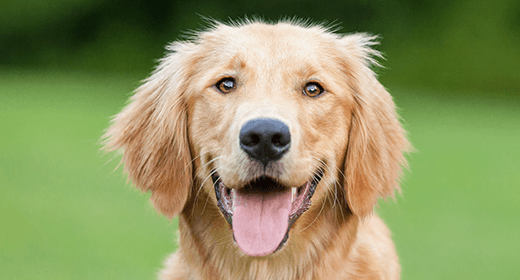
DHA (docosahexaenoic acid) is an omega-3 fatty acid important for neural development of puppies. DHA is a major structural component of the brain, as well as the most abundant fatty acid in the brain. It plays a vital role in the development of a puppy’s central nervous system and retinal function.
To help your puppy be as smart and healthy as possible, DHA should be an essential component of your dog's diet. The DHA in IAMS™ ProActive Health™ Smart Puppy food helps encourage healthy brain development, which can make your puppy more trainable and help forge a stronger bond with you.
Common dietary DHA sources include fish (such as salmon, sardines, tuna and other seafood), eggs and organ meat. In pet foods, sources of DHA include fish, fish meal and fish oil.
Prior to weaning, puppies get DHA from their mothers. The puppy’s mother transfers DHA from her body tissues to her offspring during pregnancy and lactation.
After weaning, puppies can obtain DHA through their diet.
One IAMS study looked at beagle puppies whose mothers had been fed enhanced or typical dietary DHA from breeding on through weaning.* After weaning, puppies were fed the same diets as their mothers throughout the remainder of the study (up to 16 weeks of age). To evaluate the effect of diet on trainability, all puppies were taught to associate a symbol with a direction in a t-maze, with correct responses resulting in a food treat.
In the 30 days of testing, puppies from the enhanced-DHA group consistently outperformed the puppies from the typical-DHA group on the maze test. Results of the study indicated that puppies nourished on high DHA levels were more trainable.
*Data on file. The IAMS Company.


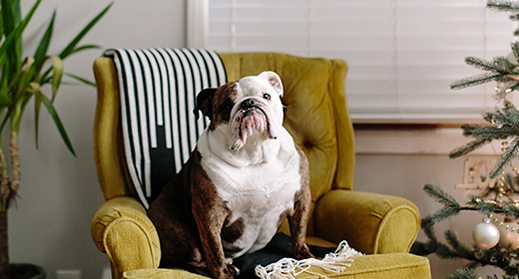
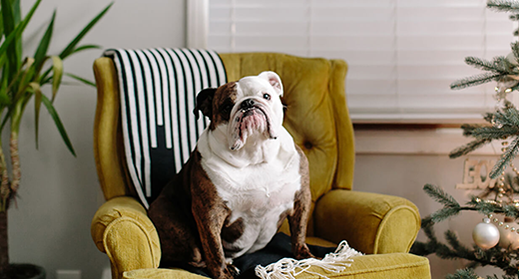
Diet plays a central role in your dog’s overall health and well-being, and it stands to reason that you want to provide your dog the best possible source of nutrition in the dog food you choose. But some nutrients, like L-Carnitine, may be unfamiliar or completely foreign. Learn more about this vitamin-like compound and how it can help your dog maintain a healthy weight.
Carnitine, or L-carnitine, is a vitamin-like compound made in the body from amino acids. It's found naturally only in animal-based protein sources. It has been used to help with fat metabolism in other species, and recent scientific studies show that it can help reduce weight in overweight dogs.
This water-soluble substance attaches to fatty acids, transporting them into cellular mitochondria, the part of the cell that converts fat into a usable form of energy. There, they are broken down through oxidation and converted to energy for all tissues, including the heart, liver, and skeletal muscles. Through this process, carnitine helps reduce the storage of body fat and the amount of fat in the bloodstream.
In a study conducted by The IAMS™ Company, overweight dogs were fed similar diets. One group was given a diet supplemented with L-carnitine while another group received a diet without supplemental L-carnitine.
After seven weeks, the group that received the diet without supplemental L-carnitine lost 1.8% body weight compared to 6.4% body weight loss from the group that was fed the L-carnitine supplemented diet. Likewise, body fat was reduced in each group by 2.4% and 4.6%, respectively.1 The study found that L-carnitine promotes loss of body weight and body fat in overweight dogs.
IAMS™ ProActive Health™ Adult Healthy Weight is formulated with L-carnitine that helps turn fat into energy, providing a path to help keep him fit for life.
1 Sunvold GD, Tetrick MA, Davenport GM, Bouchard GF. 'Carnitine supplementation promotes weight loss and decreased adiposity in the canine.' Proceedings of the XXIII World Small Animal Veterinary Association. p. 746. October, 1998.