Enter a keyword below to search for articles and products.
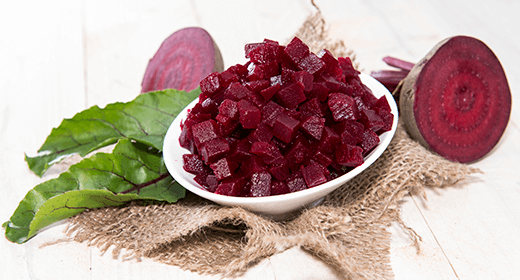
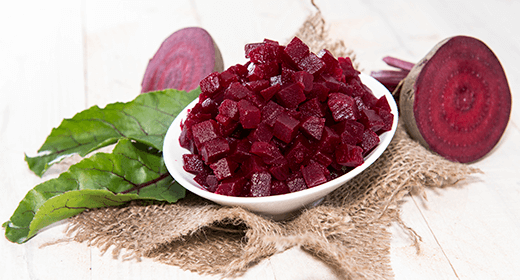
Beet pulp is an important source of fiber that is good for helping your dog maintain intestinal health and can enhance his ability to absorb ingredients. Beet pulp is the material that remains after sugar is extracted from sugar beets.
There are two types of fiber: Nonfermentable and fermentable. Nonfermentable fiber remains undigested as it passes through a dog's intestines, providing bulk to move wastes out. Cellulose is an example of a nonfermentable fiber.
In contrast, fermentable fiber is broken down in the intestines into short-chain fatty acids that provide energy for cells that line the intestine.
Moderately fermentable fiber does both: It provides bulk to move waste and supplies energy to cells lining the intestine. Beet pulp is a moderately fermentable fiber. IAMS™ products contain a patented, moderately fermentable fiber, beet pulp, to keep your dog's digestive system healthy.
Beet pulp contains no toxins and is not harmful. It is a very safe fiber source. Beet pulp does not affect coat color. There is nothing in beet pulp that can affect coat pigment—the inside is light in color, and the dark outside peel is not used in our foods.
By definition, beet pulp is the material left over after the sugar is removed from sugar beets. Therefore, beet pulp contains no sugar.
There is no evidence that beet pulp causes bloat. Bloat (gastric dilatation-volvulus or GDV) is related to a stomach defect that delays the stomach’s emptying. It is believed that bloat is not related to diet or ingredients, such as beet pulp. However, the cause of bloat remains unknown.
IAMS has conducted extensive research on many types of fiber. The results of this research point to the fact that beet pulp maintains intestinal health and works with other nutrients to provide optimal nutrition in all of our products, including IAMS™ ProActive Health™ Adult MiniChunks. No other food manufacturer can match our formulas. Only IAMS holds a patent for moderately fermentable beet pulp.
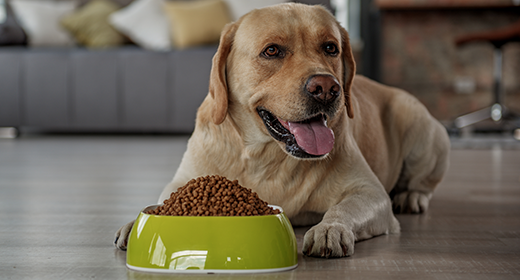
No two dogs are alike. So when choosing your pet's food, you'll want to take into consideration the dog's breed, size, age, weight, and lifestyle.
Full growth will happen at around 1 to 2 years, with the exact age determined by your dog's breed—small-breed dogs mature faster than large-breed dogs. “Grown dogs, especially ones who are more athletic, will start to eat more quantities in one feeding,” says Madan Khare, DVM. “You want to limit his feeding to one or two times a day, depending on his activity level.” Exact quantities should be determined by consulting your vet or by reading the package labels (just remember to split a daily serving in half if you choose to feed the dog twice a day).
When transitioning your dog from puppy food to premium adult food—such as IAMS™ ProActive Health™ Adult MiniChunks —you want to do it gradually. “Never change a dog's diet abruptly,” Khare says. Here's a schedule for transitioning your pet from puppy food to an adult dog food.
Day 1: Fill your dog's bowl with 75% puppy food and 25% premium adult dog food.
Day 2: Use 50% of each food.
Day 3: Feed your dog a mixture of 75% premium adult food and 25% of your current dog food.
Day 4: Give him 100% premium adult dog food.
Daily exercise and a diet packed with high-quality protein from chicken, lamb, or fish and essential nutrients will keep him happy and healthy throughout his lifetime. Premium dry pet food has all of the daily nutrition your pet needs. It helps promote healthy teeth and gums, too.
“When it comes to feeding your dog human food, I have three words,” Khare says. “No. No. No.” Interfering with your pet's food regimen by adding higher-fat and higher-calorie human foods can disturb the animal's digestive system. When it comes to biscuits, Khare recommends looking for ones low in sugar, salt, and fat. 'You have to keep in mind that you're adding calories to his daily diet, so offer them in moderation,” Khare says. Finally, make sure your pet has a clean bowl of fresh water at all times.