Enter a keyword below to search for articles and products.
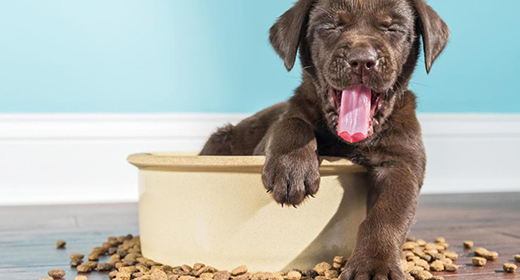
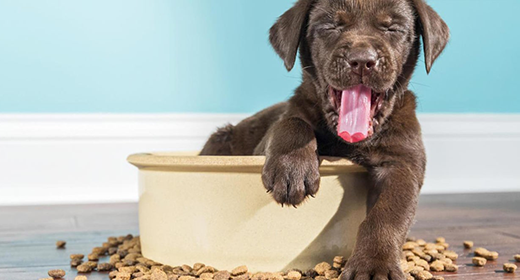
How much do you know about the food you’re buying for your puppy? When shopping for puppy food, pay attention to these three sections of a dog food label.
This section lists all the ingredients that make up the product. The ingredients are listed in descending order according to weight before cooking. In dry food, look for a source of high-quality animal-based protein: chicken or lamb, for example. Dogs thrive on animal proteins.
Manufacturers who use large amounts of vegetable proteins might be saving money by providing basic — but not optimal — nutrition. You should also avoid artificial colors and flavors, which offer no nutritional benefits.
Near the ingredient panel should be a chart of percentages called the 'guaranteed analysis.' These figures reveal the basic nutrient makeup of the dog food's formula and protein content. The minimum percentages of protein and fat and the maximum percentages of fiber and moisture (water) should be listed.
This information must be included on the label by law. A toll-free number or web address for the manufacturer may also be listed. Manufacturers who list a phone number, such as IAMS™, generally have a high-quality product and welcome consumer calls and questions. If you would like information about IAMS products, visit our website or call us toll-free at 800-525-4267.
Switching your dog to a new food takes some planning. Because dogs are creatures of habit, they tend to prefer their current food to a new food. Like us, they become accustomed to a food and might not be thrilled about a new routine. These useful dog-feeding tips will help you keep your dog satisfied.
When easing your dog into a change in diet, think “slow and steady.” Start by mixing 25% new food with 75% current food. Slowly change the proportions over the next three days or so by gradually increasing the new food and lessening the amount of the current food. Here’s a sample feeding schedule:
At the end of this weaning process, you should be feeding 100% of the new food. Your dog may want to eat only the old food, or not eat at all. Don’t worry — a healthy dog can miss meals for a day or two with no ill effects.
Bringing a new food into your home, pouring it into your dog’s bowl and declaring that he should eat it might cause your dog to go on a hunger strike. This is not the time to show who’s boss. It’s better to introduce the new food by using a pleasant tone of voice and gently encouraging him to try the new food.
Persistence is key! For the first two days of the food transition, don’t give your dog treats or table scraps. Dogs train us as much as we train them. Giving in to their demands only reinforces refusal behavior and makes it more difficult to make a nutritious dietary change.
Switching diets may be more challenging when changing from a moist food to a dry food. If your dog continues to resist eating dry food, mix in a little warm water. You might even want to put the moistened food in the microwave for a few seconds. If you mix the food with water, be sure to throw away the uneaten portion after 20 minutes to prevent spoilage. The same rule applies for canned and pouch food. After the dog has become accustomed to the moistened food, you can wean him onto completely dry food. To do this, follow the same mixing instructions outlined above.