Enter a keyword below to search for articles and products.
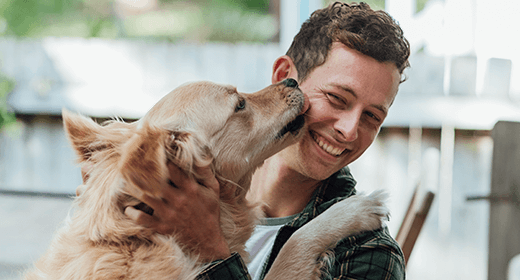
Adrena Wilhelm from Canine Companions for Independence shows you how you can teach your dog to speak and be quiet on command. She also provides effective techniques for teaching your dog to not bark when the doorbell rings and when other dogs are near.
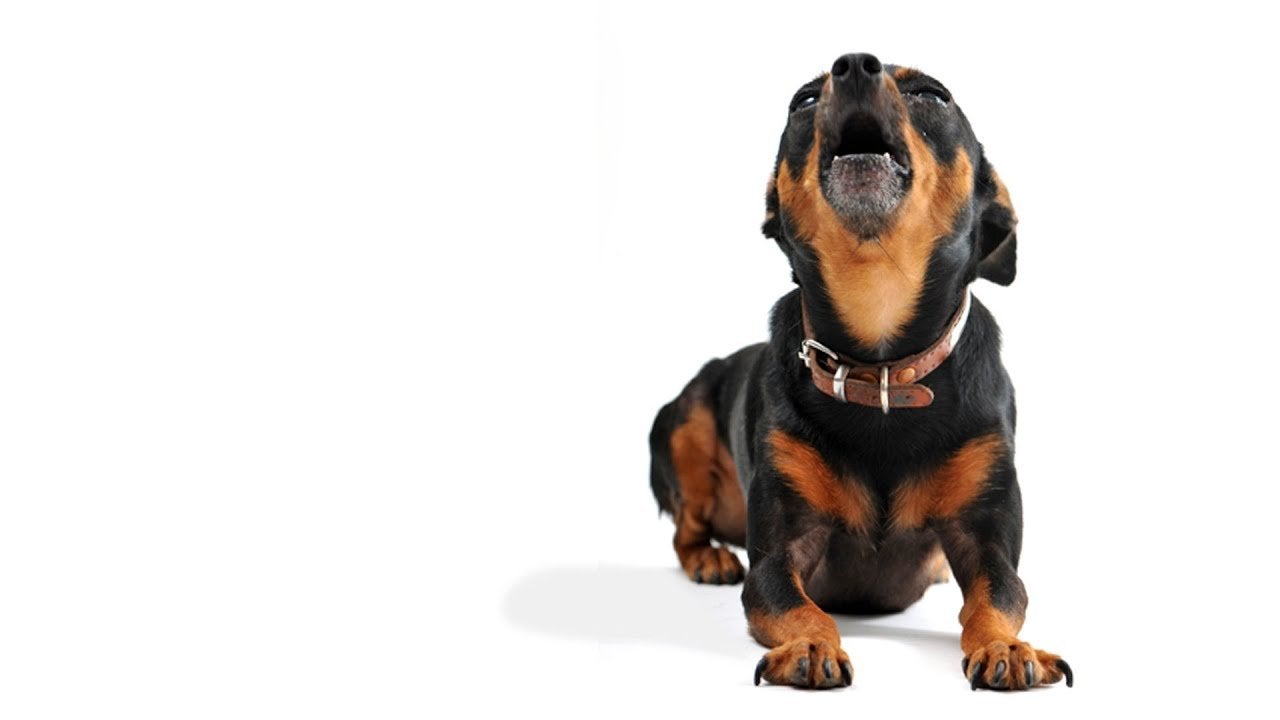
Hi. I'm Adrena Wilhelm from Canine Companions for Independence on behalf of IAMS. Today, we're going to learn how to teach your dog to stop barking. It may sound nonsensical. But to stop your dog from barking, first, teach him to bark on command. Give your dog the command to speak. Have someone immediately make a noise, such as knocking on the door that is sure to make your dog bark. Let him bark two or three times. Then, stick a tasty treat in front of his nose. When he stops barking to sniff the treat, praise him and give him the treat. Repeat until he starts barking as soon as you say speak. Once your dog can reliably bark on command, move on to the quiet command. Teach your dog that barking is OK until told to be quiet. Simultaneously, hold a treat in front of your dog's nose. Most dogs get quiet immediately because they can't sniff and lick the treat while barking at the same time. Praise your dog continuously during his quiet time with petting and words of encouragement. When your dog makes a mistake and barks, and he will, reprimand him immediately. Never strike your dog, but do something that will catch his attention, such as clapping loudly. As soon as your dog stops barking, you must instantly reward him. If you're still having trouble, then you may need to spend some time working with your dog on specific barking situations. Here are a few of the more common ones. If your dog is in his crate or confined to a room behind a baby gate or other barrier, he may bark because he wants to be with you. But if that's not always possible, then you'll need to train him to stay quiet. Next time, he's barking uncontrollably in his more confined space, try this. Start by turning your back and ignoring him. Whenever he stops barking, turn and praise him. Give him a treat and make a game of it. As he catches on that being quiet gets him a treat, lengthen the amount of time that he must remain quiet before being rewarded. Dogs that are afraid of other dogs will often bark at them. Have a friend with a dog stand out of sight far enough away that you know your dog won't bark at the other dog. As soon as the friend and dog come into view, start feeding your dog lots of treats. Keep feeding treats until the friend and dog are out of sight. Ask your friend and her dog to gradually walk closer. Don't try to progress too quickly. It may take days or weeks before your dog can pay attention to you and the treats without barking at the other dog. When the doorbell rings, your dog alerts you to the presence of an intruder by barking wildly. Once you've taught your dog the quiet command in a calm environment, practice in increasingly distracting situations. Teach your dog to react to the doorbell by going to a special place and laying quietly while the intruder comes into the house. Start by tossing a treat on his mat and telling him go to your place. Have him go to his place before you give him the treat. When he's reliably going to his mat to earn a treat, up the ante by opening the door while he's on his mat. If he gets up, close the door immediately. Repeat until he stays on the mat while the door is open. Then, increase the difficulty by having someone ring the doorbell while your dog is on his mat. Reward him if he stays in his place. Try these techniques to stop your dog from barking. All of them can be successful, but don't expect miracles overnight. The longer your dog has been practicing the barking behavior, the longer it will take for him to change his ways. Let's recap. First, teach your dog to speak or bark on command. Once he has that down, teach him to be quiet on command. Use treats and praise to help get the desired outcome. And lastly, be patient and consistent in training. Don't expect overnight changes. I'm Adrena Wilhelm on behalf of IAMS. To join the IAMS community for more information and offers, check out the website.
Like any companion or roommate, dogs — for all their love and cuteness—have habits we just don’t understand. One question dog owners often ask their pets: “Why? Why would you eat poop?”
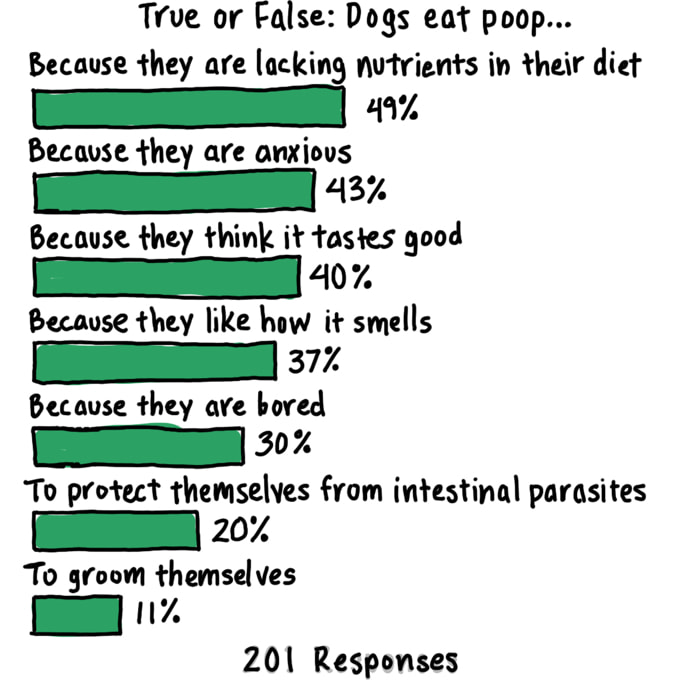
When we polled* dog owners recently, most thought it was because a dog is lacking nutrients (49%), they’re anxious (43%) or they just think it tastes good (40%).
Dogs are significantly more likely to eat the droppings of another species (e.g., horses, rabbits) than their own.
We held our noses and got to the bottom of the issue with the help of some experts.
While those in our poll thought this was the number-one reason for the behavior, it has actually never been proven. “It’s a myth dogs eat poop because they’re seeking nutrients they aren’t getting. There’s no evidence to back this,” says
Opens a new windowDr. Jo Gale, BVetMed CertLAS MRCVS, Senior Manager, Global Science Advocacy at Waltham Petcare Science Institute.
According to
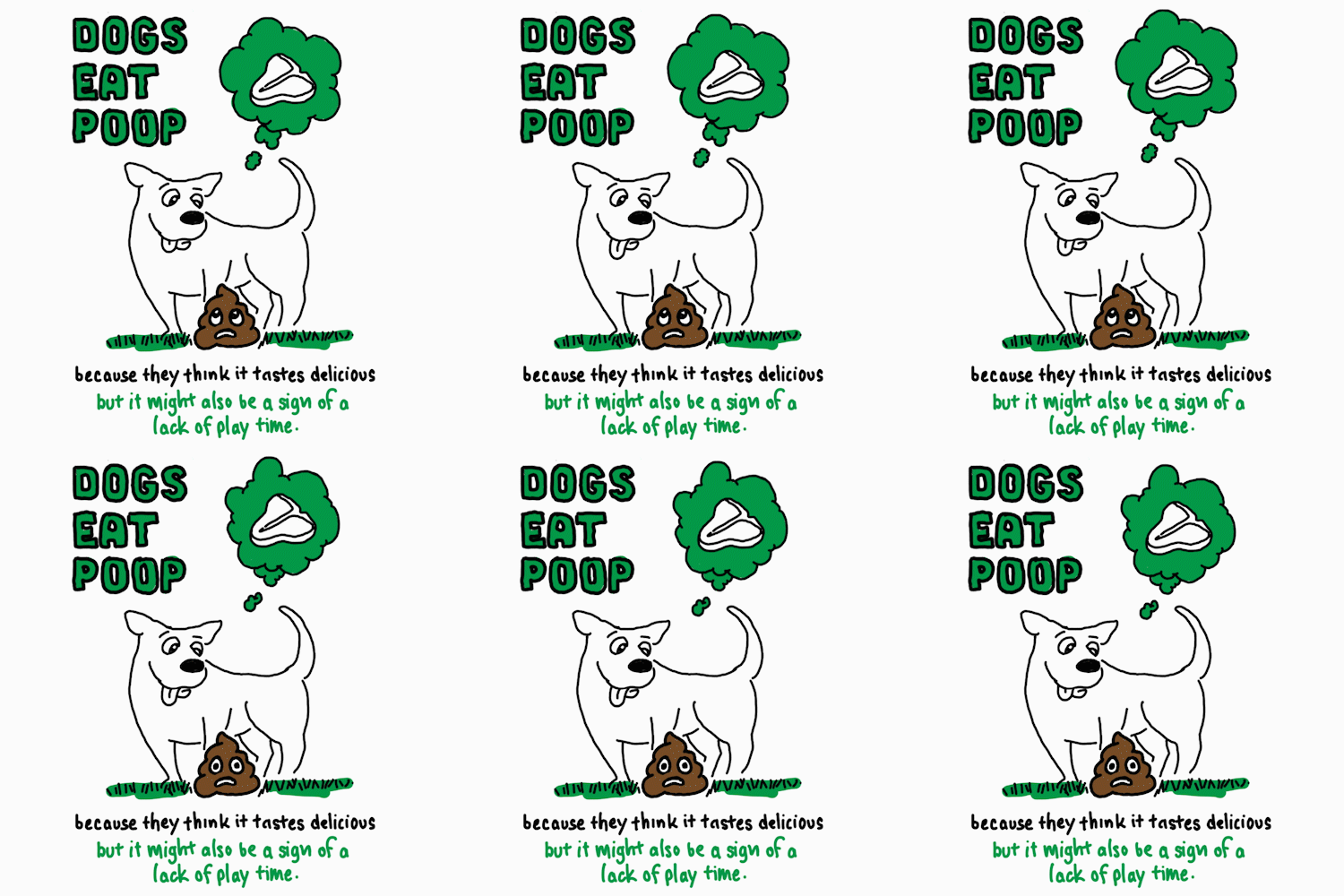
Opens a new windowDr. Tammie King, Applied Behavior Technical Leader at Waltham Petcare Science Institute, “It can occur where there is lack of environmental enrichment. You see this often in dogs who are kenneled and have a lack of opportunity to exhibit normal canine behavior.” So if you need another excuse to get out and play with your pooch, this is a good one.
Believe it or not, this is the main reason dogs eat poop. Dr. Jo Gale explains: “Dogs are scavengers by nature and use any opportunity to eat what they can, when they can. They consider it a ‘tasty snack.’” Dr. Tammie King adds that “[Dogs eating poop] is a learned behavior. They’ve done it, enjoyed it, and that behavior is repeated.”
We love our dogs so much that we’re willing to trust our best friends on this. Maybe we should come out with a line of doggie breath mints though. Hmm.
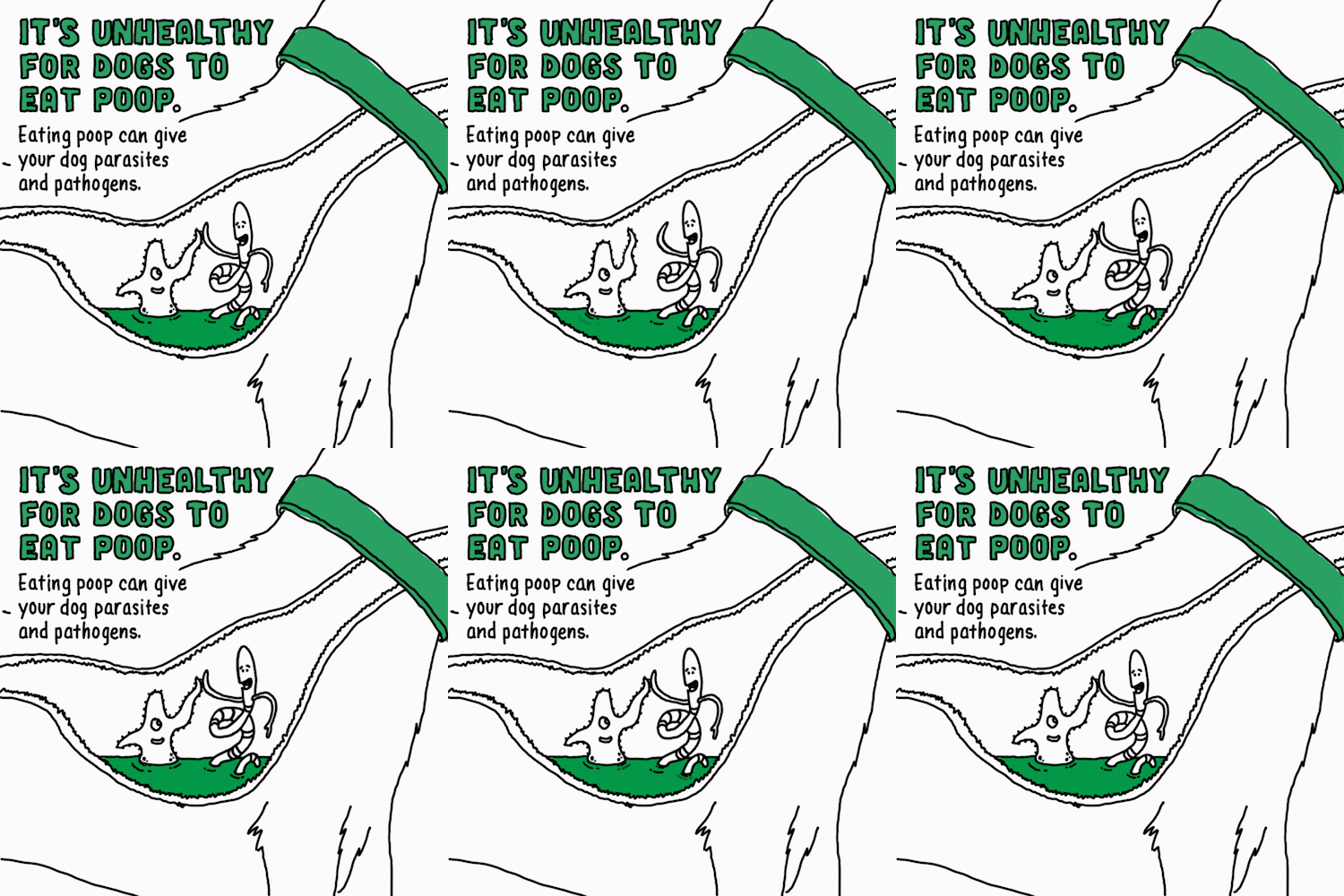
“Ingesting feces from any animal increases potential for ingesting parasites and pathogens,” cautions Opens a new windowDr. James Serpell BSc, Phd Professor of Humane Ethics & Animal Welfare at University of Pennsylvania School of Veterinary Medicine. He went on to say, “[It’s] not something humans should ignore, but it's not worth getting too excited about it.”
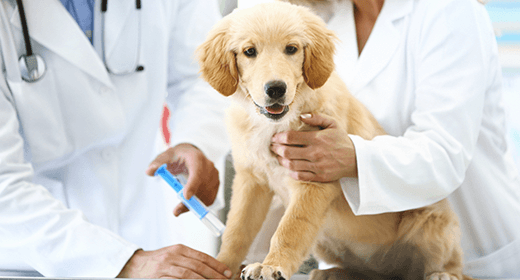
All the experts we consulted said that if your dog occasionally eats poop, it’s nothing to be overly alarmed by. Just keep an eye on the frequency and their overall health. And as always, make sure they’re getting a nutritious diet and plenty of exercise and attention. If you have any concerns contact your vet.
Despite dogs liking the taste of poop, we’re going to stick with the healthy range of more traditional flavors offered in all IAMS dog foods.
*Surveyed U.S. dog owners, age 18+
Sample Size: n=201
Fielded May 8 to May 10, 2020