Enter a keyword below to search for articles and products.
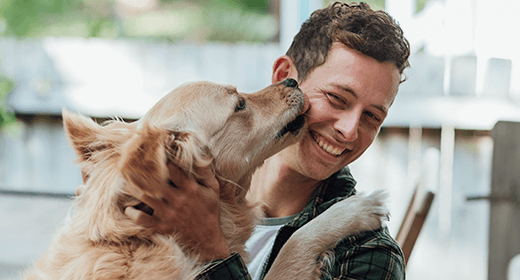
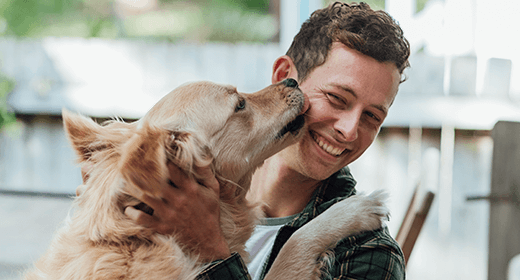
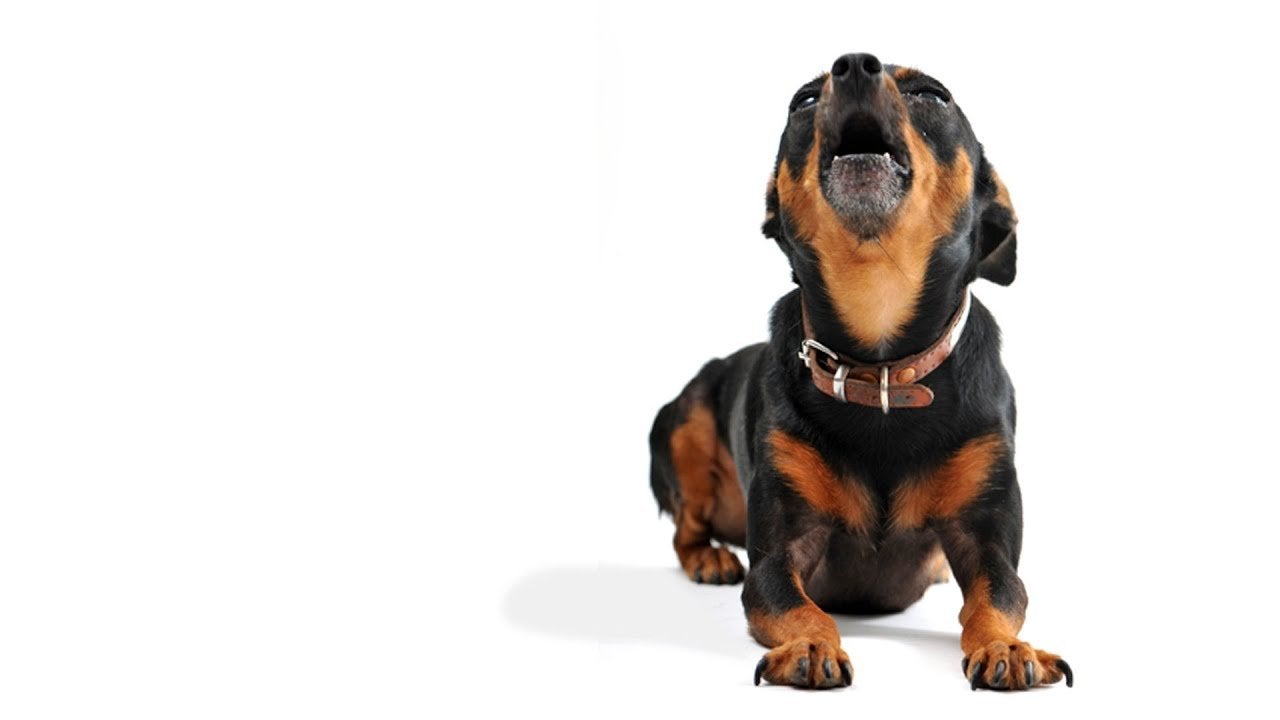
Adrena Wilhelm from Canine Companions for Independence shows you how you can teach your dog to speak and be quiet on command. She also provides effective techniques for teaching your dog to not bark when the doorbell rings and when other dogs are near.
Hi. I'm Adrena Wilhelm from Canine Companions for Independence on behalf of IAMS. Today, we're going to learn how to teach your dog to stop barking. It may sound nonsensical. But to stop your dog from barking, first, teach him to bark on command. Give your dog the command to speak. Have someone immediately make a noise, such as knocking on the door that is sure to make your dog bark. Let him bark two or three times. Then, stick a tasty treat in front of his nose. When he stops barking to sniff the treat, praise him and give him the treat. Repeat until he starts barking as soon as you say speak. Once your dog can reliably bark on command, move on to the quiet command. Teach your dog that barking is OK until told to be quiet. Simultaneously, hold a treat in front of your dog's nose. Most dogs get quiet immediately because they can't sniff and lick the treat while barking at the same time. Praise your dog continuously during his quiet time with petting and words of encouragement. When your dog makes a mistake and barks, and he will, reprimand him immediately. Never strike your dog, but do something that will catch his attention, such as clapping loudly. As soon as your dog stops barking, you must instantly reward him. If you're still having trouble, then you may need to spend some time working with your dog on specific barking situations. Here are a few of the more common ones. If your dog is in his crate or confined to a room behind a baby gate or other barrier, he may bark because he wants to be with you. But if that's not always possible, then you'll need to train him to stay quiet. Next time, he's barking uncontrollably in his more confined space, try this. Start by turning your back and ignoring him. Whenever he stops barking, turn and praise him. Give him a treat and make a game of it. As he catches on that being quiet gets him a treat, lengthen the amount of time that he must remain quiet before being rewarded. Dogs that are afraid of other dogs will often bark at them. Have a friend with a dog stand out of sight far enough away that you know your dog won't bark at the other dog. As soon as the friend and dog come into view, start feeding your dog lots of treats. Keep feeding treats until the friend and dog are out of sight. Ask your friend and her dog to gradually walk closer. Don't try to progress too quickly. It may take days or weeks before your dog can pay attention to you and the treats without barking at the other dog. When the doorbell rings, your dog alerts you to the presence of an intruder by barking wildly. Once you've taught your dog the quiet command in a calm environment, practice in increasingly distracting situations. Teach your dog to react to the doorbell by going to a special place and laying quietly while the intruder comes into the house. Start by tossing a treat on his mat and telling him go to your place. Have him go to his place before you give him the treat. When he's reliably going to his mat to earn a treat, up the ante by opening the door while he's on his mat. If he gets up, close the door immediately. Repeat until he stays on the mat while the door is open. Then, increase the difficulty by having someone ring the doorbell while your dog is on his mat. Reward him if he stays in his place. Try these techniques to stop your dog from barking. All of them can be successful, but don't expect miracles overnight. The longer your dog has been practicing the barking behavior, the longer it will take for him to change his ways. Let's recap. First, teach your dog to speak or bark on command. Once he has that down, teach him to be quiet on command. Use treats and praise to help get the desired outcome. And lastly, be patient and consistent in training. Don't expect overnight changes. I'm Adrena Wilhelm on behalf of IAMS. To join the IAMS community for more information and offers, check out the website.
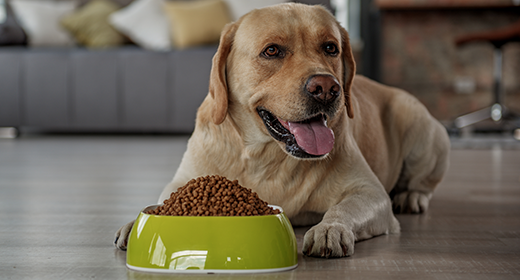
No two dogs are alike. So when choosing your pet's food, you'll want to take into consideration the dog's breed, size, age, weight, and lifestyle.
Full growth will happen at around 1 to 2 years, with the exact age determined by your dog's breed—small-breed dogs mature faster than large-breed dogs. “Grown dogs, especially ones who are more athletic, will start to eat more quantities in one feeding,” says Madan Khare, DVM. “You want to limit his feeding to one or two times a day, depending on his activity level.” Exact quantities should be determined by consulting your vet or by reading the package labels (just remember to split a daily serving in half if you choose to feed the dog twice a day).
When transitioning your dog from puppy food to premium adult food—such as IAMS™ ProActive Health™ Adult MiniChunks —you want to do it gradually. “Never change a dog's diet abruptly,” Khare says. Here's a schedule for transitioning your pet from puppy food to an adult dog food.
Day 1: Fill your dog's bowl with 75% puppy food and 25% premium adult dog food.
Day 2: Use 50% of each food.
Day 3: Feed your dog a mixture of 75% premium adult food and 25% of your current dog food.
Day 4: Give him 100% premium adult dog food.
Daily exercise and a diet packed with high-quality protein from chicken, lamb, or fish and essential nutrients will keep him happy and healthy throughout his lifetime. Premium dry pet food has all of the daily nutrition your pet needs. It helps promote healthy teeth and gums, too.
“When it comes to feeding your dog human food, I have three words,” Khare says. “No. No. No.” Interfering with your pet's food regimen by adding higher-fat and higher-calorie human foods can disturb the animal's digestive system. When it comes to biscuits, Khare recommends looking for ones low in sugar, salt, and fat. 'You have to keep in mind that you're adding calories to his daily diet, so offer them in moderation,” Khare says. Finally, make sure your pet has a clean bowl of fresh water at all times.