Enter a keyword below to search for articles and products.
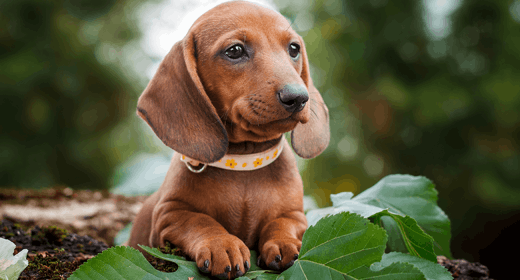
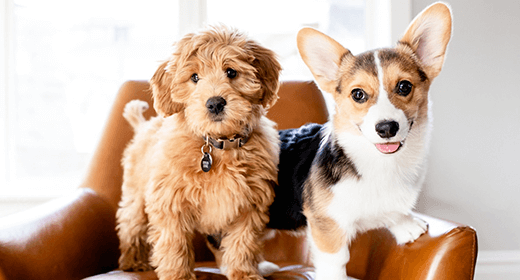
Small-breed dogs tend to have higher metabolism rates than their larger counterparts, which means they need a puppy feeding diet specifically designed for them. 'Small-breed dog food formulas are created to give your dog the right balance of nutrients,' says Debra Eldredge, DVM, a veterinarian in upstate New York and coauthor of The Dog Owner's Home Veterinary Handbook (Howell House). Here's what you need to know to feed your small-breed pooch.
The guidelines on the package are a great starting point, Eldredge says, but 'you have to customize [them] for your dog.' For instance, her family has three dogs who all weigh almost the same. But, one is getting twice as much food as the other two, and she's thin. 'She just burns it up,' Eldredge says. Your dog's breed and activity levels will affect how much food she needs.
Small-breed puppies, especially toy breeds, can be prone to hypoglycemia. To keep your dog’s blood sugar levels up, you might have to feed her more frequently and up the calories, Eldredge says.
Small-breed puppies grow quickly, so during the first six months, they need to eat more food and eat more frequently, generally three to four times a day. After six months, feeding two meals a day is usually sufficient. As your dog gets older and less active, her nutritional needs change, and she may need a formula for mature dogs. Her new food will generally have more protein and fewer calories.
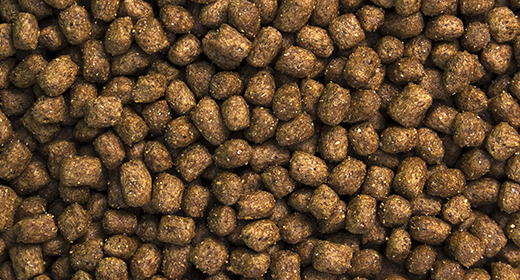
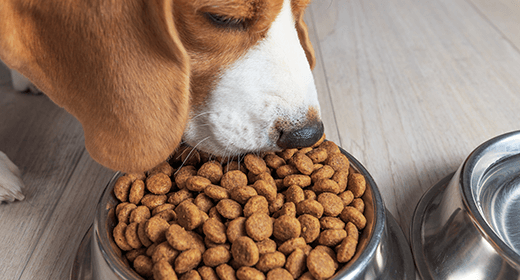
Smaller dogs have smaller mouths and teeth, so their food is usually made in a smaller bite size, which is easier for them to chew and swallow.
Don't leave your dog's food out all day. Instead, pick it up after 10 or 20 minutes, Eldredge says. If food is available all day, she may eat out of boredom.
With dog food, your pet is on a balanced diet. Feeding her human food may throw off that balance. The occasional taste of chicken or eggs is okay, but don't make it a daily habit.


You’ll do anything to keep your puppy healthy and happy—IAMS™ is just the first step. Here’s some extra advice to help your puppy stay extra healthy.
Step 1: Begin with a play session and praise to relax your puppy. Then get on the same physical level as your puppy. With a large dog, kneel next to him while he's in the sitting position; with a small puppy, place him on a grooming table or a countertop.
Step 2: Place one hand over the top of the puppy's muzzle as shown. Hold the pill in your free hand and then gently open his mouth with that hand.
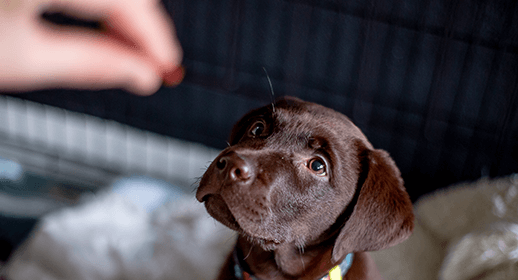
Step 3: Place the pill in the center of the tongue as far back as you're able to reach. Then close your puppy's mouth and hold it shut while you blow gently but quickly at his nose. This will cause your dog to swallow before he has a chance to spit the pill out. Give him a treat immediately afterward to ensure that the pill has really been swallowed. End each session with play and praise.
Just like you, your new puppy needs high-quality health care. Before you run into any dog health issues, ask a friend or your local humane society to recommend a veterinarian, then choose one with these factors in mind:
Once you've narrowed your choices, visit the veterinarian's office. Inspect the facility and talk to the doctor about your new puppy. If you like what you see and hear, arrange a time to bring your puppy in for an initial examination. It's a good idea to visit the veterinarian within the first three days after you bring your puppy home to make sure he's in good health. The veterinarian will probably check: