Enter a keyword below to search for articles and products.
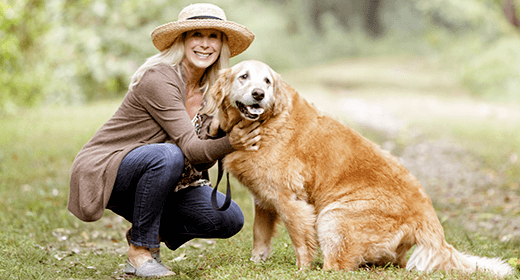
It depends on the breed of dog, but your pet's senior years generally begin at age 7. Louise Murray, DVM, director of the ASPCA's Bergh Memorial Animal Hospital in New York City and author of Vet Confidential (Ballantine, 2008), tells you what you need to know to keep your older dog spry and happy.
At this stage, Murray recommends taking your dog to the vet twice a year. 'So much can happen to an elderly dog,' she says. Your veterinarian can take blood annually to test liver and kidney functions. 'Discovering problems early is extremely important,' she says. Your vet can be on the lookout for conditions that often affect older dogs, such as anemia and arthritis.
Pay attention to what might be subtle changes in your dog's habits: Is she drinking more water or urinating larger amounts? These behaviors might indicate a liver or kidney problem. Have your dog's bowel movements shifted? This could indicate a digestive issue. Diabetes or digestive problems might cause your dog to eat more but still lose weight. Knowing the dog's patterns can help the veterinarian determine a course of treatment.
Continue to use preventive medicines.
Clean your dog's teeth daily. If she has tartar buildup, you might need to have her teeth professionally cleaned at your vet's office, which requires sedating your pet.
Your dog is probably less active, so steady, moderate exercise is best for her now. Don't turn her into a 'weekend warrior' who, after lying around on weekdays, accompanies you on a 10-mile hike on Saturdays. This is especially hard on an older dog's joints.
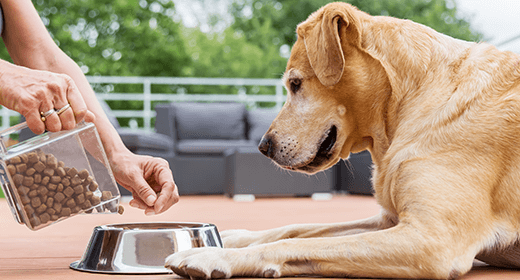
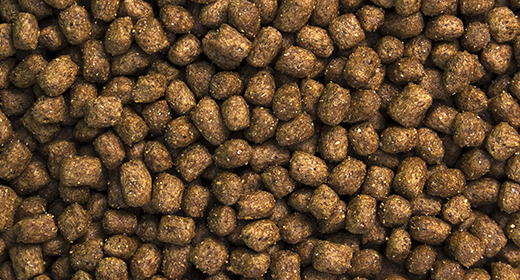
Your veterinarian might wish to put your dog on a senior diet, such as IAMS™ ProActive Health™ Senior Plus. These formulations contain nutrients specifically geared toward older-dog health.


DHA (docosahexaenoic acid) is an omega-3 fatty acid important for neural development of puppies. DHA is a major structural component of the brain, as well as the most abundant fatty acid in the brain. It plays a vital role in the development of a puppy’s central nervous system and retinal function.
To help your puppy be as smart and healthy as possible, DHA should be an essential component of your dog's diet. The DHA in IAMS™ ProActive Health™ Smart Puppy food helps encourage healthy brain development, which can make your puppy more trainable and help forge a stronger bond with you.
Common dietary DHA sources include fish (such as salmon, sardines, tuna and other seafood), eggs and organ meat. In pet foods, sources of DHA include fish, fish meal and fish oil.
Prior to weaning, puppies get DHA from their mothers. The puppy’s mother transfers DHA from her body tissues to her offspring during pregnancy and lactation.
After weaning, puppies can obtain DHA through their diet.
One IAMS study looked at beagle puppies whose mothers had been fed enhanced or typical dietary DHA from breeding on through weaning.* After weaning, puppies were fed the same diets as their mothers throughout the remainder of the study (up to 16 weeks of age). To evaluate the effect of diet on trainability, all puppies were taught to associate a symbol with a direction in a t-maze, with correct responses resulting in a food treat.
In the 30 days of testing, puppies from the enhanced-DHA group consistently outperformed the puppies from the typical-DHA group on the maze test. Results of the study indicated that puppies nourished on high DHA levels were more trainable.
*Data on file. The IAMS Company.