Enter a keyword below to search for articles and products.
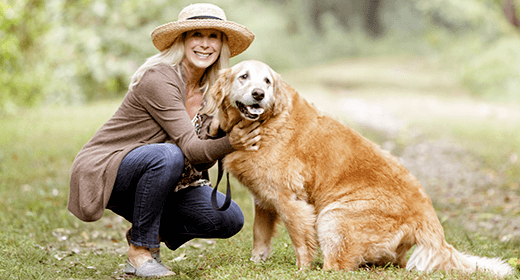
It depends on the breed of dog, but your pet's senior years generally begin at age 7. Louise Murray, DVM, director of the ASPCA's Bergh Memorial Animal Hospital in New York City and author of Vet Confidential (Ballantine, 2008), tells you what you need to know to keep your older dog spry and happy.
At this stage, Murray recommends taking your dog to the vet twice a year. 'So much can happen to an elderly dog,' she says. Your veterinarian can take blood annually to test liver and kidney functions. 'Discovering problems early is extremely important,' she says. Your vet can be on the lookout for conditions that often affect older dogs, such as anemia and arthritis.
Pay attention to what might be subtle changes in your dog's habits: Is she drinking more water or urinating larger amounts? These behaviors might indicate a liver or kidney problem. Have your dog's bowel movements shifted? This could indicate a digestive issue. Diabetes or digestive problems might cause your dog to eat more but still lose weight. Knowing the dog's patterns can help the veterinarian determine a course of treatment.
Continue to use preventive medicines.
Clean your dog's teeth daily. If she has tartar buildup, you might need to have her teeth professionally cleaned at your vet's office, which requires sedating your pet.
Your dog is probably less active, so steady, moderate exercise is best for her now. Don't turn her into a 'weekend warrior' who, after lying around on weekdays, accompanies you on a 10-mile hike on Saturdays. This is especially hard on an older dog's joints.
Your veterinarian might wish to put your dog on a senior diet, such as IAMS™ ProActive Health™ Senior Plus. These formulations contain nutrients specifically geared toward older-dog health.
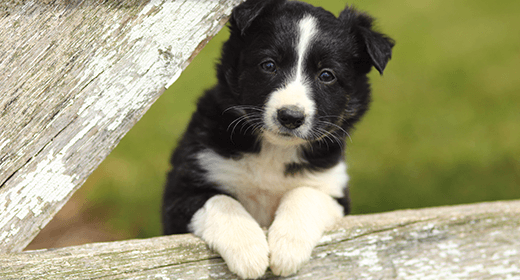

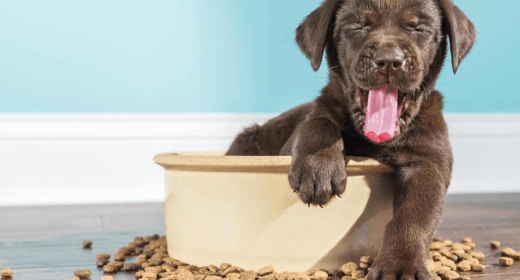
Your puppy is changing in so many ways. In fact, the most rapid growth will take place in these first months of his life. His immune system is developing. Bones are growing. Muscles are getting stronger. All of this requires a nutrient-dense diet, formulated to support a medium-breed puppy's rate of development. To make sure your puppy is getting optimal nutrition to protect and maintain health and well-being, here are some key points to keep in mind.
From the time your puppy is weaned until 4 months of age, you should feed your puppy two to three meals a day, with the daily amount based on the guidelines of the food label. After 4 months of age, he should be fed twice a day on a regular schedule. Always have fresh water available.
Research shows that puppies need up to twice as much energy as adult dogs. Dramatic growth at this stage means your puppy requires an energy-rich, nutrient-dense complete and balanced diet. Puppies also require more protein than adult dogs. High-quality animal-based protein will help your puppy create new body tissue.
Not all puppies have the same nutritional needs. Medium-breed puppies actually have slightly higher metabolism rates per pound than large-breed puppies. And your puppy will reach his mature adult weight at about 12 months, sooner than larger breeds that reach adulthood as late as 24 months. Your puppy needs protein, fat, calcium, and phosphorus to support growth and development of bones, muscles, and other tissues. So giving him a food that supports his medium size is the easiest way to help make sure he's getting the right balance of nutrients for his metabolism and growth rate.
Remember, puppies have small stomachs. Make sure his food is nutrient-dense so he'll get a complete and balanced diet even though his stomach can only handle what seems like a small volume of food.
Aside from energy and protein, there are other important nutrients and ingredients vital to your puppy's diet:
These are important building blocks of nutrition. Look for them when you choose dry or canned dog food and when you select treats.
A medium-breed puppy reaches adult weight by about 12 months. You can begin feeding an adult dog food at this time, such as IAMS™ ProActive Health™ Adult MiniChunks. Your dog might not welcome the change at first, but don't worry. You can help ease the transition by gradually introducing the adult food. Try mixing 25% of the new food with 75% of his puppy food, then gradually change the proportions over the next three days until he's eating 100% adult food.