Enter a keyword below to search for articles and products.
Taking care of your new puppy can be overwhelming, but with these tips and lots of love, you’ll be a great puppy parent in no time.
Just like a baby, a puppy's body is fragile. Avoid picking up your puppy unless absolutely necessary. If you must, be careful and use these steps:
Step 1: Place one hand under your puppy's rump, and place your other hand under his chest.
Step 2: Lift with both arms. With a small adult dog, use the puppy technique. For larger dogs, wrap both arms around his legs, draw him to your chest, and lift.
Before you bring your puppy home, be sure you have the following supplies:
Keeping your puppy safe in your yard requires good fencing. There are several options to choose from, and the one you should pick will depend on your puppy's personality, your property, and your budget. Here are some of the options you should consider:
The ideal time to bring home a new puppy is when the house is quiet. Discourage friends from stopping by and don't allow overnight guests. First, establish a daily routine and follow these steps:
Step 1: Before bringing him in the house, take him to the designated potty area in your yard and spend a few minutes there. If he goes, praise him. Be sure to take him to this spot each time he potties.
Step 2: Take him to the room with his crate. This restricted area will serve as his new 'den' for several days. Put bedding and chew toys in the crate, leave the door open, and line the area outside of the crate with newspaper in case of an accident. Let him investigate the crate and the room. If he chews or urinates on his bedding, permanently remove it from the crate.
Step 3: Observe and interact with your puppy while he's getting used to his new den. This will help forge a sense of 'pack' and establish you as the pack leader.
Don't treat a puppy as young as 6 to 12 weeks like an adult dog. Treat him the same way you would an infant, with patience, constant supervision, and a gentle touch. The way you interact with your puppy at this age is critical to his socialization. Use these tips:
Ideally, your kids should help you choose your puppy. When you bring him home, don't let them play with him constantly. Puppies need a lot of rest, just like a growing child. Limit puppy-children play sessions to 15- to 30-minute periods, two to three times a day.
Meeting Resident Pets
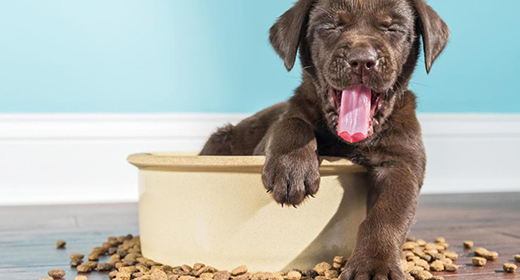
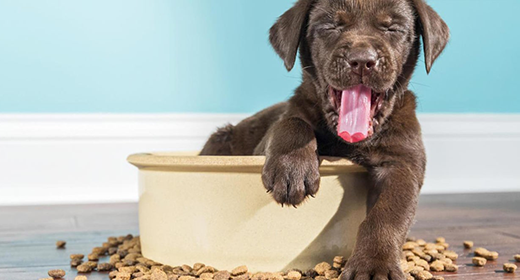
How much do you know about the food you’re buying for your puppy? When shopping for puppy food, pay attention to these three sections of a dog food label.
This section lists all the ingredients that make up the product. The ingredients are listed in descending order according to weight before cooking. In dry food, look for a source of high-quality animal-based protein: chicken or lamb, for example. Dogs thrive on animal proteins.
Manufacturers who use large amounts of vegetable proteins might be saving money by providing basic — but not optimal — nutrition. You should also avoid artificial colors and flavors, which offer no nutritional benefits.
Near the ingredient panel should be a chart of percentages called the 'guaranteed analysis.' These figures reveal the basic nutrient makeup of the dog food's formula and protein content. The minimum percentages of protein and fat and the maximum percentages of fiber and moisture (water) should be listed.
This information must be included on the label by law. A toll-free number or web address for the manufacturer may also be listed. Manufacturers who list a phone number, such as IAMS™, generally have a high-quality product and welcome consumer calls and questions. If you would like information about IAMS products, visit our website or call us toll-free at 800-525-4267.