Enter a keyword below to search for articles and products.
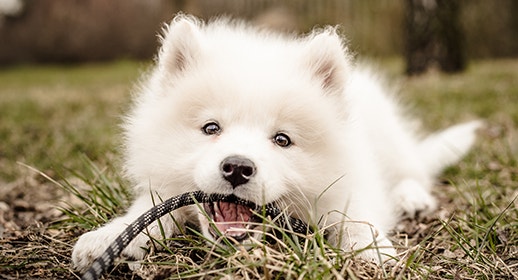
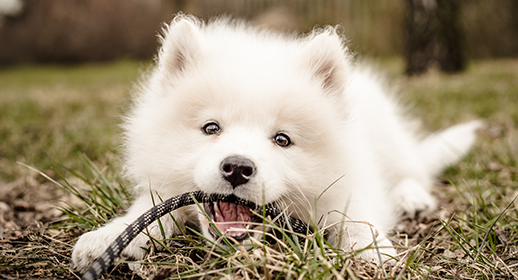
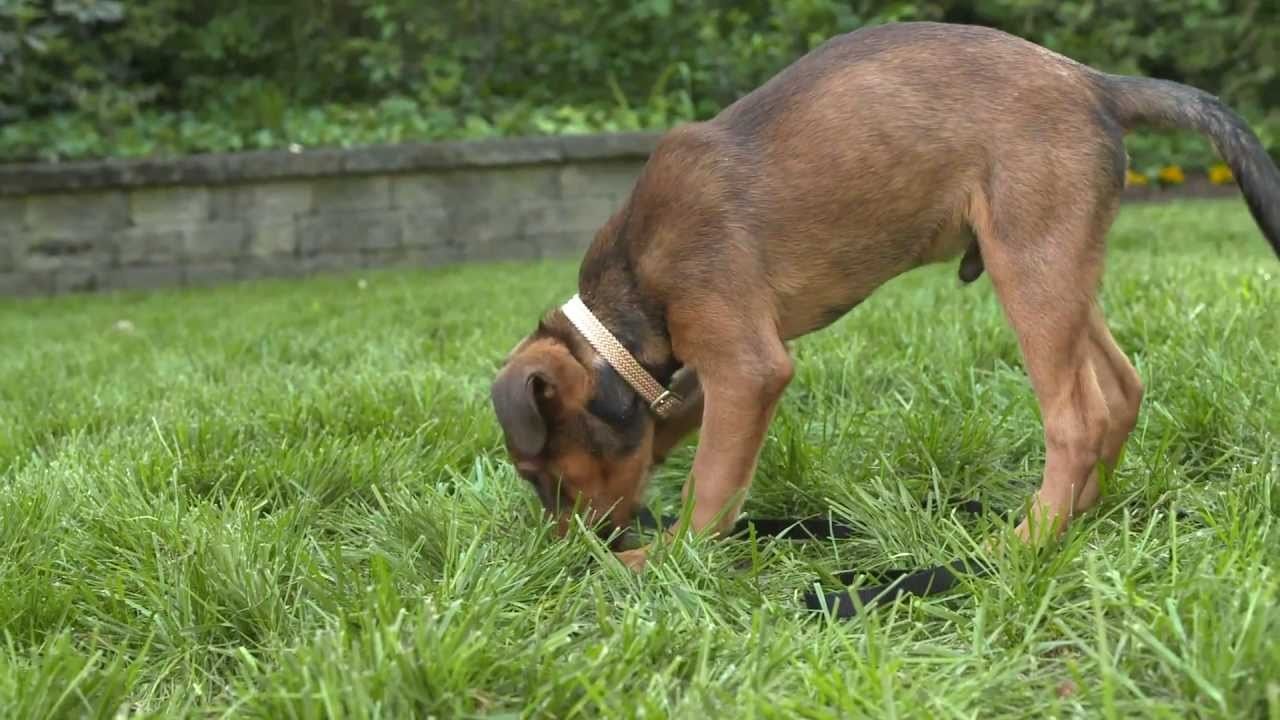
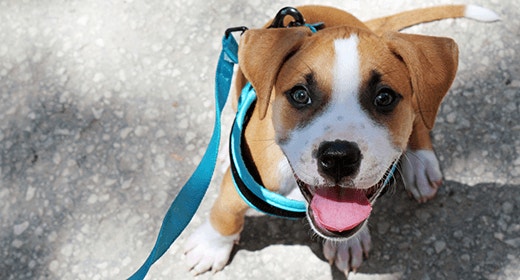
A puppy nibbling on your fingers may seem cute and harmless, but when he grows up, biting can become a hard habit to break. Join Expert Pet Trainer Kathy Santo as she explains the reasons puppies bite and what you can do to change their behavior.
Hi, I'm Kathy Santo with IAMS, and today we're going to discuss the dangers of allowing puppy biting, the importance of playing correctly, and how to stop the unwanted biting behavior.
It's normal and even cute when your puppy nibbles and lunges at your hands. Since your puppy has been exposed to only other puppies in the litter, who naturally play with biting and mouthing, it would make perfect sense why he would assume that playing with you wouldn't be different. But as puppies' teeth grow, and their bodies become stronger, what was once cute nibbling eventually turns into uncomfortable, or even dangerous, rough play and bites.
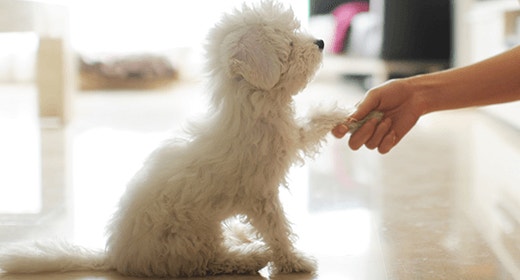
Since biting is an unacceptable type of play, it's important to teach your pup how to enjoy playing games with toys instead of your hand. Playing is a healthy, natural activity that helps build the bond between you and your puppy. This also affects your puppy's train ability-- sitting, waiting, learning tricks, not pulling on the leash, even to stop biting.
Before teaching your puppy not to bite, it's important to train your puppy to decrease bite pressure. Allow your puppy to begin mouthing and nibbling at your hand. When he bites down hard, yell 'ouch,' so he's startled and stops for a second. Continue allowing him to mouth your hand, making sure to speak up every time he bites too hard, so your puppy can learn your threshold for what is acceptable and what isn't.
Once your puppy understands your feedback about the strength of his bite, you can begin to reduce biting. The best way to teach your puppy not to bite is to redirect him to a toy or a chew bone. Simply give your dog a firm 'no,' and replace whatever he was biting with something he is allowed to chew.
If your puppy is three to six months old, there is a good chance he may be teething, so he might be trying to reduce discomfort by chewing. Try giving him an ice cube to chew on. It'll numb his gums and help alleviate the pain.
My favorite trick to get puppies to stop biting is to exaggerate, and pretend they've injured me, their friend. By pretending their nip actually hurt you, by pulling your hand away, yelling 'ouch,' and stop playing, you're replicating what other litter mates would do if another puppy were to cause them pain.
Managing and controlling puppy biting problems can be a major challenge for dog lovers. Puppy biting or nipping starts out as a bit of fun, but needs to be controlled quickly to avoid ongoing problems. Training your dog depends on a good relationship built on love and trust. It takes time to build a working partnership, and the more time and patience you have with your puppy from day one, the more obedient he'll be. Dogs want to please.
I'm Kathy Santo with IAMS, and I hope you found this as helpful as you welcome your new addition to your family.
Nutrients are divided into subcategories: protein, carbohydrates, fats, vitamins and minerals, and water.
Common dog-food protein sources include meat, poultry, fish, and some plant ingredients such as corn gluten and soybean meal.
Protein is best known for supplying amino acids, or protein subunits, to build hair, skin, nails, muscles, tendons, ligaments, and cartilage. It also plays a main role in hormone production.
Dogs, best fed as carnivores, require essential amino acids, that are not all found in the correct balance in single plant-protein sources such as soybean meal.
Common carbohydrate sources are plants and grains. Carbohydrates, also categorized as starches (sugars) and fibers, provide energy and bulk, respectively.
Starches are made up of various types of sugar, such as glucose or fructose. Through digestion, dogs can easily convert sugar into usable energy.
Fiber may or may not be fermented or broken down into short-chain fatty acids by bacteria in a dog's intestines. Highly fermentable fiber sources, such as vegetable gums, provide high amounts of short-chain fatty acids. Moderately fermentable fibers, such as beet pulp, provide short-chain fatty acids and bulk for moving waste. Slightly fermentable fibers, such as cellulose, provide mainly bulk for moving waste through the digestive tract and only a few short-chain fatty acids.
Fats are found in meats, poultry, fish, and plant oils, such as flax and vegetable oils. Fat, for all of its bad press, fulfills many vital body functions. Animal-cell membranes are made of fat. Fat also helps maintain body temperature, control inflammation, and more. Fat is the primary form of stored energy in the body, providing twice as much energy as carbohydrates or proteins.
Fats also provide the important fat subunits, omega-6 and omega-3 fatty acids. Omega-6 fatty acids are essential for skin and coat maintenance and proper membrane structure. Omega-3 fatty acids have been shown to be important in blood clotting and decreasing inflammation.
Vitamins are responsible for promoting bone growth, blood clotting, energy production, and oxidant protection.
Vitamins A, D, E, and K require fat for absorption into the body, while vitamins such as the B-complex vitamins and vitamin C need water to be absorbed into the body.
Minerals provide skeletal support and aid in nerve transmission and muscle contractions.