Enter a keyword below to search for articles and products.
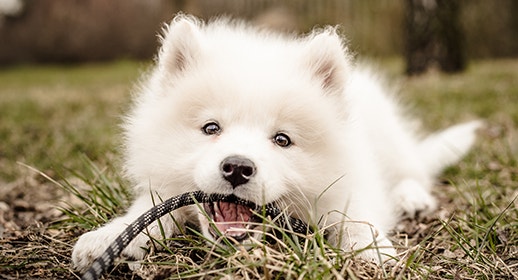
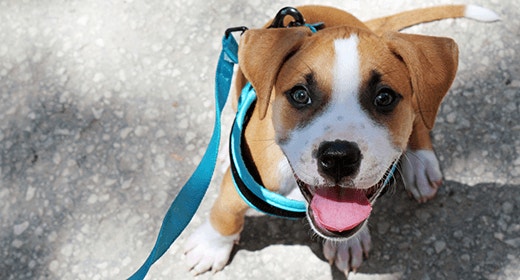
A puppy nibbling on your fingers may seem cute and harmless, but when he grows up, biting can become a hard habit to break. Join Expert Pet Trainer Kathy Santo as she explains the reasons puppies bite and what you can do to change their behavior.
Hi, I'm Kathy Santo with IAMS, and today we're going to discuss the dangers of allowing puppy biting, the importance of playing correctly, and how to stop the unwanted biting behavior.
It's normal and even cute when your puppy nibbles and lunges at your hands. Since your puppy has been exposed to only other puppies in the litter, who naturally play with biting and mouthing, it would make perfect sense why he would assume that playing with you wouldn't be different. But as puppies' teeth grow, and their bodies become stronger, what was once cute nibbling eventually turns into uncomfortable, or even dangerous, rough play and bites.
Since biting is an unacceptable type of play, it's important to teach your pup how to enjoy playing games with toys instead of your hand. Playing is a healthy, natural activity that helps build the bond between you and your puppy. This also affects your puppy's train ability-- sitting, waiting, learning tricks, not pulling on the leash, even to stop biting.
Before teaching your puppy not to bite, it's important to train your puppy to decrease bite pressure. Allow your puppy to begin mouthing and nibbling at your hand. When he bites down hard, yell 'ouch,' so he's startled and stops for a second. Continue allowing him to mouth your hand, making sure to speak up every time he bites too hard, so your puppy can learn your threshold for what is acceptable and what isn't.
Once your puppy understands your feedback about the strength of his bite, you can begin to reduce biting. The best way to teach your puppy not to bite is to redirect him to a toy or a chew bone. Simply give your dog a firm 'no,' and replace whatever he was biting with something he is allowed to chew.
If your puppy is three to six months old, there is a good chance he may be teething, so he might be trying to reduce discomfort by chewing. Try giving him an ice cube to chew on. It'll numb his gums and help alleviate the pain.
My favorite trick to get puppies to stop biting is to exaggerate, and pretend they've injured me, their friend. By pretending their nip actually hurt you, by pulling your hand away, yelling 'ouch,' and stop playing, you're replicating what other litter mates would do if another puppy were to cause them pain.
Managing and controlling puppy biting problems can be a major challenge for dog lovers. Puppy biting or nipping starts out as a bit of fun, but needs to be controlled quickly to avoid ongoing problems. Training your dog depends on a good relationship built on love and trust. It takes time to build a working partnership, and the more time and patience you have with your puppy from day one, the more obedient he'll be. Dogs want to please.
I'm Kathy Santo with IAMS, and I hope you found this as helpful as you welcome your new addition to your family.
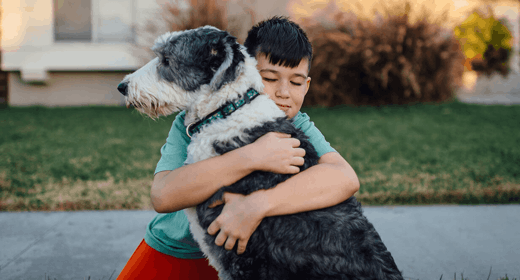
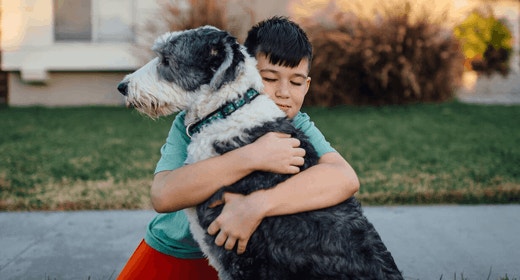
Healthy joints and proper weight are especially important for dogs that grow to be more than 50 pounds. But not all large- and giant-breed adult dogs have the same nutritional needs. Is your dog getting proper exercise? Is she about to have puppies? Special conditions can dramatically affect your dog’s nutritional demands. Giving her a food specially formulated for her large size, life stage and activity level is the easiest way to make sure she’s getting the nutrients she needs.
To address the special needs of your large- or giant-breed dog, look for these features:
These components are key to good nutrition. Look for them in treats, wet dog food, or dry dog food, such as IAMS™ ProActive Health™ Adult Large Breed.
Joint health is a big concern for owners of large- and giant-breed dogs. A large- or giant-breed formula that contains high-quality protein can help nourish healthy joints. Vitamins and minerals help promote the production of cartilage. Also, keeping your dog at a healthy weight will help minimize joint stress.
Dogs with lower activity levels and dogs that have been neutered or spayed are all prone to weight gain. Controlling your dog’s weight is an important step toward protecting against the health effects of excess weight, such as diabetes or joint health problems. If you use a weight-management food, look for these characteristics:
Pregnant dogs have substantial nutrition requirements. Starting in the seventh week of her pregnancy, a mother dog will need to increase her energy intake up to 50% by the time she gives birth and increase it even more when she starts nursing her puppies. Because she may lose her appetite at times, it's important that she eats a nutrient-dense food. A complete, balanced puppy formula can give her the extra nutrients she needs. But avoid puppy food created for large and giant breeds; these formulas contain specially adjusted levels of energy and minerals that may not be sufficient for a pregnant or nursing dog.
Dogs who grow to be more than 50 pounds are considered mature or senior at age 5 or 6, which is earlier than small-breed dogs. So, it’s critical to make a proactive transition to a specially formulated mature diet, such as IAMS™ ProActive Health™ Mature Adult Large Breed, to help keep your dog healthy and active as she ages.