Enter a keyword below to search for articles and products.
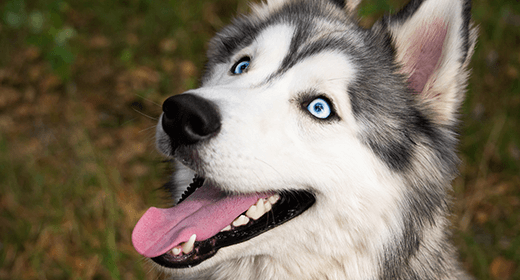
Teeth are important players in the digestive process.
As teeth grind up food, debris accumulates on the tooth surface and attracts bacteria. This accumulation of debris and bacteria is called plaque. Plaque is easily removed from teeth by brushing—that is, when teeth are brushed frequently.
If the plaque isn't brushed away, mineral deposits cause it to harden on the teeth. This is called tartar. Dark yellow or brown accumulations on the teeth are indicators of tartar, which is difficult to remove.
If left untreated, plaque can lead to damage of the gums (gingivitis) or the jawbones and teeth (periodontitis).
Keeping a pet’s teeth and gums healthy involves regular brushing and professional cleaning. Unfortunately, many owners have problems brushing their dogs’ teeth on a regular basis.
Special diets also can help reduce tartar buildup between cleanings. Most dental diets are formulated with a tough kibble that is texturized to scrape off some plaque.
Our dental technology uses a patent-pending manufacturing process that enables dry-food kibbles to control tartar buildup. This process does not affect the nutrient content of the food or the size of the kibbles.
IAMS™ researchers have looked at the effects of feeding dogs dry diets with our dental technology. In each of these studies, two groups of animals were fed our formula, either with (control) or without our dental technology.
All animals had their teeth thoroughly cleaned.
After 28 days of eating one diet, animals’ teeth were examined for tartar.
All animals then received another thorough cleaning.
Then diets were switched for another feeding period.
In dogs, the diets featuring our dental technology reduced tartar accumulation as much as 50% compared to dogs fed the control diet.'
Diet plays a central role in your dog’s overall health and well-being, and it stands to reason that you want to provide your dog the best possible source of nutrition in the dog food you choose. But some nutrients, like L-Carnitine, may be unfamiliar or completely foreign. Learn more about this vitamin-like compound and how it can help your dog maintain a healthy weight.
Carnitine, or L-carnitine, is a vitamin-like compound made in the body from amino acids. It's found naturally only in animal-based protein sources. It has been used to help with fat metabolism in other species, and recent scientific studies show that it can help reduce weight in overweight dogs.
This water-soluble substance attaches to fatty acids, transporting them into cellular mitochondria, the part of the cell that converts fat into a usable form of energy. There, they are broken down through oxidation and converted to energy for all tissues, including the heart, liver, and skeletal muscles. Through this process, carnitine helps reduce the storage of body fat and the amount of fat in the bloodstream.
In a study conducted by The IAMS™ Company, overweight dogs were fed similar diets. One group was given a diet supplemented with L-carnitine while another group received a diet without supplemental L-carnitine.
After seven weeks, the group that received the diet without supplemental L-carnitine lost 1.8% body weight compared to 6.4% body weight loss from the group that was fed the L-carnitine supplemented diet. Likewise, body fat was reduced in each group by 2.4% and 4.6%, respectively.1 The study found that L-carnitine promotes loss of body weight and body fat in overweight dogs.
IAMS™ ProActive Health™ Adult Healthy Weight is formulated with L-carnitine that helps turn fat into energy, providing a path to help keep him fit for life.
1 Sunvold GD, Tetrick MA, Davenport GM, Bouchard GF. 'Carnitine supplementation promotes weight loss and decreased adiposity in the canine.' Proceedings of the XXIII World Small Animal Veterinary Association. p. 746. October, 1998.