Enter a keyword below to search for articles and products.

Fiber is important to your dog's health, providing bulk to move food through his intestinal tract. Some types of fiber can be fermented (broken down by bacteria) in the intestinal tract. This process creates short-chain fatty acids (SCFA), which are a key energy source for the cells lining the intestinal tract.
Most people are aware of fiber and its role in their diet. The beneficial effects of higher fiber levels in humans influence the way many people think about their own food—and their pets’ food. As a result, some pet-food manufacturers began to think like human nutritionists and make high-fiber diets for dogs. But high-fiber diets and the shorter digestive tracts of dogs don't always mix well. High fiber levels in dogs can cause digestive problems and interfere with proper nutrient absorption. Unlike humans, dogs are carnivorous, meaning their nutritional needs are better satisfied with meat rather than with plant materials.
For more than 60 years, pet nutritionists at IAMS™ have been studying diets to better meet the special nutritional needs of dogs. IAMS research shows that the optimal crude-fiber level for healthy dogs ranges from 1.4 to 3.5%. At these levels, nutrient digestibility is maximized.
An important characteristic of fiber is its fermentability, or how well it can be broken down by the bacteria that normally reside in the dog's intestine. This breakdown of dietary fiber produces SCFAs that provide energy to the cells lining the intestines. Different types of fiber vary in fermentability.
Fiber sources used in pet foods include cellulose, which is poorly fermentable; beet pulp, which is moderately fermentable; and gums and pectin, which can be highly fermentable.
Research has shown that moderate levels of moderately fermentable fiber, such as beet pulp, provide the benefits of energy for the intestinal lining and bulk without the negative effects of excessive stool or gas.
High levels of poorly fermentable fiber are used in some weight-reduction pet foods to dilute the calories in a serving. IAMS research found that this is not a good practice because high fiber levels can decrease the digestibility of other nutrients in the food and, therefore, can reduce the nutritional quality of the diet. You might also see more poop piles in the yard because of the indigestible fiber.
The key thing to remember about dietary fiber is that your dog's needs are not the same as yours. A moderate level of moderately fermentable fiber, such as beet pulp, provides proven nutritional benefits for dogs. Diets containing high levels of poorly fermentable fiber to dilute calorie content do not provide these nutritional benefits.
All IAMS products, including IAMS™ ProActive Health™ Adult MiniChunks, are formulated with optimal levels of moderately fermentable fiber to promote a healthy intestinal tract and enhance the well-being of your dog.
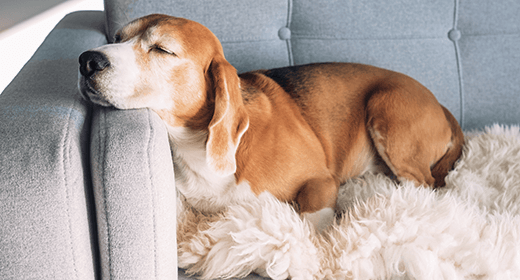
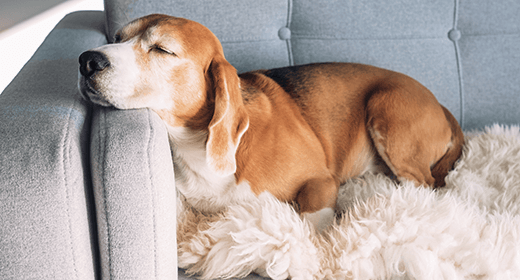
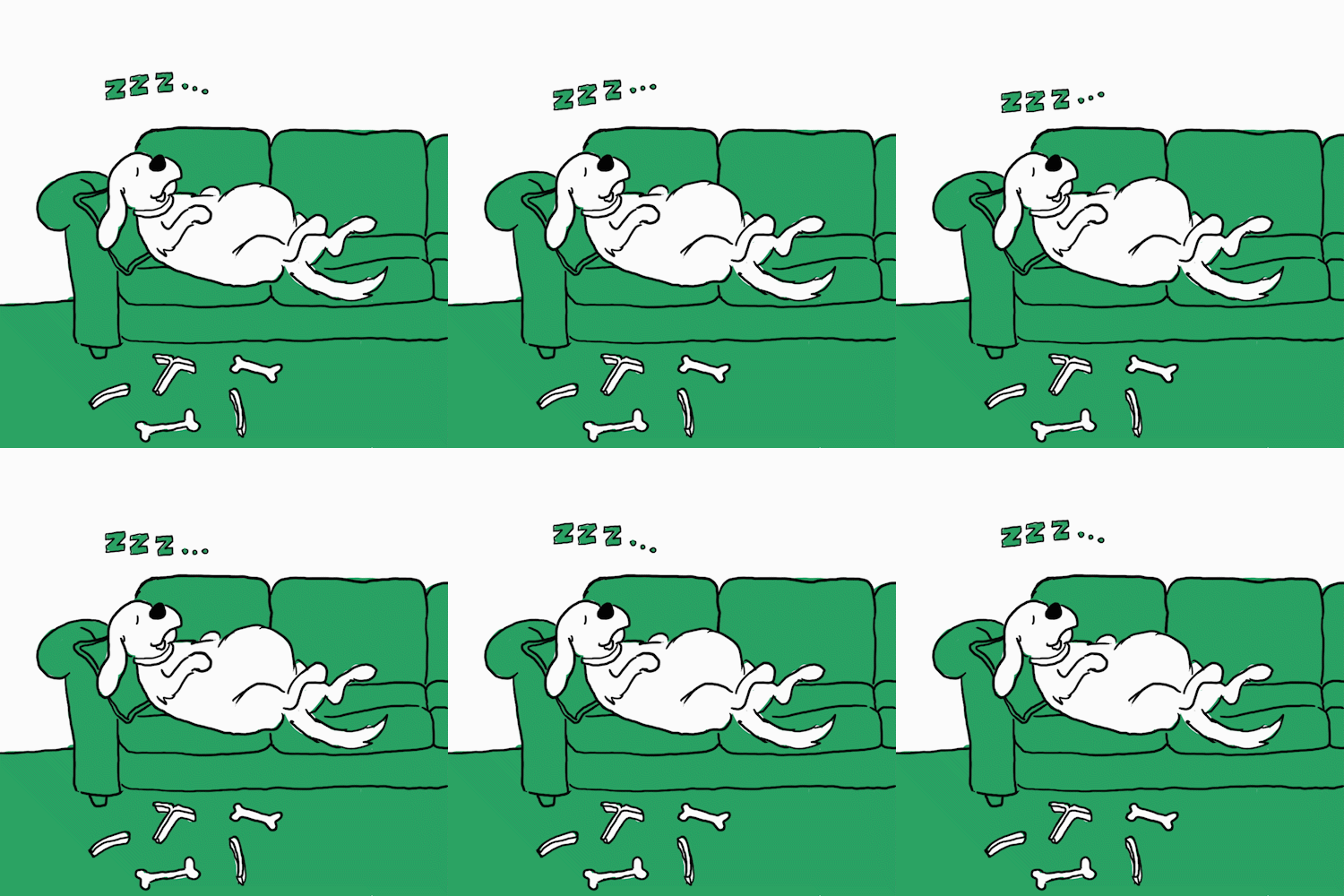
We asked dog owners* how many hours a day they think their adult dog sleeps. The answers averaged around 9.7 hours. Truth is, dogs normally sleep around 12-14 hours a day. (Cats sleep 12-16 hours, which is why it’s called a “catnap,” we presume.) “Normal” can depend on lots of things. Bigger breeds definitely need more z’s. Older dogs tire quicker and sleep more. Growing puppies need up to 20 hours a day. Being cute must really be tiresome.
But why do they sleep so much? We’re not going to let sleeping dogs lie; we’re getting to the answers.
Dogs spend less time in deep REM sleep, so they’re able to wake quickly and be ready to go — whether it’s responding to danger or the opening of a bag of chips. It also means they need to doze more often to make up for that lack of truly restful sleep.
In general, carnivores need more rest. “In their wild dog and wolf days, it was a hunt for food, bringing down large prey, then feasting,” says
Opens a new windowDr. Jo Gale, BVetMed CertLAS MRCVS, Senior Manager, Global Science Advocacy at Waltham Petcare Science Institute. “They’d spend a long time digesting and may not eat for a few days. There’s a tendency to conserve energy.” Just think about how you feel after eating a huge steak. Incoming meat coma. Goodbye, belt. Hello, sofa.
Yawn. When owners are out of the house, dogs often sleep simply because they’re bored. They’re not into books and haven’t quite figured out how to turn on the TV, so why not catch a few extra winks? Plus, they want to be super refreshed when you come back home in the evening.
Some dogs like to sleep longer and some dogs are just lazier than others. According to
Opens a new windowDr. Tammie King, Applied Behavior Technical Leader at Waltham Petcare Science Institute, “You might see more sleeping after intense exercise or they’ve gone to a pet sitter or boarding center due to high stimulation.” There’s usually no cause for concern unless they seem lethargic and lose interest in playing or eating, or begin listening to a lot of emo music.
Their wild days long gone, dogs have adapted their sleep schedules to match humans’ sleep schedules. Sort of. They still might get you up in the night or early morning before your alarm goes off. It’s best to exercise them in the morning and evening so they’re more tired — and have used the facilities — right before everyone else goes to sleep.
Now, the only question remaining is, what do you think your dog dreams about?
*Surveyed U.S. dog owners, age 18+
Sample Size: n=201
Fielded May 8-10, 2020