Enter a keyword below to search for articles and products.
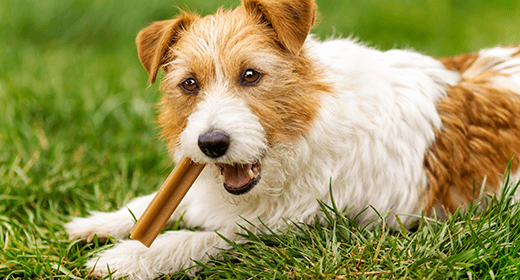
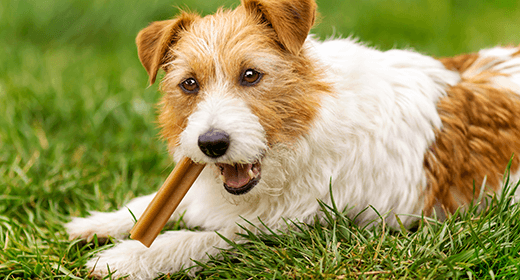
Dogs love to chew on things. In fact, chewing is a natural canine behavior. Providing appropriate chew treats and chew toys can be rewarding for the dog and might prevent or eliminate possible destructive chewing behavior. Chewable treats/toys are designed to provide that important natural chewing activity that dogs love. If the chew treat/toy has other benefits, such as oral care, that's even better.
Make enjoying chew treats and chew toys a safe and healthy activity with these tips:
Tip #1: There is some risk of digestive-tract obstruction with any type of chew treat or chew toy. Safety is always a concern when a dog chews. Many natural objects, such as sticks, rocks, and bones, can get stuck in a dog’s throat or intestine. As a dog owner, you are ultimately responsible to monitor your dog closely to make certain that the chew treat is chewed well.
Tip #2: Chew treats and chew toys should be sized appropriately for your dog. In other words, your dog should not be given a chew treat/toy that could be swallowed whole. Packages should indicate the appropriate size dog for the chew treat/toy. If in doubt, ask your retailer or contact the manufacturer.
Tip #3: Observe your dog playing with the chew toy or eating the chew treat. With the chew treat, your dog should gnaw on it with the side teeth and swallow pieces of the edible chew. Because dogs don't have the same crushing molars that humans have, they will “slice” off pieces with the side teeth. Many dogs will hold the treat in their paws or simply move it from side to side in their mouth as they chew off small pieces.
Tip #4: If your dog has a history of ingesting foreign objects such as rocks, sticks, or toys, you might not want to give him or her chew treats/toys at all. Try edible biscuits, instead.
Tip #5: Watch for choking, excessive drooling, vomiting, poor appetite, lethargy, and abnormal bowel movements. If you notice any of these signs, seek veterinary care sooner rather than later!
Tip #6: When in doubt about what is appropriate for your dog, contact your veterinarian. He or she can offer professional advice.
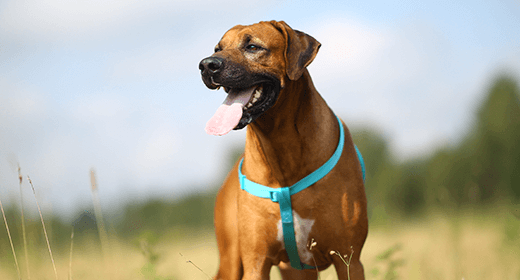
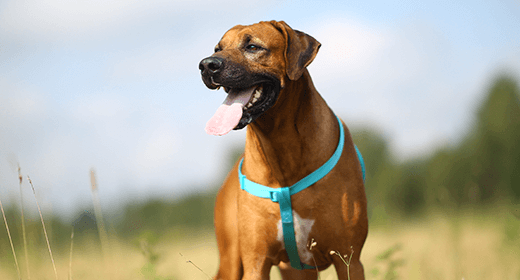
Physiological condition, rather than chronological age, determines whether a dog is mature. Aging begins when the body's systems start to slow down, when cells deteriorate faster than the body can repair them. Though large breeds tend to age faster than smaller breeds, the mature years generally begin at around 7 years (5 years for large breeds). If you feed your dog a diet designed to address the nutritional needs of his age, you can best maintain his overall health and well-being.
As your dog ages, it is important to detect and address with his veterinarian the telltale signs of aging or disease: a dull, dry coat and flaky skin, joint stiffness, energy loss, weight gain, increased water intake, digestive problems, and frequent constipation. These signs, among others, may be caused either by normal wear-and-tear or perhaps by the onset of disease. In any case, detecting and addressing them early may give your dog a greater chance to stay active and healthy.
When and how your dog responds to the aging process has a lot to do with genetics and environment, but nutrition plays an equally important role. The quality of food and its ability to maintain and nourish your dog's cells can help promote a long, healthy life.
As your dog ages and his systems become less efficient, he relies increasingly on the food you provide to make up for his body's shortfalls. According to Michael Hayek, PhD, an IAMS research nutritionist who specializes in geriatric nutrition, 'Aging dogs need the same nutrients as younger dogs; however, the quantity or the way the nutrients are provided may change.'