Enter a keyword below to search for articles and products.
Bloat is a life-threatening condition that acts rapidly and can lead to death within hours if not recognized and treated immediately. Unfortunately, the cause of bloat remains unknown at this time.
The scientific term for bloat is gastric dilatation-volvulus or GDV. Bloat is characterized by rapid and abnormal expansion of the stomach with gas (dilatation). This can be followed by rotation of the stomach (volvulus). This rotation closes both the entry to and exit from the stomach. The blood vessels also are closed down, and blood flow is restricted.
What follows is an increase in pressure inside the stomach and compression of the surrounding organs. Eventually, shock will occur as a result of the restricted blood flow. Here are a few key facts about bloat:
Bloat is a true medical emergency, and early identification and treatment is critical to survival.
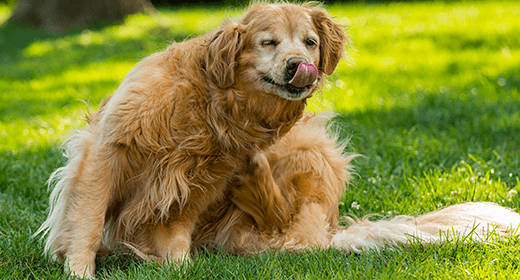
In the early stages of bloat, the dog will be very uncomfortable. You might see him pacing and whining or trying unsuccessfully to get into a comfortable position. He might seem anxious, might lick or keep staring at his stomach, and might attempt to vomit, without success.
Other indications of bloat can include weakness, swelling of the abdomen, and even signs of shock. Signs of shock are increased heart rate and abnormally rapid breathing.
If you notice these signs, call your veterinarian immediately!
These suggestions could help you prevent bloat in your dog. However, they are based on suspected risk factors and are not guaranteed to prevent the onset of bloat.
Another way you might help prevent bloat is to feed a high-quality, highly digestible food with normal fiber levels.
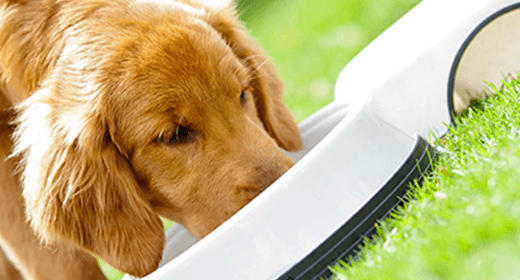
Feeding management offers the best method available for reducing risk until the exact cause of bloat can be identified. Although not 100% effective, these measures can reduce the number of dogs that face this serious, life-threatening condition.

Dogs are creatures of habit and can resist change when trying to switch their diets. It's important to completely stop feeding from the table. This is best accomplished by removing the pet from the kitchen during mealtimes. Be persistent when offering dry food. The pet may refuse to eat for several meals before deciding to give the food a try. Heating food in the microwave increases the aroma of the food and will often entice a pet to eat. Another alternative is to try mixing some wet food with the dry food, or topping it with a sauce or gravy specifically formulated for pets. Be assured that the pet eats to meet an energy need and will eventually begin to eat unless there is an underlying medical issue.
Keep in mind that the pet's stool should be small and firm. Most cases of constipation are temporary and due to dietary interruptions. Loose stools also are often temporary and can be due to dietary interruptions, as well as many other things, including an abrupt change in diet, overeating, parasites, medication, eating table scraps, viral or bacterial infections, and stress. If constipation or diarrhea persists, however, it is important to consult a veterinarian.
No. Dead grass is caused by a heavy concentration of urine—usually when a dog urinates in the same spot over and over. Try to train the dog to go to a designated, inconspicuous area of the yard. If this is impossible, try to hose the area as quickly as possible to dilute the urine. Sometimes the discoloration is due to acidic ground pH, which can usually be remedied with a lime treatment.