Enter a keyword below to search for articles and products.
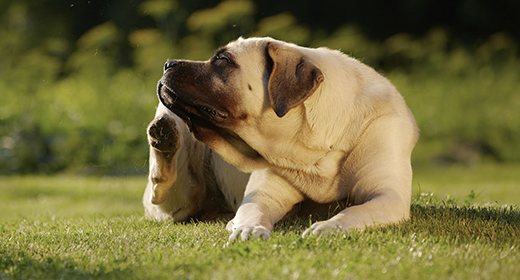
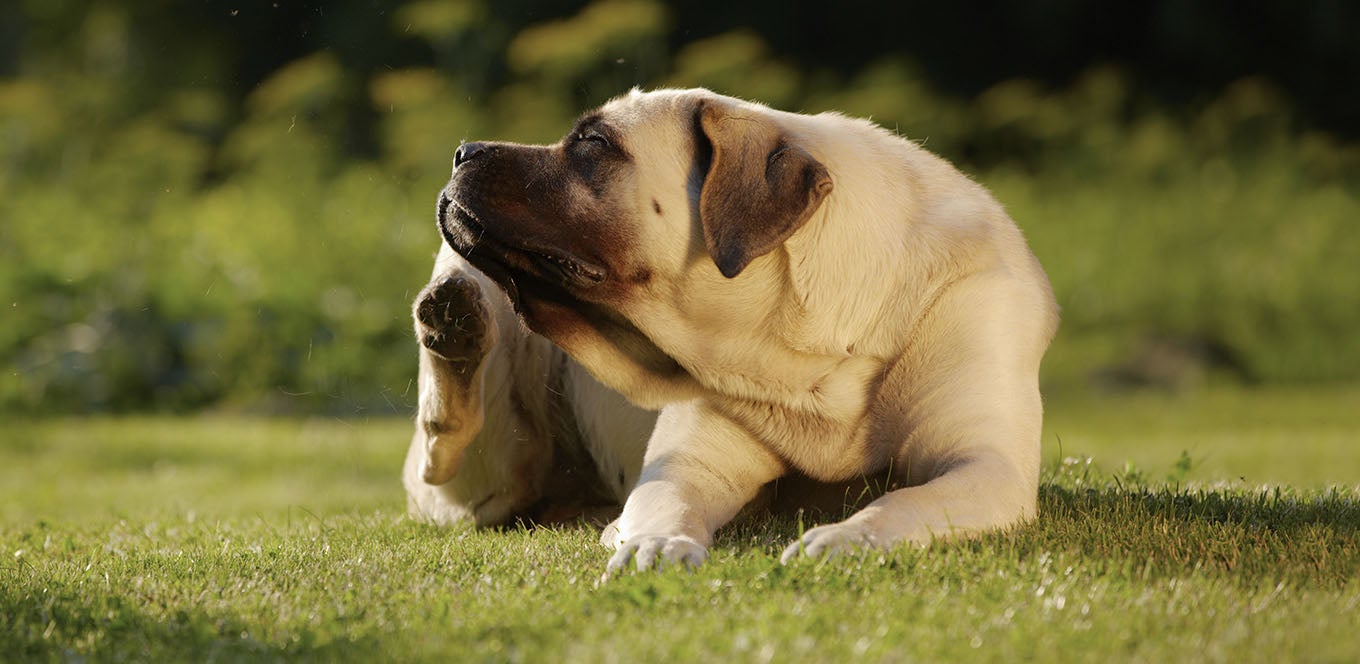
The human animal isn’t the only one affected by allergies. Like you, your adult dog can suffer from allergic reactions to any number of things—in the air, on his skin, and in his food. Allergies must be diagnosed and treated by your veterinarian, but first, you must know what to look for.
The most common signs and symptoms of allergies include:
The most common allergy symptoms in dogs are the skin reactions, regardless of the cause. And they can they can crop up at any age. Just because he didn’t have allergies as a puppy, doesn’t mean your dog won’t have them now that he’s an adult. Inhalant, food, contact, and flea allergies are four of the most common types of allergies that might affect your dog.
Inhalant allergies in dogs are caused by the same common allergens that affect you—dust, grass, trees, mold, pollen, ragweed, etc. They can be seasonal or persistent and, while some breeds (especially short-snouted breeds) might experience the same sniffly, sneezy symptoms you might suffer, skin reactions are most common. Inhalant allergies often can be treated with the same medications you take, but please don’t treat your dog’s allergies without veterinary supervision.
Food allergies can be the most difficult to diagnose and manage. Treatment involves a hit-and-miss approach involving a restricted diet and the gradual reintroduction of possible allergens to determine the culprit. Skin reactions to food allergies are common in dogs, but frequent vomiting or diarrhea also can be a sign. Keep in mind that if there is a change in your dog’s diet (or he just ate something he wasn’t supposed to), he might experience an episode of vomiting or diarrhea, but this doesn’t necessarily mean your dog has an allergy. Watch and see if it becomes a persistent problem before scheduling a costly trip to the vet.
Contact and flea allergies generally cause skin irritation and are treated topically. You might be surprised to learn that most dogs are only vaguely bothered by fleas. But those that are allergic can suffer—and so can their owners. Dogs with contact and flea allergies often chew their skin raw, leading to hair loss, odor, and infection, so fastidious flea control is a must.
Allergies can vary from dog to dog, so it is important that you work with your vet to make sure your dog gets the best possible treatment. You’ll both be happier for it.

Ethoxyquin is a synthetic antioxidant (artificially manufactured from other elements) that is approved for different uses.
Ethoxyquin is approved and regulated by the Food and Drug Administration (FDA) and the Association of American Feed Control Officials (AAFCO) for use as a preservative in animal feeds.
Dog-food manufacturers have been using ethoxyquin to prevent rancidity and to maintain the nutritional quality of their products for more than 35 years.
Ethoxyquin remains stable at the high temperatures required to process dog foods during extrusion. It is important in protecting fats and oils from degrading, losing available calories, and becoming rancid.
Despite the fact that all studies conducted to date prove that ethoxyquin is safe for use in all animal foods when used at approved levels, rumors continue to circulate to the contrary.
Individuals who seek to discredit the use of ethoxyquin will often cite certain studies that showed toxic effects in animals fed ethoxyquin. What these individuals fail to point out is that the animals in these studies were given excessive amounts of ethoxyquin—20 to more than 50 times the maximum limit—before negative effects were exhibited.