Enter a keyword below to search for articles and products.


The human animal isn’t the only one affected by allergies. Like you, your adult dog can suffer from allergic reactions to any number of things—in the air, on his skin, and in his food. Allergies must be diagnosed and treated by your veterinarian, but first, you must know what to look for.
The most common signs and symptoms of allergies include:
The most common allergy symptoms in dogs are the skin reactions, regardless of the cause. And they can they can crop up at any age. Just because he didn’t have allergies as a puppy, doesn’t mean your dog won’t have them now that he’s an adult. Inhalant, food, contact, and flea allergies are four of the most common types of allergies that might affect your dog.
Inhalant allergies in dogs are caused by the same common allergens that affect you—dust, grass, trees, mold, pollen, ragweed, etc. They can be seasonal or persistent and, while some breeds (especially short-snouted breeds) might experience the same sniffly, sneezy symptoms you might suffer, skin reactions are most common. Inhalant allergies often can be treated with the same medications you take, but please don’t treat your dog’s allergies without veterinary supervision.
Food allergies can be the most difficult to diagnose and manage. Treatment involves a hit-and-miss approach involving a restricted diet and the gradual reintroduction of possible allergens to determine the culprit. Skin reactions to food allergies are common in dogs, but frequent vomiting or diarrhea also can be a sign. Keep in mind that if there is a change in your dog’s diet (or he just ate something he wasn’t supposed to), he might experience an episode of vomiting or diarrhea, but this doesn’t necessarily mean your dog has an allergy. Watch and see if it becomes a persistent problem before scheduling a costly trip to the vet.
Contact and flea allergies generally cause skin irritation and are treated topically. You might be surprised to learn that most dogs are only vaguely bothered by fleas. But those that are allergic can suffer—and so can their owners. Dogs with contact and flea allergies often chew their skin raw, leading to hair loss, odor, and infection, so fastidious flea control is a must.
Allergies can vary from dog to dog, so it is important that you work with your vet to make sure your dog gets the best possible treatment. You’ll both be happier for it.

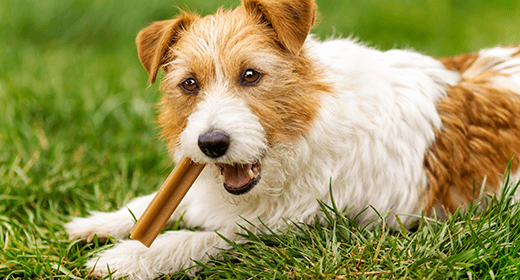
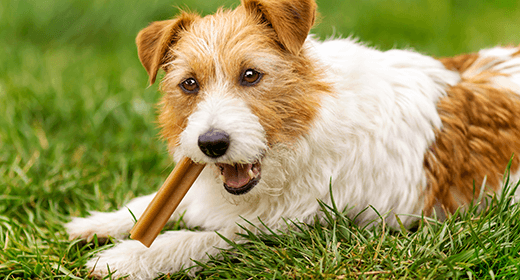
Dogs love to chew on things. In fact, chewing is a natural canine behavior. Providing appropriate chew treats and chew toys can be rewarding for the dog and might prevent or eliminate possible destructive chewing behavior. Chewable treats/toys are designed to provide that important natural chewing activity that dogs love. If the chew treat/toy has other benefits, such as oral care, that's even better.
Make enjoying chew treats and chew toys a safe and healthy activity with these tips:
Tip #1: There is some risk of digestive-tract obstruction with any type of chew treat or chew toy. Safety is always a concern when a dog chews. Many natural objects, such as sticks, rocks, and bones, can get stuck in a dog’s throat or intestine. As a dog owner, you are ultimately responsible to monitor your dog closely to make certain that the chew treat is chewed well.
Tip #2: Chew treats and chew toys should be sized appropriately for your dog. In other words, your dog should not be given a chew treat/toy that could be swallowed whole. Packages should indicate the appropriate size dog for the chew treat/toy. If in doubt, ask your retailer or contact the manufacturer.
Tip #3: Observe your dog playing with the chew toy or eating the chew treat. With the chew treat, your dog should gnaw on it with the side teeth and swallow pieces of the edible chew. Because dogs don't have the same crushing molars that humans have, they will “slice” off pieces with the side teeth. Many dogs will hold the treat in their paws or simply move it from side to side in their mouth as they chew off small pieces.
Tip #4: If your dog has a history of ingesting foreign objects such as rocks, sticks, or toys, you might not want to give him or her chew treats/toys at all. Try edible biscuits, instead.
Tip #5: Watch for choking, excessive drooling, vomiting, poor appetite, lethargy, and abnormal bowel movements. If you notice any of these signs, seek veterinary care sooner rather than later!
Tip #6: When in doubt about what is appropriate for your dog, contact your veterinarian. He or she can offer professional advice.