Enter a keyword below to search for articles and products.
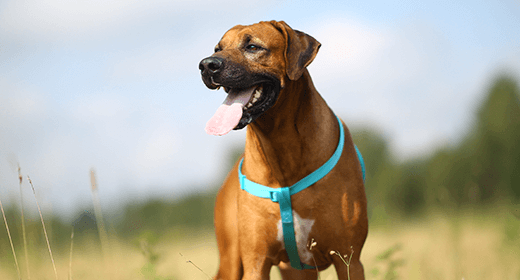
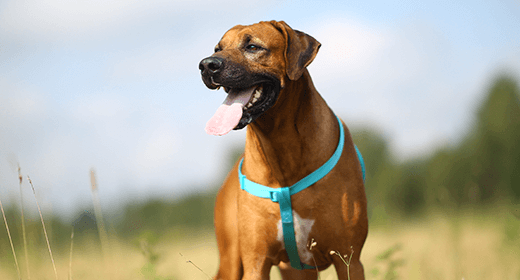
Physiological condition, rather than chronological age, determines whether a dog is mature. Aging begins when the body's systems start to slow down, when cells deteriorate faster than the body can repair them. Though large breeds tend to age faster than smaller breeds, the mature years generally begin at around 7 years (5 years for large breeds). If you feed your dog a diet designed to address the nutritional needs of his age, you can best maintain his overall health and well-being.
As your dog ages, it is important to detect and address with his veterinarian the telltale signs of aging or disease: a dull, dry coat and flaky skin, joint stiffness, energy loss, weight gain, increased water intake, digestive problems, and frequent constipation. These signs, among others, may be caused either by normal wear-and-tear or perhaps by the onset of disease. In any case, detecting and addressing them early may give your dog a greater chance to stay active and healthy.
When and how your dog responds to the aging process has a lot to do with genetics and environment, but nutrition plays an equally important role. The quality of food and its ability to maintain and nourish your dog's cells can help promote a long, healthy life.
As your dog ages and his systems become less efficient, he relies increasingly on the food you provide to make up for his body's shortfalls. According to Michael Hayek, PhD, an IAMS research nutritionist who specializes in geriatric nutrition, 'Aging dogs need the same nutrients as younger dogs; however, the quantity or the way the nutrients are provided may change.'


Active dogs thrive on diets high in fat. To preserve a high-fat dry kibble diet, however, is a challenge. The IAMS research team met that challenge with an effective preservative system used in all our dry dog food products, such as IAMS™ ProActive Health™ Adult MiniChunks.
The preservative system features a special blend of mixed tocopherols. Tocopherols are antioxidants extracted from vegetable oils. There are four major types of tocopherols. Vitamin E, also known as alpha-tocopherol, is commonly used in dog foods, though a specific mixture of the different tocopherols protects against rancidity.
Our preservative system slows the rate of oxidation and allows for an extended shelf life.
Wet foods, such as IAMS™ ProActive Health™ with Chicken and Whole Grain Rice Pate, do not require preservatives because they are preserved by packaging. When the ingredients are mixed and ready for cooking, the mixture is packed into cans, trays or pouches and cooked in a retort. Similar in principle to a pressure cooker, the retort sterilizes and preserves the product.
The cans, trays or pouches are then cooled under conditions that assure product sterility and container integrity.
Thorough shelf-life testing is conducted on all our products. In general, shelf lives for various types of products are:
24 months for wet foods
16 months for dry foods
12 months for biscuits
By using a preservative system in our dry dog food and preservation through packaging in our wet dog food, IAMS makes sure the food your dog eats is well-balanced and nutritionally beneficial.