Enter a keyword below to search for articles and products.
Chicken, a complete protein source, is a key ingredient in IAMS™ dog foods, including IAMS™ ProActive Health™ Adult MiniChunks. As an animal-based protein, chicken can help maintain your dog’s muscle structure and naturally provides all the amino acids essential to carnivorous animals such as dogs. Plus, chicken adds great flavor.
Learn more about chicken’s role in your dog’s complete, well-balanced diet.
Common chicken ingredients in dog food include chicken, chicken meal, chicken byproduct meal and chicken fat:
Another common chicken-based ingredient is natural chicken flavor, also called chicken digest. Natural chicken flavor adds palatability and nutrients. It is high-quality protein and fat material that has been reduced to amino and fatty acids to improve flavor through an enzymatic process.
Internal organs are rich sources of protein, fats and minerals, such as iron, that are essential to dog health and add to the palatability of the pet food. Including some ground bone provides a good source of minerals, such as calcium. Some pet-food manufacturers formulate their products without such ingredients to appeal to dog owners, rather than to help dogs achieve optimal health. However, the nutritional needs of dogs are not the same as the nutritional needs of humans.
Dried chicken-protein sources in our chicken-based dog foods undergo an extra refining process. Refined chicken meal and chicken byproduct meal are excellent and complete sources of protein because they naturally contain each of the amino acids that are essential to dogs.
Like any companion or roommate, dogs — for all their love and cuteness—have habits we just don’t understand. One question dog owners often ask their pets: “Why? Why would you eat poop?”
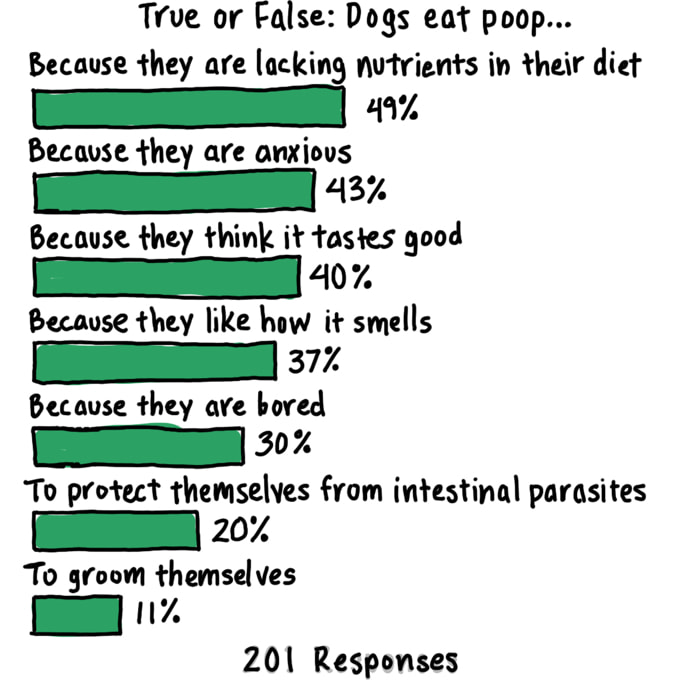
When we polled* dog owners recently, most thought it was because a dog is lacking nutrients (49%), they’re anxious (43%) or they just think it tastes good (40%).
Dogs are significantly more likely to eat the droppings of another species (e.g., horses, rabbits) than their own.
We held our noses and got to the bottom of the issue with the help of some experts.
While those in our poll thought this was the number-one reason for the behavior, it has actually never been proven. “It’s a myth dogs eat poop because they’re seeking nutrients they aren’t getting. There’s no evidence to back this,” says
Opens a new windowDr. Jo Gale, BVetMed CertLAS MRCVS, Senior Manager, Global Science Advocacy at Waltham Petcare Science Institute.
According to
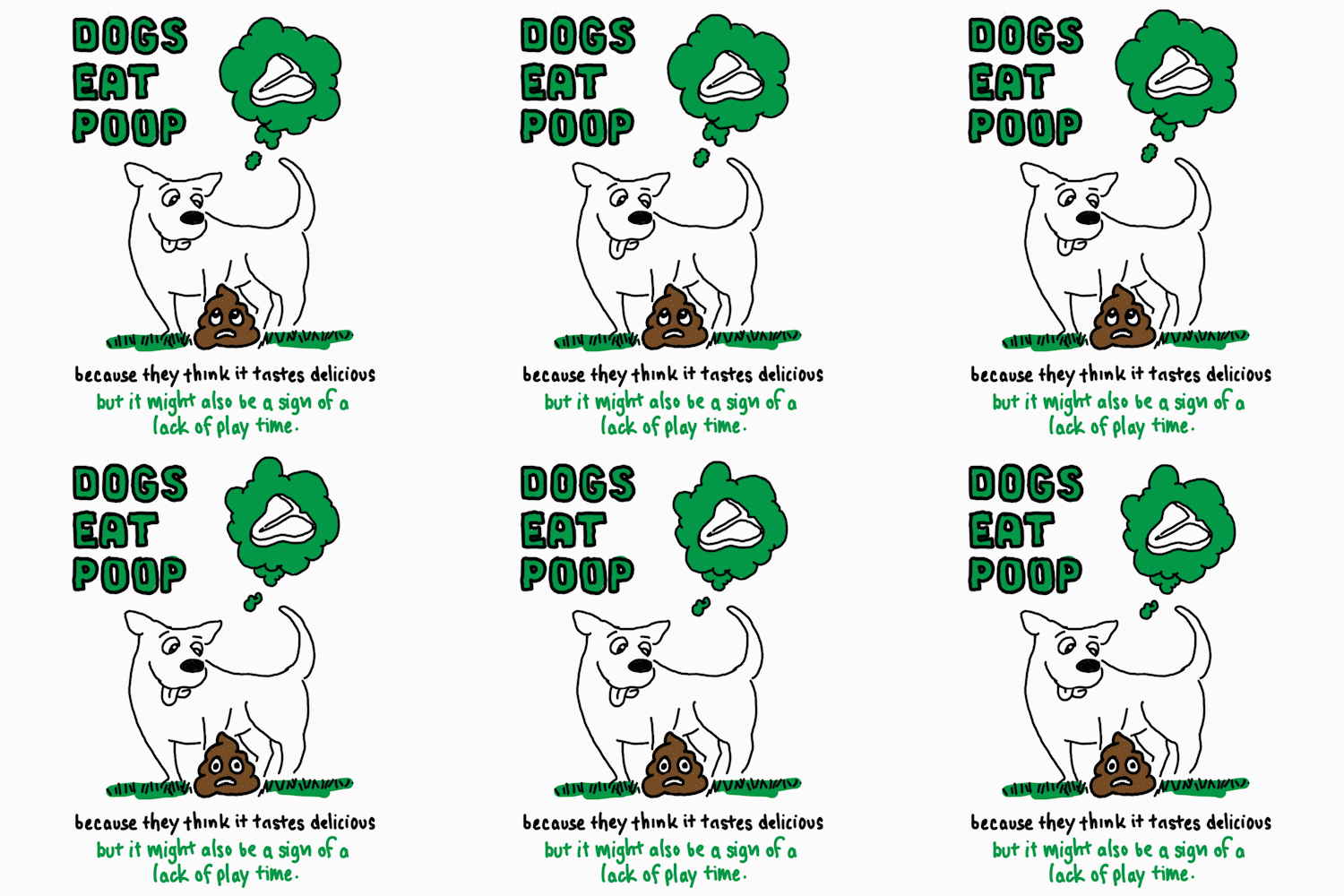
Opens a new windowDr. Tammie King, Applied Behavior Technical Leader at Waltham Petcare Science Institute, “It can occur where there is lack of environmental enrichment. You see this often in dogs who are kenneled and have a lack of opportunity to exhibit normal canine behavior.” So if you need another excuse to get out and play with your pooch, this is a good one.
Believe it or not, this is the main reason dogs eat poop. Dr. Jo Gale explains: “Dogs are scavengers by nature and use any opportunity to eat what they can, when they can. They consider it a ‘tasty snack.’” Dr. Tammie King adds that “[Dogs eating poop] is a learned behavior. They’ve done it, enjoyed it, and that behavior is repeated.”
We love our dogs so much that we’re willing to trust our best friends on this. Maybe we should come out with a line of doggie breath mints though. Hmm.
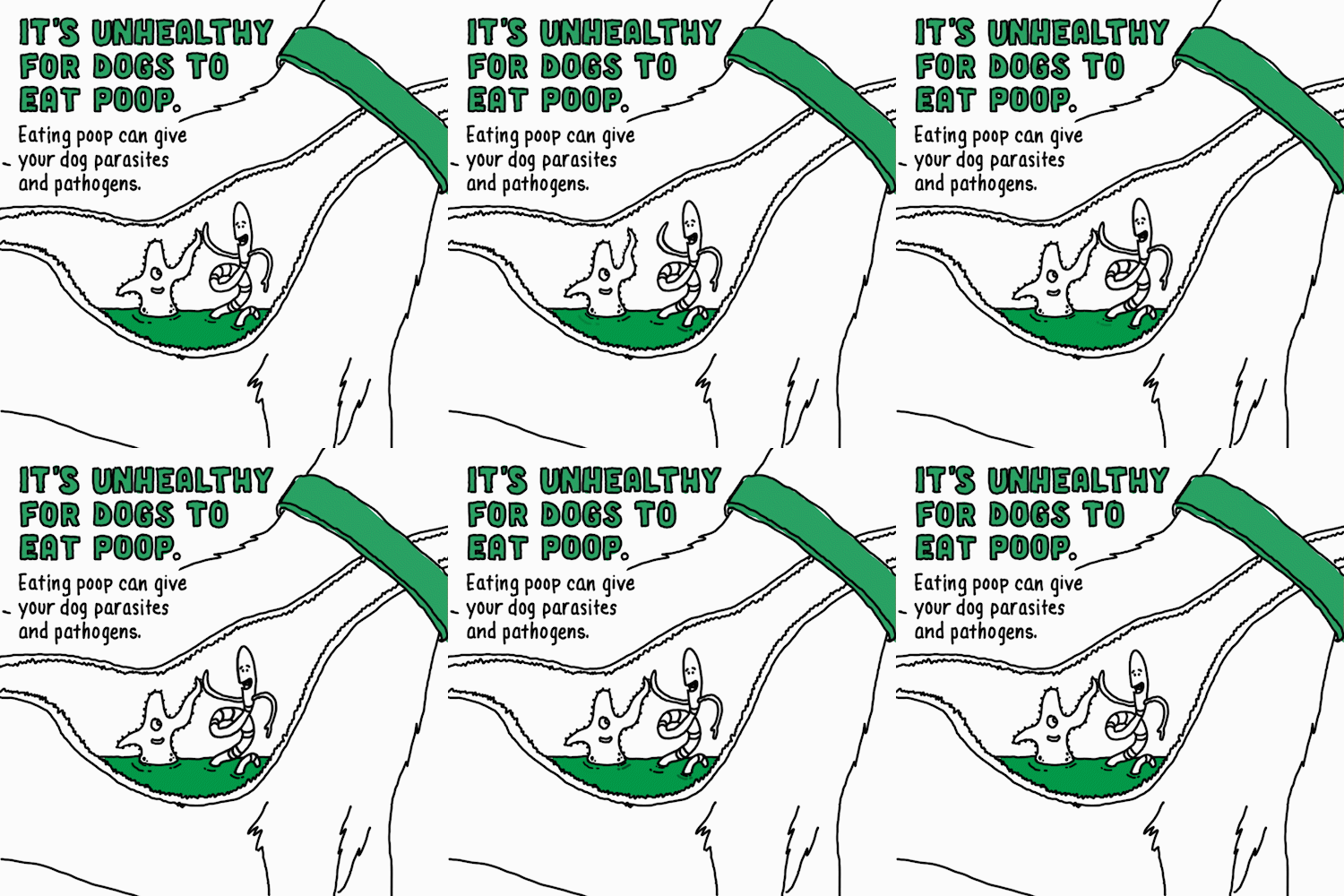
“Ingesting feces from any animal increases potential for ingesting parasites and pathogens,” cautions Opens a new windowDr. James Serpell BSc, Phd Professor of Humane Ethics & Animal Welfare at University of Pennsylvania School of Veterinary Medicine. He went on to say, “[It’s] not something humans should ignore, but it's not worth getting too excited about it.”
All the experts we consulted said that if your dog occasionally eats poop, it’s nothing to be overly alarmed by. Just keep an eye on the frequency and their overall health. And as always, make sure they’re getting a nutritious diet and plenty of exercise and attention. If you have any concerns contact your vet.
Despite dogs liking the taste of poop, we’re going to stick with the healthy range of more traditional flavors offered in all IAMS dog foods.
*Surveyed U.S. dog owners, age 18+
Sample Size: n=201
Fielded May 8 to May 10, 2020