Enter a keyword below to search for articles and products.
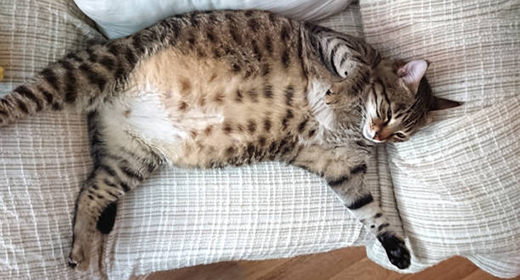
Pregnancy and nursing are responsible for many changes in a cat's lifestyle, as well as in her body. You should pay special attention to your cat’s changing nutritional needs throughout the entire reproduction process.
If you are planning to breed your female cat, it is important to assess her body condition well in advance. Because of the physical demands of pregnancy and nursing, starting off with less-than-ideal health can cause problems.
An underweight cat often can't consume enough food to support her and the developing kittens. Overweight cats may experience abnormal or difficult labor because of large fetuses.
A complete and balanced diet that supports a healthy weight and body condition before breeding helps the female cat maintain her health, and that of her offspring, throughout pregnancy and nursing.
The gestation period for cats is nine weeks. Pregnant cats, like humans, gain weight gradually throughout pregnancy. The energy requirements of pregnant cats are reflected by their weight gain. The energy needs of a pregnant cat should gradually increase so that, by the end of pregnancy, the cat is consuming 25% to 50% more than her normal amount of calories.
Pregnant cats lose weight after giving birth. However, their nutritional needs increase dramatically. Energy needs can be two to three times normal, depending on litter size, in order to produce the milk supply that will support the offspring. Water intake is also important for milk volume.
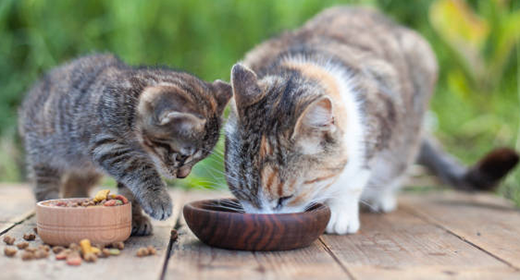
To ensure a nursing cat is getting enough nutrition, give her a nutrient-dense diet, such as kitten food. Without increasing the amount of food at each meal, increase the number of meals in the day. Free-choice feed her, offering unlimited access to dry food.
By 5 weeks, most kittens show an interest in their mother's food. Gradually, the kittens will begin eating solid food and nursing less. At the same time, the nursing cat will usually start eating less. Most kittens are completely weaned by eight weeks after birth. By this time, the mother's energy requirement is back to normal and she should be eating her usual pre-pregnancy diet.
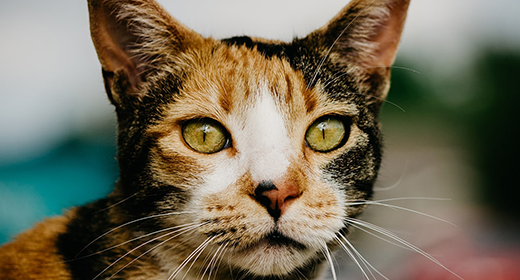
Taurine is an important component to all IAMS™ cat foods, such as IAMS ProActive Health™ Adult Original with Chicken.
Taurine is an essential amino acid that is critical for normal heart muscle function, vision, and reproduction in kittens. It is also needed to form the bile salts that aid in digestion. Unlike other amino acids, taurine is found as a free amino acid in body tissues such as the heart and eyes, and is not incorporated into proteins.
Most mammals manufacture taurine from other amino acids. However, cats cannot manufacture a sufficient amount and, therefore, must acquire enough additional taurine through diet to meet their needs. In pet food, taurine is naturally found in animal-based protein ingredients and can also be added separately.
Taurine is supplemented in IAMS dry and canned cat foods to ensure that we provide optimal levels of this essential nutrient. IAMS wet cat foods are supplemented with taurine because they must contain as much as twice the amount of taurine found in dry food for cats to maintain adequate blood taurine levels. The canning process may affect the complex taurine balance in your cat. Our wet cat foods are supplemented with taurine to meet these higher needs.
IAMS dry cat foods also include taurine as an ingredient to supplement the primary source of this amino acid, which is animal-based protein from sources such as chicken, egg, lamb, and fish. However, these sources can vary in their taurine content, and adding more taurine is a sound approach to ensure optimal taurine levels.
Taurine is essential to the proper development and function of cells in the retina of the eye. If insufficient taurine is present, the retinal cells don’t function properly and may die, eventually causing impaired vision and even blindness. This process is referred to as feline central retinal degeneration.
Taurine is also necessary for normal function of the heart muscle cells. Taurine deficiency leads to weakening of the heart muscle, which, in turn, can lead to heart failure. This condition is known as dilated cardiomyopathy and can be fatal.
Decreased Reproductive Performance and Growth
Taurine is necessary for optimal reproductive and growth performance. Both the queen and kittens must maintain adequate taurine levels during pregnancy, lactation, and growth to ensure proper structural development.
IAMS cat foods are formulated with high-quality, animal-based proteins as their primary ingredient. In addition, they are supplemented with extra taurine to ensure balanced levels of essential amino acids.
Case L, et al. Canine and Feline Nutrition. 3rd ed. Maryland Heights, MO: Mosby Elsevier, 2011.