Enter a keyword below to search for articles and products.
Is your feline leaving puddles of urine in your bathtub or on your tile floors? Making lots (and lots) of trips to the litter box? Or crying out in pain when they pee?
Sounds like
tinkling trouble.
Your furry friend might have feline lower urinary tract disease (FLUTD), which is just scientific jargon for a collection of painful conditions that can wreak havoc on your kitty’s bladder and/or urethra.
Some of the most common FLUTD diseases include urinary tract infections, urinary stones caused by a buildup of minerals, obstructions within the urethra or an inflamed bladder.
Keep your
eyes peeled for
peeing problems ...
The American Veterinary Medical Association says to watch for these major signs:
Get your cat back
on the right tract.
First things first, if your feline seems to be in a lot of pain or isn’t able to pee at all, get to the vet — stat!
Your cat might have a urethral obstruction, a life-threatening condition that your veterinarian must treat quickly!
Seriously, don’t dillydally.
Take this old adage to heart:
“An ounce of prevention is worth a pound of cure.”
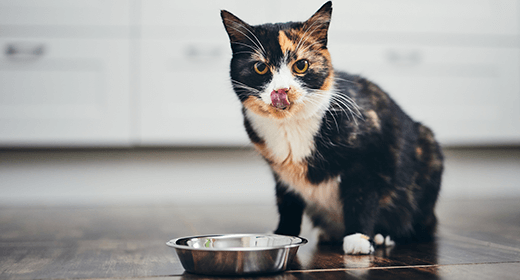
IAMS nutritionists were looking for a way to control hairball formation while maintaining optimal feline health and well-being. They evaluated risk factors for hairball formation in cats fed diets that varied in fiber source and content.
Researchers found that feeding diets that contained a blend of beet pulp and cellulose was more effective at moving hair through the digestive tract, compared with the same diets containing beet pulp as the only fiber source.
IAMS hairball formulas provide high-quality nutrition and taste, like our other adult formulas, with the added benefit of reducing the risk of hairballs.