Enter a keyword below to search for articles and products.
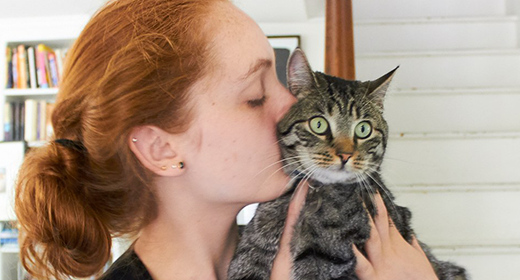
Is your feline leaving puddles of urine in your bathtub or on your tile floors? Making lots (and lots) of trips to the litter box? Or crying out in pain when they pee?
Sounds like
tinkling trouble.
Your furry friend might have feline lower urinary tract disease (FLUTD), which is just scientific jargon for a collection of painful conditions that can wreak havoc on your kitty’s bladder and/or urethra.
Some of the most common FLUTD diseases include urinary tract infections, urinary stones caused by a buildup of minerals, obstructions within the urethra or an inflamed bladder.
Keep your
eyes peeled for
peeing problems ...
The American Veterinary Medical Association says to watch for these major signs:
Get your cat back
on the right tract.
First things first, if your feline seems to be in a lot of pain or isn’t able to pee at all, get to the vet — stat!
Your cat might have a urethral obstruction, a life-threatening condition that your veterinarian must treat quickly!
Seriously, don’t dillydally.
Take this old adage to heart:
“An ounce of prevention is worth a pound of cure.”
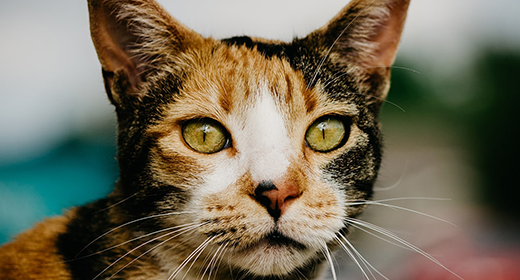
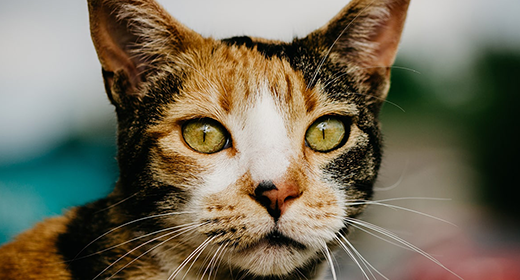
Taurine is an important component to all IAMS™ cat foods, such as IAMS ProActive Health™ Adult Original with Chicken.
Taurine is an essential amino acid that is critical for normal heart muscle function, vision, and reproduction in kittens. It is also needed to form the bile salts that aid in digestion. Unlike other amino acids, taurine is found as a free amino acid in body tissues such as the heart and eyes, and is not incorporated into proteins.
Most mammals manufacture taurine from other amino acids. However, cats cannot manufacture a sufficient amount and, therefore, must acquire enough additional taurine through diet to meet their needs. In pet food, taurine is naturally found in animal-based protein ingredients and can also be added separately.
Taurine is supplemented in IAMS dry and canned cat foods to ensure that we provide optimal levels of this essential nutrient. IAMS wet cat foods are supplemented with taurine because they must contain as much as twice the amount of taurine found in dry food for cats to maintain adequate blood taurine levels. The canning process may affect the complex taurine balance in your cat. Our wet cat foods are supplemented with taurine to meet these higher needs.
IAMS dry cat foods also include taurine as an ingredient to supplement the primary source of this amino acid, which is animal-based protein from sources such as chicken, egg, lamb, and fish. However, these sources can vary in their taurine content, and adding more taurine is a sound approach to ensure optimal taurine levels.
Taurine is essential to the proper development and function of cells in the retina of the eye. If insufficient taurine is present, the retinal cells don’t function properly and may die, eventually causing impaired vision and even blindness. This process is referred to as feline central retinal degeneration.
Taurine is also necessary for normal function of the heart muscle cells. Taurine deficiency leads to weakening of the heart muscle, which, in turn, can lead to heart failure. This condition is known as dilated cardiomyopathy and can be fatal.
Decreased Reproductive Performance and Growth
Taurine is necessary for optimal reproductive and growth performance. Both the queen and kittens must maintain adequate taurine levels during pregnancy, lactation, and growth to ensure proper structural development.
IAMS cat foods are formulated with high-quality, animal-based proteins as their primary ingredient. In addition, they are supplemented with extra taurine to ensure balanced levels of essential amino acids.
Case L, et al. Canine and Feline Nutrition. 3rd ed. Maryland Heights, MO: Mosby Elsevier, 2011.