Enter a keyword below to search for articles and products.
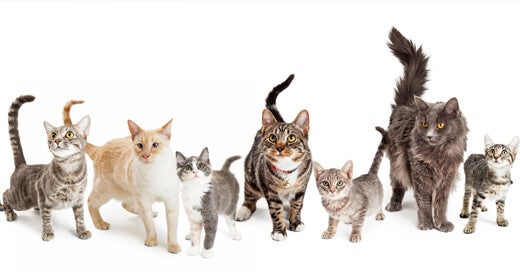
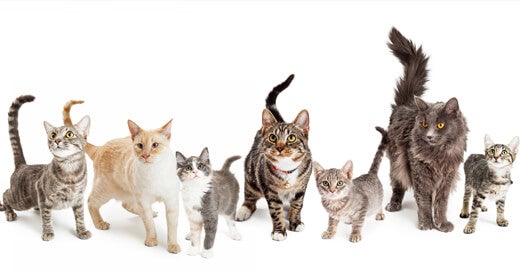
Your adult cat is a perfect specimen of mobility, speed, acuity, and grace. She is in her prime. She shines in her gleaming coat and her eyes are bright.
Jumping, twisting, and landing, her skeleton bears strain our own bodies could never endure. Her muscles are highly flexible. Her movements are lightning fast and her senses highly tuned.
Between ages 1 and 8, your cat will experience the equivalent of a human's journey from teenager to late middle age. As caretaker, you are responsible for good adult cat health and lifestyle in these years and beyond.
It can be difficult to keep such an adventurous creature indoors. But to do so is proven to extend a cat's life, because it limits exposure to predators, cars, fleas, and other cats that may have diseases such as feline leukemia or feline immunodeficiency virus (FIV). Keep your cat duly entertained indoors by providing toys, structures to climb on, spots near windows to watch the action outdoors, or–if she responds to them–TV and special videos.
One potential side effect of being a pampered, indoor cat is obesity. If your cat starts to gain weight, limit or change her diet and encourage more exercise. Make time for play with your cat each day.
An adult cat should visit the vet annually. Dental and gum disease, diabetes, hyperthyroidism, and other medical problems can present themselves in adulthood to middle age. Early detection is essential to successful treatment and extended life.
As your cat nears 8 years old, be sure to watch for signs of other age-related illnesses such as weight loss, decreased appetite, neglect of grooming, increased thirst and urination, and retreating from the household.
Both you and your cat will enjoy these peak years. They will be filled with acrobatic antics and lithe poses you can't help photographing. If you take the appropriate precautions, you can extend the health and fun for many years.
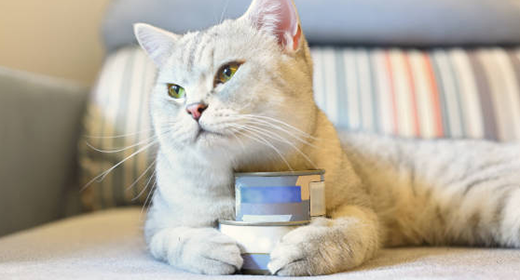
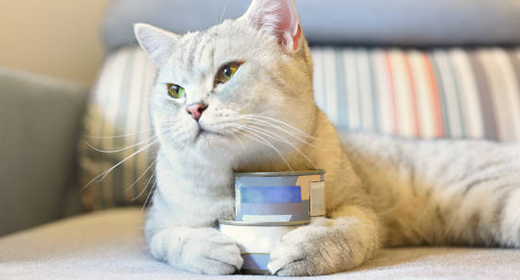
Before you assume that by-products in kitten food are a bad thing, here are some facts. In common usage, a by-product is something that is just that—a side product from the making of another product. By-products are not by definition poor quality. For instance, gingerbread cookies wouldn’t be the same without molasses, which is a by-product of sugar manufacture.
In relation to IAMS™ kitten and cat foods, by-products are generally parts of the animals that are not the muscle meat preferred by most consumers. The term refers only to the anatomic parts included, not to the nutritional quality of the parts.
While many may not be used to eating these animal parts themselves, it is important to realize that many of the items included in by-products (e.g., organ meats) may be higher in essential nutrients—amino acids, minerals, and vitamins—as well as more palatable to pets than the skeletal muscle meat.
In addition to nutritional benefits, inclusion of these ingredients in pet foods reduces waste and likely has environmental benefits as the livestock industry does not have to produce additional animals just to satisfy the needs for muscle meats to feed pets as well as people. Feeding these nutrient-rich, tasty parts to pets may prevent them from being wasted.
Much of the consumer confusion and discomfort surrounding by-products most likely stems from the marketing strategies of some pet food brands and perhaps from the ingredient name “by-product” itself.
It is important to keep in mind that most ingredients in pet foods can vary greatly in quality. In addition, quality cannot be assessed purely on the basis of the ingredient list. All by-products are not the same quality. Neither is all muscle meat. There are very high-quality by-products as well as poor-quality chicken and chicken meal.
Purchasing food only from reputable manufacturers who are very selective about their suppliers, have full-time, qualified nutritionists, and perform analytical testing to ensure that every ingredient, as well as the finished product, meets their exact nutrient specifications, will help avoid problems due to poor-quality ingredients.