Enter a keyword below to search for articles and products.


How can you help your kitten live a long and healthy life? Although you can’t predict the health of your cat with certainty, you can increase the probability of both her general health and a long life through proper care that begins as soon as you bring her home. Your veterinarian can advise further on these five key considerations for taking care of your kitten.
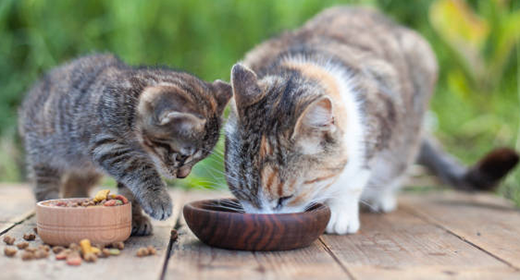
Feed your kitten high-quality food designed to meet nutritional needs during specific stages of her life. Your kitten’s nutritional requirements will depend on her life stage and lifestyle. No matter the life stage, cats are carnivores and require nutrients from animal protein and fat for optimal health.
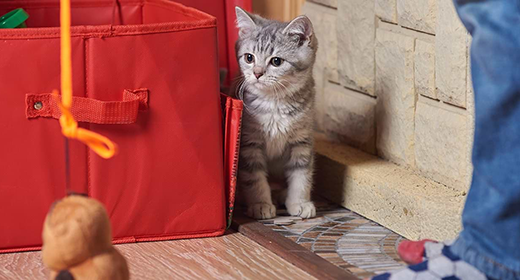
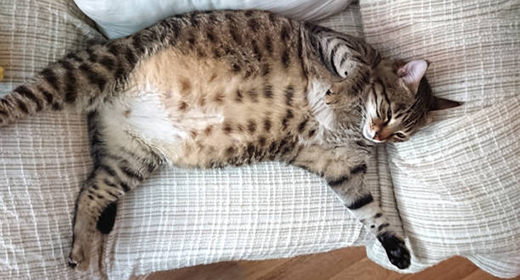
Prevent obesity with prudent portion control and frequent play activities. Exercise relieves stress, reduces aggression and keeps cats alert. Just 15 to 30 minutes of play a day can help keep your cat in shape and strengthen the bond between the two of you. In addition, getting your kitten used to playtime early on will help you get used to playing with your cat routinely.
Keep your kitten inside to help reduce the risk of illness or injury from accidents, fights and disease. As your kitten gets older, you can help avoid the stress of harassment from other animals by keeping your kitten inside. You should make your home safe by protecting your cat from environmental dangers, such as household cleaners and secondhand smoke. Cats frequently groom themselves with their tongues, and over time, even small amounts of harmful chemicals can have adverse effects.
Groom your kitten early and often to get her used to brushing. When brushing, check for bumps or abnormalities, and promptly seek veterinary advice if you discover anything suspicious. Take your cat to the veterinarian at least annually for a complete physical exam, and follow your veterinarian’s advice regarding preventive health care measures.
Your veterinarian may also recommend periodic professional cleaning of your cat’s teeth, which may preserve years of her life.
Last but not least, give your cat lots of love! Despite some cats’ aloof demeanor, all cats thrive on affection. Both you and your cat will reap the benefits of spending quality time together.
It was once thought that one year in the life of a cat was equivalent to seven years of a human life. Below is a revised way of looking at how a cat year stacks up to a human year.
| Cat Age | Human Age |
| 6 months | 10 years |
| 8 months | 13 years |
| 10 months | 14 years |
| 1 year | 15 years |
| 18 months | 20 years |
| 2 years | 24 years |
| 3 years | 28 years |
| 4 years | 32 years |
| 5 years | 36 years |
| 6 years | 40 years |
| 7 years | 44 years |
| 8 years | 48 years |
| 9 years | 52 years |
| 10 years | 56 years |
| 11 years | 60 years |
| 12 years | 64 years |
| 13 years | 68 years |
| 14 years | 72 years |
| 15 years | 76 years |
| 16 years | 80 years |
| 17 years | 84 years |
| 18 years | 88 years |
| 19 years | 92 years |
| 20 years | 96 years |
| 21 years | 100 years |


Cat food labels provide limited information regarding the nutritional value of the package contents. It is important for customers to know what can and cannot be determined from the label, and what information is particularly important. Major components of a pet food label include:
Values in the guaranteed analysis are expressed as either minimum or maximum. A maximum guarantee (% max) means at most this specific amount of the nutrient is included in the formula. A minimum guarantee (% min) means at least this specific amount of the nutrient is included in the formula. The following four nutrients must be included on all pet food labels:
For example, a cat food with a 25% minimum crude protein guarantee should contain at least 25% protein, but could contain much more. The only way to determine the actual amount is by laboratory analysis.
Other information may be guaranteed on cat food products, such as magnesium (% max), taurine (% min), ash (% max), and linoleic acid (% min).
Ingredients must be listed in order of abundance (largest quantity listed first).
AAFCO nutritional adequacy statements are required on all pet foods. Products may either be formulated or tested according to AAFCO procedures and recommendations.
Veterinary-exclusive products include statements such as, 'This product is intended for intermittent feeding only' and 'Use only as directed by your veterinarian.'
Manufacturing codes allow the company to track products for quality and inventory issues. In order to quickly and efficiently handle a customer inquiry, the company's customer service department will usually ask the customer for this code.
Expiration or 'Best Used By' dates are optional, but are helpful in determining product freshness and shelf life.
The manufacturer's information should include the company name, address, and phone number so customers can quickly and easily obtain product information.
A toll-free telephone number should be provided as a convenience to the customer and to ensure that a charge is not incurred when calling for information.