Enter a keyword below to search for articles and products.
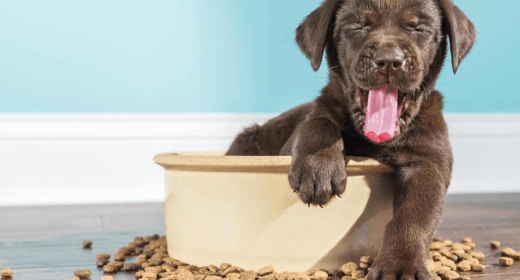
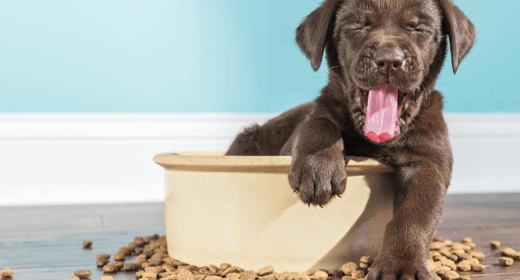
If you’ve got a big love for big dogs, IAMS™ has a large-breed puppy formula specially made for their nutritional needs.
Many large-breed puppies have a tendency to grow very quickly. Unfortunately, if this tendency is encouraged by overfeeding, developmental bone problems can occur. To avoid these problems, careful feeding management is necessary. This should include
Our specially formulated large-breed puppy formulas make feeding management easier because they are designed for fast-growing, large-breed puppies (those with an expected adult weight of more than 50 pounds).
A protein level approximating 26% in these formulas promotes healthy body condition and balances the protein with the reduced number of calories in the food. Research has shown that
The protein in our large-breed puppy formulas supports normal skeletal and muscular growth.
Fat contributes more than twice as many calories in a diet as proteins or carbohydrates do. As the fat level increases, the energy content of the diet also increases, making feeding management more difficult for large-breed puppies. Several studies have shown increases in developmental bone problems when a diet was overfed.2, 3
By reducing the fat content of large-breed puppy formulas to about 14%, the metabolizable energy (ME) of the diets can be kept to a low level of about 1,800 kilocalories per pound.
Fat contributes more than twice as many calories in a diet as proteins or carbohydrates
Our large-breed puppy formulas, such as IAMS ProActive Health™ Smart Puppy Large Breed, are made specifically for growing puppies with expected adult weights of 50 pounds or more. These puppy foods are unique because they are formulated with:
Reduced calcium and phosphorus levels with a normal calcium-to-phosphorus ratio to promote proper bone development in rapidly growing large breed puppies.
1 Nap, et al. Growth and skeletal development in Great Dane pups fed different levels of protein intake. J Nutr 1991; 121:S107-S113.
2 Hedhammer, et al. Over nutrition and skeletal disease: an experimental study in growing Great Dane dogs. Cornell Vet 1974; 64:1-159.
3 Lavelle. The effect of overfeeding of a balanced complete commercial diet to a group of growing Great Danes. In: Nutrition of the dog and cat. Burger and Rivers (eds). Cambridge Univ Press, 1989:303-316.
4 Hazewinkel, et al. Influences of chronic calcium excess on the skeletal development of growing Great Danes, J Am Anim Hosp Assoc 1985; 21:377-391.
5 Goedegebuure, Hazewinkel. Morphological findings in young dogs chronically fed a diet containing excess calcium. Vet Pathol 1986; 23:594-605.
6 Hazewinkel, et al. Calcium metabolism in Great Dane dogs fed diets with various calcium and phosphorus levels. J Nutr 1991; 121:S99-S106.
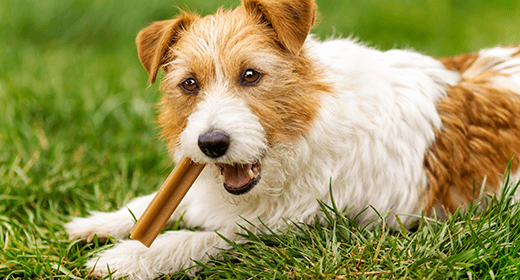
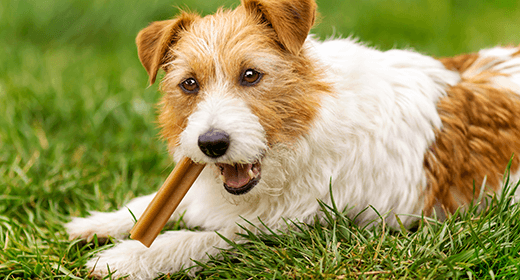
Dogs love to chew on things. In fact, chewing is a natural canine behavior. Providing appropriate chew treats and chew toys can be rewarding for the dog and might prevent or eliminate possible destructive chewing behavior. Chewable treats/toys are designed to provide that important natural chewing activity that dogs love. If the chew treat/toy has other benefits, such as oral care, that's even better.
Make enjoying chew treats and chew toys a safe and healthy activity with these tips:
Tip #1: There is some risk of digestive-tract obstruction with any type of chew treat or chew toy. Safety is always a concern when a dog chews. Many natural objects, such as sticks, rocks, and bones, can get stuck in a dog’s throat or intestine. As a dog owner, you are ultimately responsible to monitor your dog closely to make certain that the chew treat is chewed well.
Tip #2: Chew treats and chew toys should be sized appropriately for your dog. In other words, your dog should not be given a chew treat/toy that could be swallowed whole. Packages should indicate the appropriate size dog for the chew treat/toy. If in doubt, ask your retailer or contact the manufacturer.
Tip #3: Observe your dog playing with the chew toy or eating the chew treat. With the chew treat, your dog should gnaw on it with the side teeth and swallow pieces of the edible chew. Because dogs don't have the same crushing molars that humans have, they will “slice” off pieces with the side teeth. Many dogs will hold the treat in their paws or simply move it from side to side in their mouth as they chew off small pieces.
Tip #4: If your dog has a history of ingesting foreign objects such as rocks, sticks, or toys, you might not want to give him or her chew treats/toys at all. Try edible biscuits, instead.
Tip #5: Watch for choking, excessive drooling, vomiting, poor appetite, lethargy, and abnormal bowel movements. If you notice any of these signs, seek veterinary care sooner rather than later!
Tip #6: When in doubt about what is appropriate for your dog, contact your veterinarian. He or she can offer professional advice.