Enter a keyword below to search for articles and products.
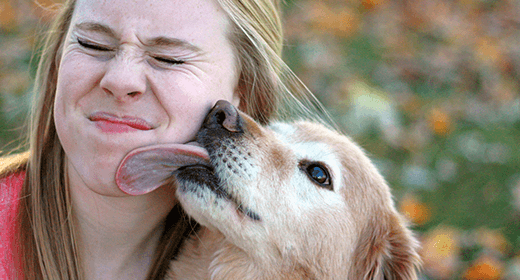
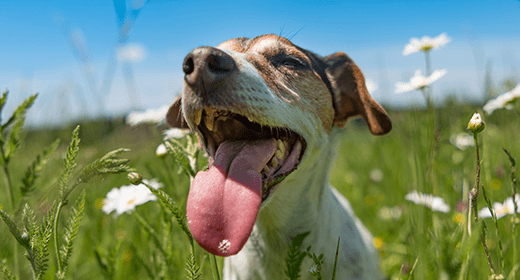
There’s no doubt dogs are affectionate creatures. And they have numerous ways of showing it. So what’s the deal when your furry friend comes up and gives you a big ol’ pooch smooch? Let’s take a tongue-in-cheek look into why.

Dogs are oral creatures and gather a lot of information about their surroundings through taste and smell. Maybe you’re salty after a sweaty run. Maybe you’ve got barbecue sauce on your face. “Dogs can smell a lot better than we can,” says Opens a new windowDr. Jo Gale, BVetMed CertLAS MRCVS, Senior Manager, Global Science Advocacy at Waltham Petcare Science Institute, “so they find a lot more things interesting to lick than we can.” This despite the fact dogs only have about 1,700 taste buds compared to around 9,000 in humans.
In a poll* of dog owners, IAMS™ found a large majority (75%) believe dogs lick people to offer friendliness. That’s definitely a correct assumption. Licking has been a social behavior among dogs since the days of great-great-great granddaddy wolf. 'It’s a standard canine greeting to lick others around the face,” agrees Opens a new windowJames Serpell, B.S., Ph.D., Professor of Humane Ethics & Animal Welfare at the University of Pennsylvania School of Veterinary Medicine. “Junior members of the pack will run around and lick the mouths of more senior members.” Your dog considers you part of their pack, so it’s their way of greeting and welcoming you. Or maybe you still have that barbecue sauce on your face.
In ancient Greece, dogs at the shrine of Asclepius were trained to lick patients. In the Middle Ages, Saint Roch was said to have been cured of a plague of sores through his dog’s licks. The French even have a saying, “langue de chien, langue de médecin,” which translates to, “a dog’s tongue, a doctor’s tongue.”

Don’t cancel your health insurance just yet. While dogs’ saliva does have some possible bactericidal properties against some types of bacteria, it can put you at the risk of exposure to others. Too much licking can also reopen the wound and cause further infection. With modern medicine, you’re much better off hitting the first-aid kit.
And that myth about dogs’ mouths being cleaner than humans’? Not true — both contain over 600 types of bacteria. You’re welcome for that image.
While an occasional canine kiss is “aww”-inducing, some dogs can overdo it to the point of annoyance. When this happens, the best thing to do is “completely ignore it and give no attention,” suggests Dr. Jo Gale. “When they stop, provide them with attention.” Over time your dog will learn to scale back on the smooches.
*Surveyed U.S. dog owners, age 18+
Sample Size: n=201
Fielded May 8-10, 2020
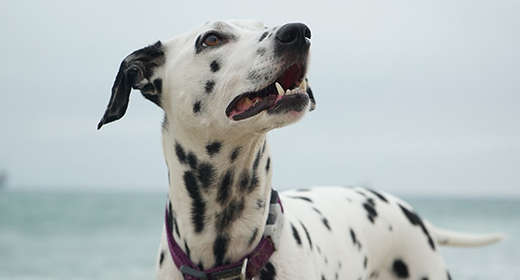
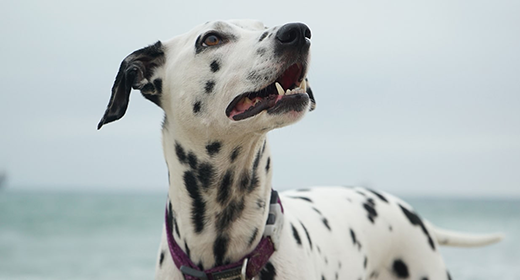
Nutrients like protein, fat, vitamins and minerals are vital to the skin and coat health of dogs. Your dog’s coat is made up almost entirely of protein. If his diet doesn’t contain enough protein quantity and quality, hair might fall out or become dry, weak and brittle. Likewise, his skin is made up of tightly packed flat cells with tough membranes made of proteins and fats. Without proper amounts of these nutrients, the cell membranes weaken, allowing water to escape and bacteria and viruses to enter more easily.
Make sure your dog is getting the following nutrients to keep his coat and skin healthy.
Proteins are found in both animal-based and plant-based ingredients. However, animal-based proteins contain all the essential amino acids dogs need, whereas plant-based proteins might not contain enough of some essential amino acids.
Fats also are found in both animal- and plant-based ingredients and are incorporated into skin cells as fatty acids. In particular, linoleic acid is essential for a dog’s skin and coat health. Without enough linoleic acid, dogs might experience a dull and dry coat, hair loss, greasy skin and increased susceptibility to skin inflammation.
Linoleic acid is found in chicken fat and vegetable oils (such as corn and soybean). IAMS™ research has also found that the fatty acids in vitamin-rich fish oils help promote excellent skin and coat health.
Your dog needs vitamins and minerals for a healthy skin and coat. The best way to provide these nutrients is by feeding a complete and balanced diet full of essential vitamins and minerals, rather than giving him supplements.
Vitamin or Mineral Importance to Skin and Coat Health
Vitamin A Necessary for growth and repair of skin
Vitamin E Protects skin cells from oxidant damage
Vitamin C Helps heal wounds
Biotin Aids in the utilization of protein
Riboflavin (B2) Necessary for fat and protein metabolism
Zinc Necessary for fat and protein metabolism
Copper Involved in tissue, pigment, and protein synthesis
Diet can be a factor when changes in skin and coat condition occur, but the most common causes are season and life stage. As cold weather approaches, most dogs grow a thick coat to help keep heat in and cold air out. As the weather warms up, they shed their thick, heavy coat.
Most puppies are born with soft, fuzzy hair, but as they age, a coarser coat grows. Pregnant or nursing dogs also might experience a change in coat condition or hair loss. And, as with humans, a dog’s hair might thin out and become coarser and white as he reaches his mature years.