Enter a keyword below to search for articles and products.
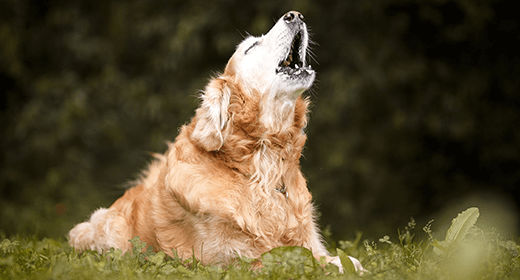
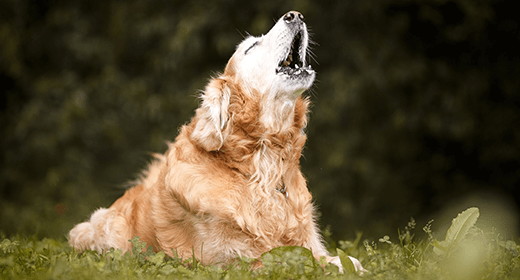
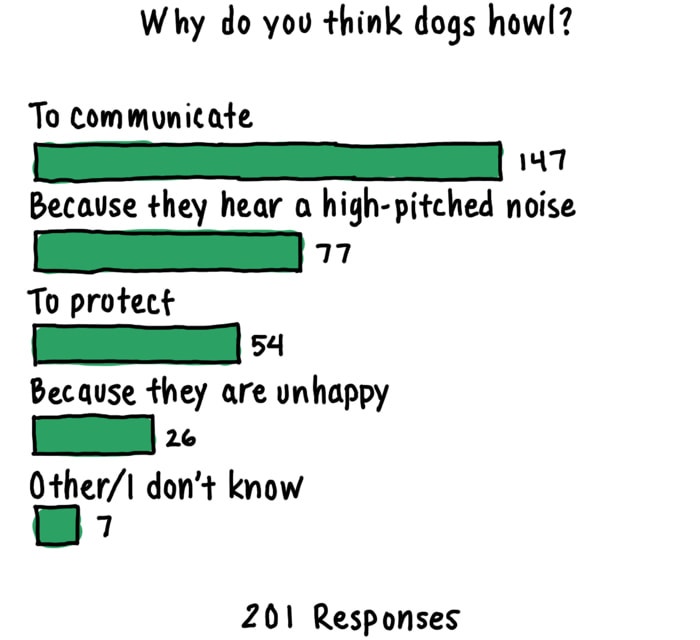
You’ve likely heard your dog let loose his inner wolf and belt out a few long howls. 73% of dog owners in a recent IAMS poll* believe they do this to communicate. This form of vocalization has a long history and is used for different reasons. Understanding more about howling will help you understand your pooch better.
Howling is an ancient trait wolves use to communicate with other members of their pack and other packs over long distances. They may be trying to locate a lost member, show off the size of their pack or warn of danger. It’s like a canine group text.
A wolf’s howl can be heard up to 10 miles away.
Each wolf has their own unique howl, so pack members know who they are, even miles apart.
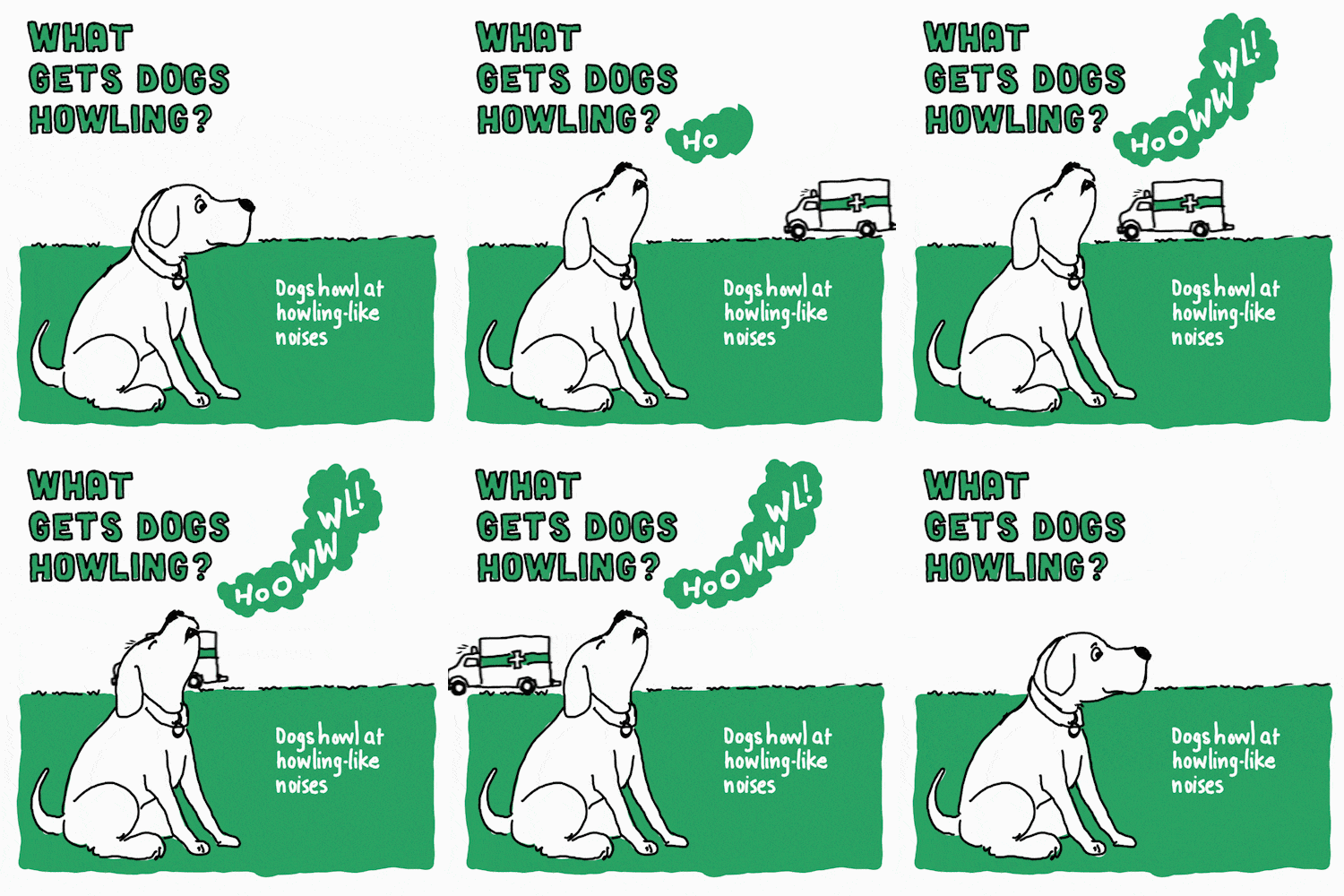
Dogs instinctually respond to howling-like noises by howling themselves. Sounds such as sirens, other dogs, singing or your kid learning the violin is usually enough to get them to sound off.
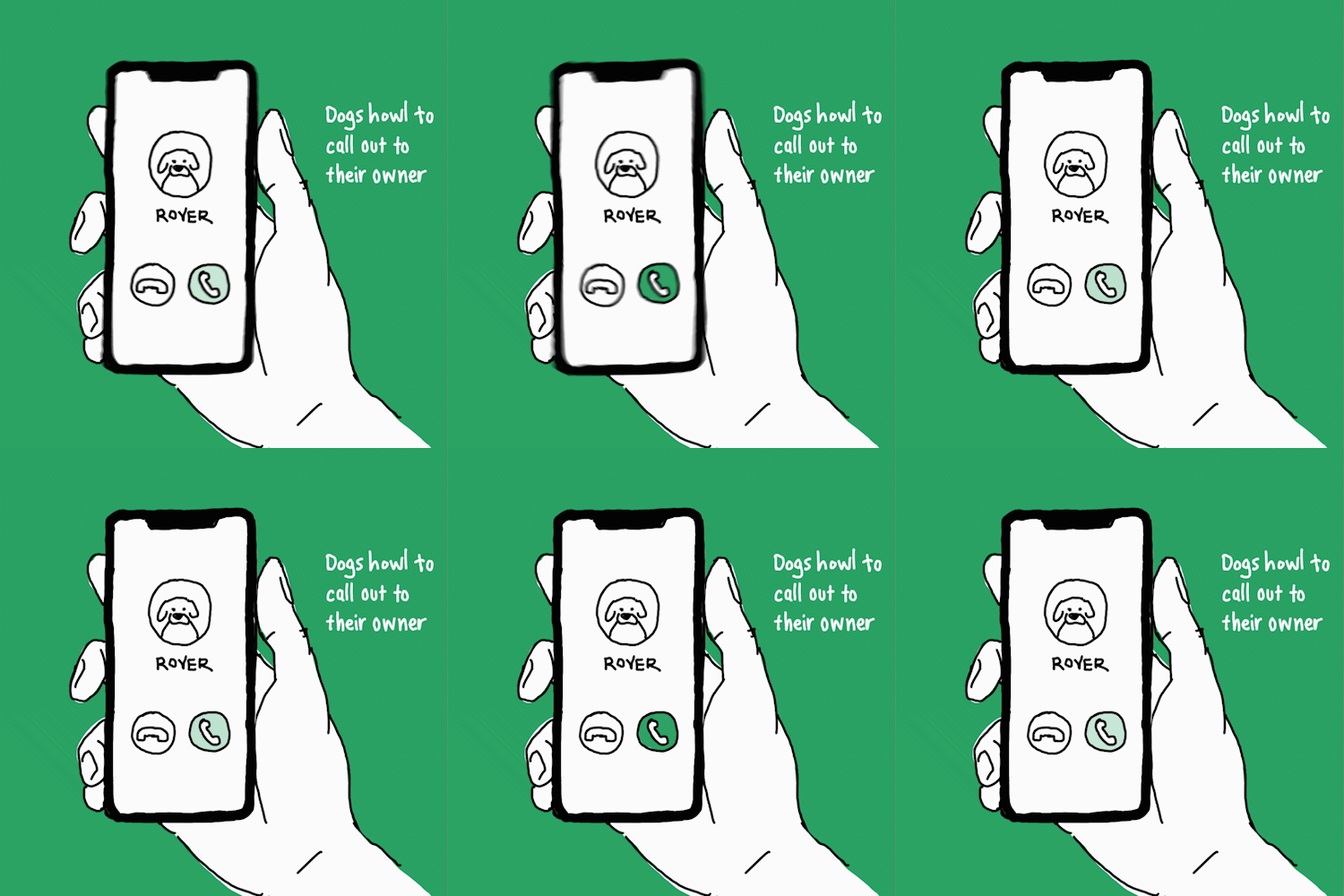
Dogs are still very social animals; it’s just that now we’re their pack. When they miss us, they’ll howl in hopes we respond.
Opens a new windowDr. James Serpell, BSc, PhD, Professor of Humane Ethics & Animal Welfare at University of Pennsylvania School of Veterinary Medicine, explains it this way: “That [howling] is an attempt on the part of the dog to ask the owner basically, ‘Where are you so that I can rejoin you?’”
Dr. James Serpell doesn’t believe so. “My own research has shown that it is common across breeds. People think huskies may be more prone to group howling.”
Dogs going through separation anxiety may howl excessively when left home alone. Dr. Jo Gale, BVetMed CertLAS MRCVS, Senior Manager for Global Science Advocacy at Waltham Petcare Science Institute, says, “If you reinforce quiet behavior, they are less likely to continue howling.” You can do this by quieting your dog and then leaving for a very brief time before returning and rewarding them when they stay quiet. Gradually increase the time you’re gone to reassure them you’ll always be back.
*Surveyed U.S. dog owners, age 18+
Sample Size: n=201
Fielded May 8 to May 10, 2020
Nutrients like protein, fat, vitamins and minerals are vital to the skin and coat health of dogs. Your dog’s coat is made up almost entirely of protein. If his diet doesn’t contain enough protein quantity and quality, hair might fall out or become dry, weak and brittle. Likewise, his skin is made up of tightly packed flat cells with tough membranes made of proteins and fats. Without proper amounts of these nutrients, the cell membranes weaken, allowing water to escape and bacteria and viruses to enter more easily.
Make sure your dog is getting the following nutrients to keep his coat and skin healthy.
Proteins are found in both animal-based and plant-based ingredients. However, animal-based proteins contain all the essential amino acids dogs need, whereas plant-based proteins might not contain enough of some essential amino acids.
Fats also are found in both animal- and plant-based ingredients and are incorporated into skin cells as fatty acids. In particular, linoleic acid is essential for a dog’s skin and coat health. Without enough linoleic acid, dogs might experience a dull and dry coat, hair loss, greasy skin and increased susceptibility to skin inflammation.
Linoleic acid is found in chicken fat and vegetable oils (such as corn and soybean). IAMS™ research has also found that the fatty acids in vitamin-rich fish oils help promote excellent skin and coat health.
Your dog needs vitamins and minerals for a healthy skin and coat. The best way to provide these nutrients is by feeding a complete and balanced diet full of essential vitamins and minerals, rather than giving him supplements.
Vitamin or Mineral Importance to Skin and Coat Health
Vitamin A Necessary for growth and repair of skin
Vitamin E Protects skin cells from oxidant damage
Vitamin C Helps heal wounds
Biotin Aids in the utilization of protein
Riboflavin (B2) Necessary for fat and protein metabolism
Zinc Necessary for fat and protein metabolism
Copper Involved in tissue, pigment, and protein synthesis
Diet can be a factor when changes in skin and coat condition occur, but the most common causes are season and life stage. As cold weather approaches, most dogs grow a thick coat to help keep heat in and cold air out. As the weather warms up, they shed their thick, heavy coat.
Most puppies are born with soft, fuzzy hair, but as they age, a coarser coat grows. Pregnant or nursing dogs also might experience a change in coat condition or hair loss. And, as with humans, a dog’s hair might thin out and become coarser and white as he reaches his mature years.