Enter a keyword below to search for articles and products.
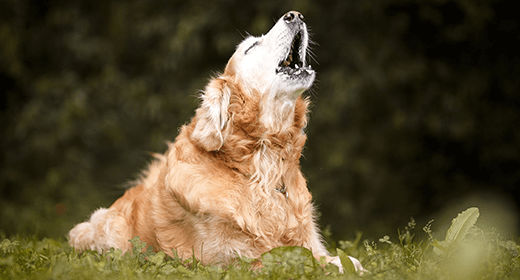
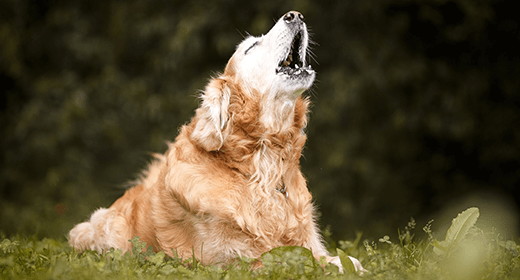
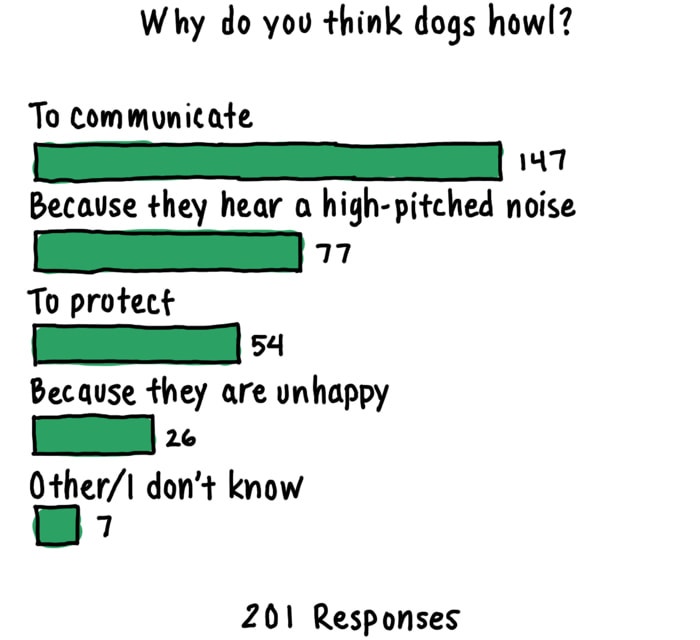
You’ve likely heard your dog let loose his inner wolf and belt out a few long howls. 73% of dog owners in a recent IAMS poll* believe they do this to communicate. This form of vocalization has a long history and is used for different reasons. Understanding more about howling will help you understand your pooch better.
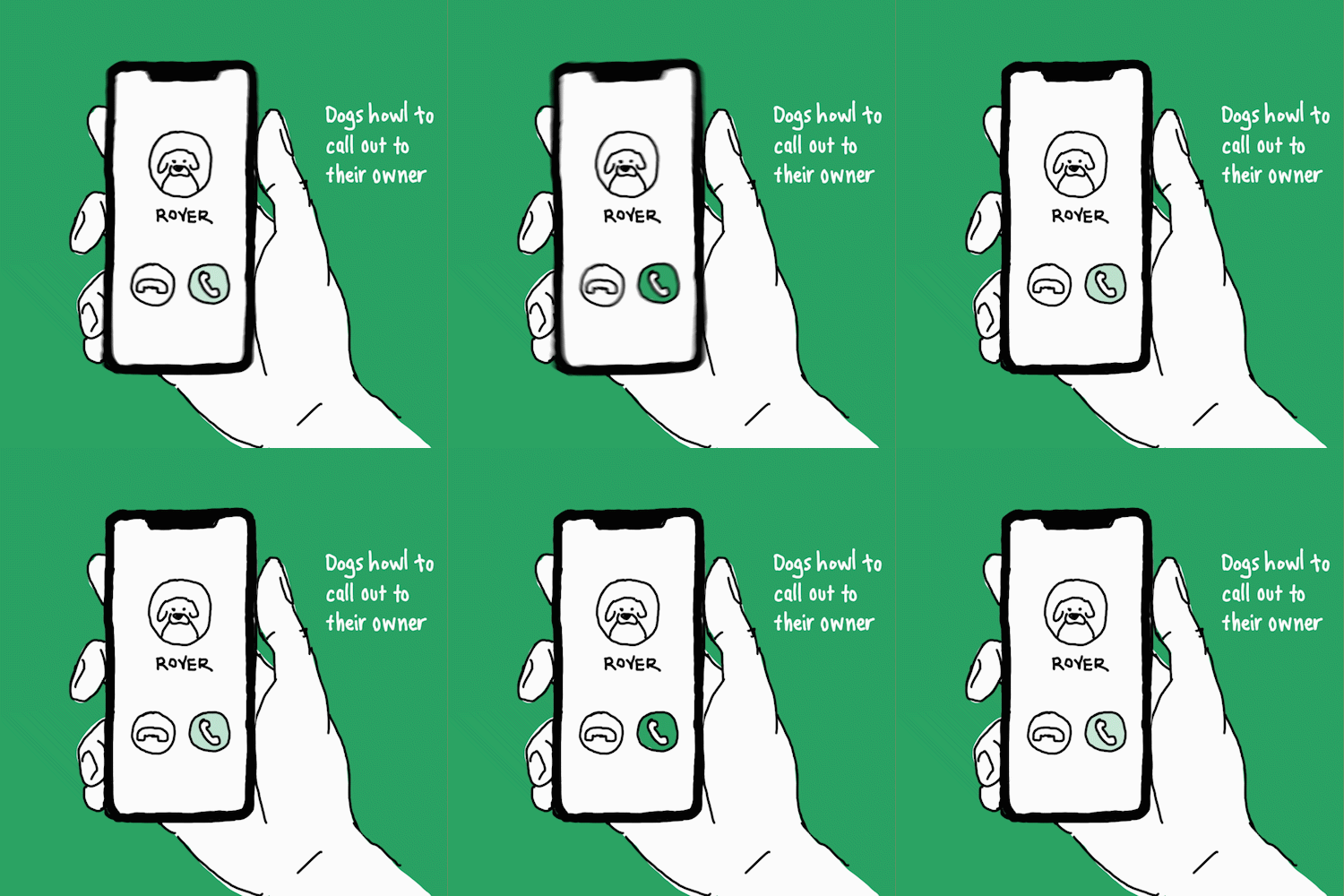
Howling is an ancient trait wolves use to communicate with other members of their pack and other packs over long distances. They may be trying to locate a lost member, show off the size of their pack or warn of danger. It’s like a canine group text.
A wolf’s howl can be heard up to 10 miles away.
Each wolf has their own unique howl, so pack members know who they are, even miles apart.
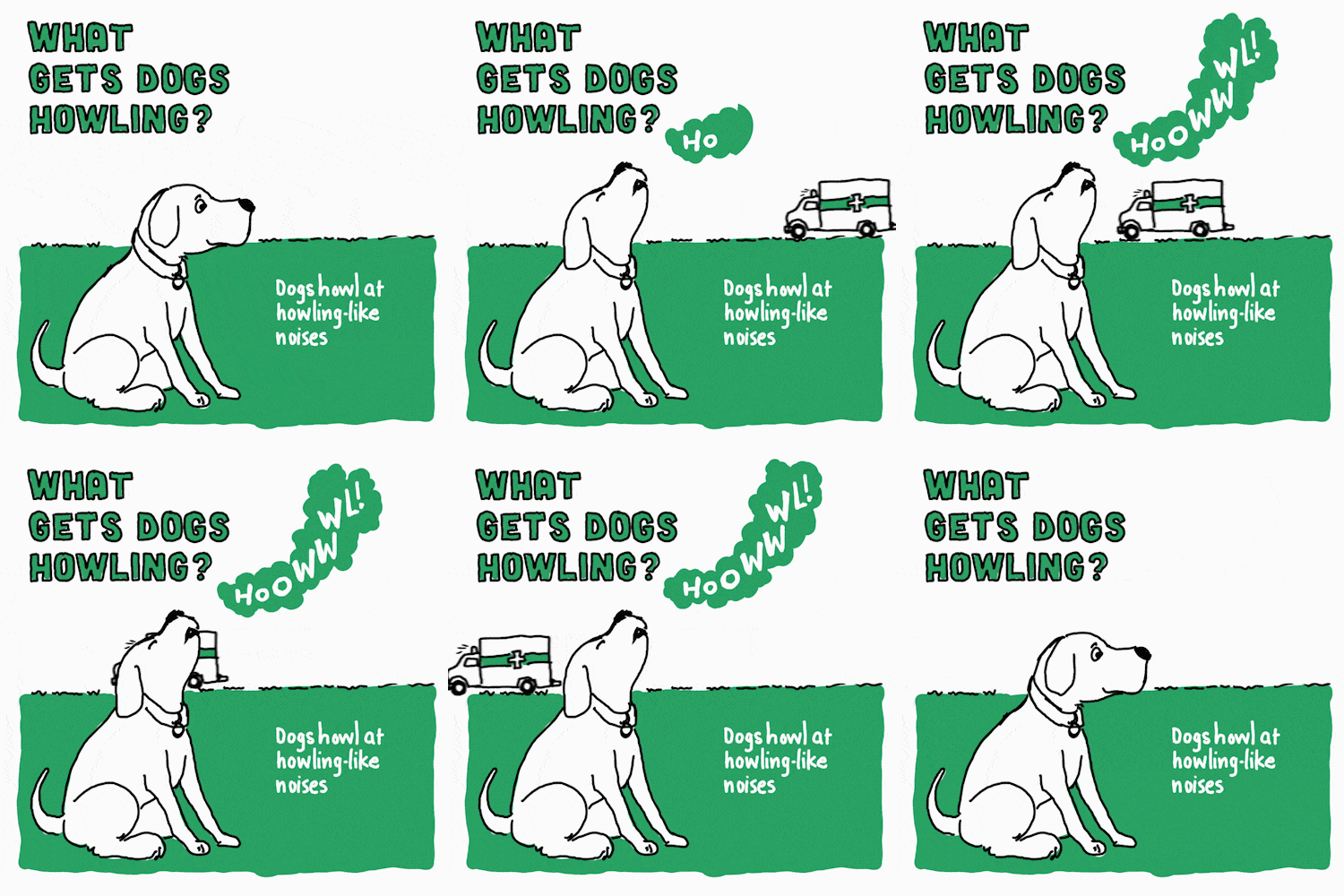
Dogs instinctually respond to howling-like noises by howling themselves. Sounds such as sirens, other dogs, singing or your kid learning the violin is usually enough to get them to sound off.
Dogs are still very social animals; it’s just that now we’re their pack. When they miss us, they’ll howl in hopes we respond.
Opens a new windowDr. James Serpell, BSc, PhD, Professor of Humane Ethics & Animal Welfare at University of Pennsylvania School of Veterinary Medicine, explains it this way: “That [howling] is an attempt on the part of the dog to ask the owner basically, ‘Where are you so that I can rejoin you?’”
Dr. James Serpell doesn’t believe so. “My own research has shown that it is common across breeds. People think huskies may be more prone to group howling.”
Dogs going through separation anxiety may howl excessively when left home alone. Dr. Jo Gale, BVetMed CertLAS MRCVS, Senior Manager for Global Science Advocacy at Waltham Petcare Science Institute, says, “If you reinforce quiet behavior, they are less likely to continue howling.” You can do this by quieting your dog and then leaving for a very brief time before returning and rewarding them when they stay quiet. Gradually increase the time you’re gone to reassure them you’ll always be back.
*Surveyed U.S. dog owners, age 18+
Sample Size: n=201
Fielded May 8 to May 10, 2020


Bloat is a life-threatening condition that acts rapidly and can lead to death within hours if not recognized and treated immediately. Unfortunately, the cause of bloat remains unknown at this time.
The scientific term for bloat is gastric dilatation-volvulus or GDV. Bloat is characterized by rapid and abnormal expansion of the stomach with gas (dilatation). This can be followed by rotation of the stomach (volvulus). This rotation closes both the entry to and exit from the stomach. The blood vessels also are closed down, and blood flow is restricted.
What follows is an increase in pressure inside the stomach and compression of the surrounding organs. Eventually, shock will occur as a result of the restricted blood flow. Here are a few key facts about bloat:
Bloat is a true medical emergency, and early identification and treatment is critical to survival.
In the early stages of bloat, the dog will be very uncomfortable. You might see him pacing and whining or trying unsuccessfully to get into a comfortable position. He might seem anxious, might lick or keep staring at his stomach, and might attempt to vomit, without success.
Other indications of bloat can include weakness, swelling of the abdomen, and even signs of shock. Signs of shock are increased heart rate and abnormally rapid breathing.
If you notice these signs, call your veterinarian immediately!
These suggestions could help you prevent bloat in your dog. However, they are based on suspected risk factors and are not guaranteed to prevent the onset of bloat.
Another way you might help prevent bloat is to feed a high-quality, highly digestible food with normal fiber levels.
Feeding management offers the best method available for reducing risk until the exact cause of bloat can be identified. Although not 100% effective, these measures can reduce the number of dogs that face this serious, life-threatening condition.