Enter a keyword below to search for articles and products.
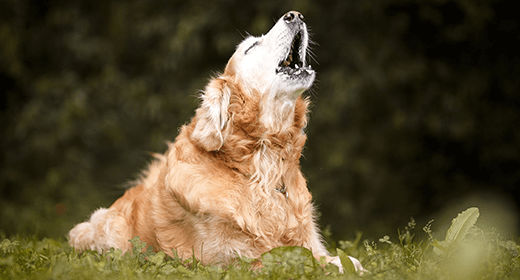
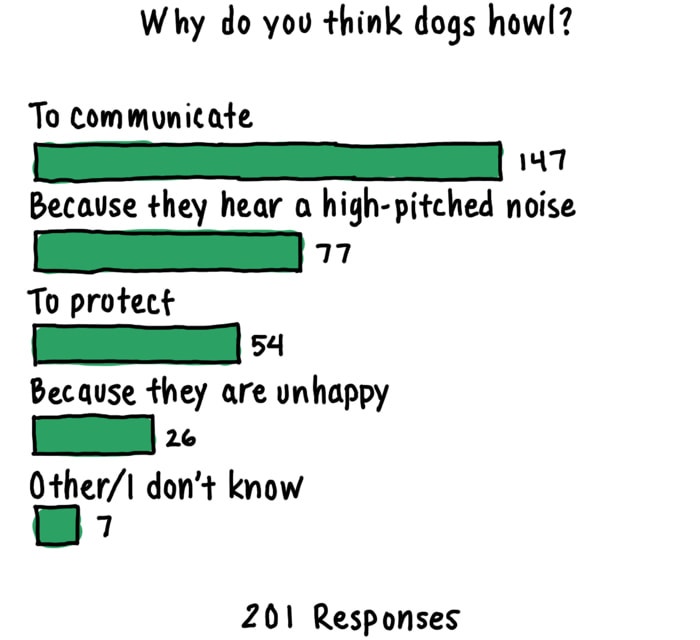
You’ve likely heard your dog let loose his inner wolf and belt out a few long howls. 73% of dog owners in a recent IAMS poll* believe they do this to communicate. This form of vocalization has a long history and is used for different reasons. Understanding more about howling will help you understand your pooch better.
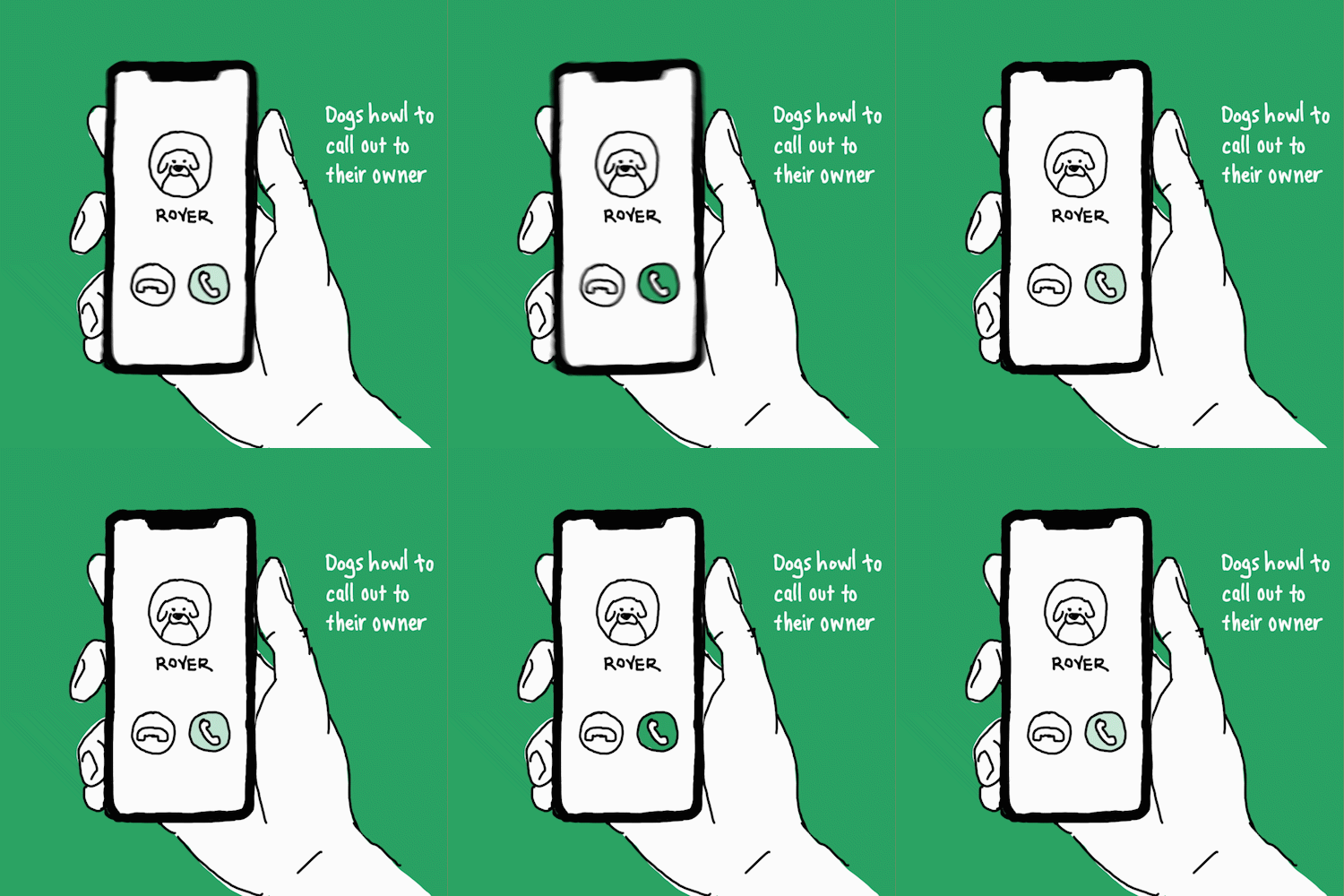
Howling is an ancient trait wolves use to communicate with other members of their pack and other packs over long distances. They may be trying to locate a lost member, show off the size of their pack or warn of danger. It’s like a canine group text.
A wolf’s howl can be heard up to 10 miles away.
Each wolf has their own unique howl, so pack members know who they are, even miles apart.
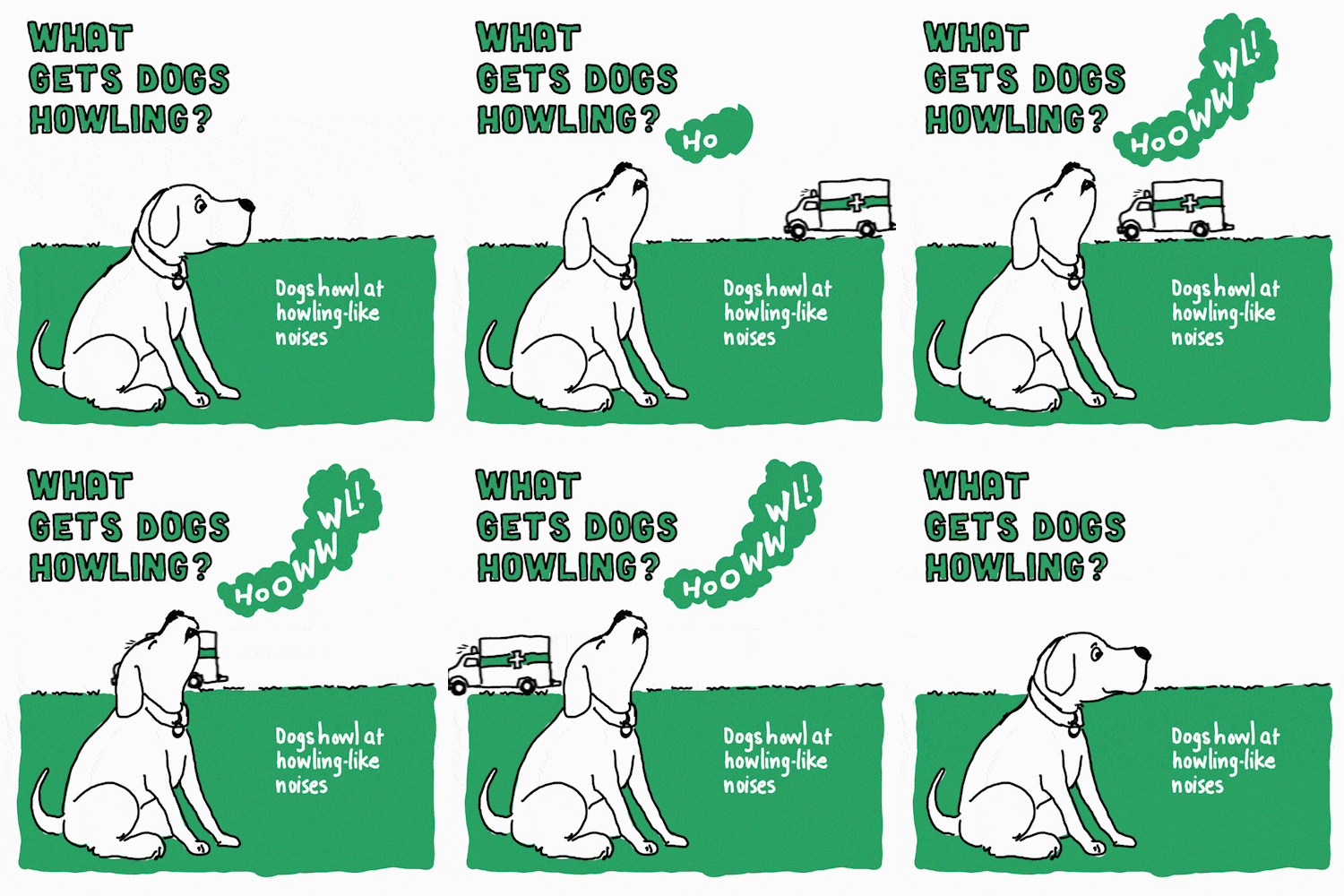
Dogs instinctually respond to howling-like noises by howling themselves. Sounds such as sirens, other dogs, singing or your kid learning the violin is usually enough to get them to sound off.
Dogs are still very social animals; it’s just that now we’re their pack. When they miss us, they’ll howl in hopes we respond.
Opens a new windowDr. James Serpell, BSc, PhD, Professor of Humane Ethics & Animal Welfare at University of Pennsylvania School of Veterinary Medicine, explains it this way: “That [howling] is an attempt on the part of the dog to ask the owner basically, ‘Where are you so that I can rejoin you?’”
Dr. James Serpell doesn’t believe so. “My own research has shown that it is common across breeds. People think huskies may be more prone to group howling.”
Dogs going through separation anxiety may howl excessively when left home alone. Dr. Jo Gale, BVetMed CertLAS MRCVS, Senior Manager for Global Science Advocacy at Waltham Petcare Science Institute, says, “If you reinforce quiet behavior, they are less likely to continue howling.” You can do this by quieting your dog and then leaving for a very brief time before returning and rewarding them when they stay quiet. Gradually increase the time you’re gone to reassure them you’ll always be back.
*Surveyed U.S. dog owners, age 18+
Sample Size: n=201
Fielded May 8 to May 10, 2020
One of the most important things you can do is to feed your senior dog a diet formulated for his age featuring nutritional breakthroughs developed by the geriatric research team at The IAMS™ Company. As the years take their toll, a complete, well-balanced diet can help older dogs maintain health and ideal body weight, maximize their ability to stay healthy, and promote and maintain muscle tone and digestive health.
To call a dog 'old,' one mustn't consider chronological age, but rather physiological condition. Aging begins when the body's systems start to slow down when cells deteriorate faster than the body can repair them. Though the process is different for every animal (large and giant breeds tend to age faster than smaller breeds), dogs are generally considered seniors beginning at around 7 years (5 years for large and giant breeds). If you feed your dog a diet designed to address the nutritional needs of his age, you can best maintain your dog's overall health and well-being. As your dog ages, detecting and addressing signs of wear and tear or disease early might help your dog adjust more readily to his condition.
How your dog ages has much to do with genetics and environment, but nutrition plays an equally important role. The quality of the food and its ability to maintain and nourish your dog's cells can slow or delay the effects of aging and help promote a long, healthy life. As your dog ages and his systems become less efficient, he relies increasingly on the food you provide to make up for his body's shortfalls. According to Michael Hayek, PhD, a research nutritionist at The IAMS Company who specializes in geriatric nutrition, 'Aging dogs need the same nutrients as younger dogs; however, the quantity or the way the nutrients are provided may change.'
Dr. Hayek advises not waiting until you see signs of aging in your dog to consider the proper diet. Feeding a high-quality, premium diet throughout your dog's life is the best way to help him age gracefully. When your dog reaches the golden years, choose IAMS for nutrition suited to this stage of life. 'Good nutrition starts early,' says Dr. Hayek. 'It should be viewed as proactive health care because it may be a deterrent to aging later on.'
If your dog already exhibits signs of aging, look for a high-quality, balanced maintenance food that caters to his changing metabolism. When you're shopping for a formula that's right for your older dog, look for and compare these important features:
High-quality animal protein. Just like us, as dogs grow older, they naturally tend to lose lean body mass (muscle). High-quality protein becomes increasingly significant by providing the essential amino acids your dog needs to minimize the loss of lean body tissue. By nature, dogs are carnivores, and they do best on high-quality, animal-based proteins from sources such as chicken or lamb. Some people believe that aging dogs should be fed less protein to prevent or minimize kidney disease. However, the evidence is just not there. Reduced protein has a significant effect only after a certain level of renal dysfunction occurs. Signs of renal dysfunction include an increase in water consumption and increased urination. If you're concerned about your dog's renal health, your veterinarian can run tests to assess the level of renal function and recommend appropriate treatments if they are needed.
'If your dog is generally in a state of good health,' explains Dr. Hayek, 'protein should not be restricted. Rather, it should be available for building those all-important muscle reserves.' Some studies have shown that a diet of high-quality protein might actually help improve kidney function, and no research has indicated that low-protein diets slow the progression of renal damage in dogs.
Lower fat. Less-active, older dogs need fewer calories. Look for a food that's low in fat compared to our other adult formulas, but don't eliminate fat completely or feed a food that doesn't have enough fat. Pick a formula with at least 10% fat. Older dogs still need essential fatty acids. The inclusion of omega-3 fatty acids helps a senior dog maintain a proper fatty-acid balance as the body's fatty-acid synthesis naturally decreases.
Moderately fermentable fiber. The goal of fiber is to help maintain optimal intestinal health. 'You want to aim for consistent stools,' explains Dr. Hayek. The goal is to promote digestibility and the ability to process food and absorb nutrients. At the same time, fiber levels should promote and maintain a healthy intestinal tract, which often can be problematic for older dogs. A fiber level of no more than 5% is appropriate for seniors to maintain an optimal intestinal environment for a healthy gut, which helps result in excellent nutrient absorption and small, firm stools. IAMS includes dried beet pulp, a patented fiber source, in all of its foods to make elimination easier and regular. According to Dr. Hayek, if you've been feeding your dog properly all along, fiber requirements shouldn't change.
Fructooligosaccharides (FOS) are a unique fiber source. FOS is a moderately fermentable fiber which can help maintain a healthy intestinal environment.
Antioxidants. These help maintain balance within the body by ridding it of harmful compounds called free radicals, which increase as a dog ages. Antioxidants fend off free radicals and help protect cell membranes and DNA. To maintain your older dog's immune-system response, feed a formula with important antioxidant nutrients such as vitamin E and beta-carotene.
Vitamins and minerals. A high-quality, nutritionally balanced dog food should include all of the essential nutrients in the proper proportions. Some say that vitamin and mineral supplements are necessary as a dog's systems age. The fact is that, unless your veterinarian specifically identifies a deficiency, vitamin and mineral supplements are unnecessary and, in some cases, might do more harm than good by creating an unhealthy imbalance.
Balanced feeding is vital as a dog ages, but it's just as essential throughout his life. The longer and more consistently you feed him a healthy diet for his life stage, such as IAMS ProActive Health™ Senior Plus, the greater his chances of living a long, healthy life. As your dog reaches the senior years for his breed or size, remember these tips:
Finally, Dr. Hayek points out that there's still much to learn about canine geriatric nutrition. For now, realize that every animal ages at a different rate and in different ways. Monitor your dog and especially watch for changes after 7 years of age (5 years for large and giant breeds). With the help of your veterinarian and responsible pet food manufacturers, your pet can live to a comfortable, healthy old age.