Enter a keyword below to search for articles and products.
Like any companion or roommate, dogs — for all their love and cuteness—have habits we just don’t understand. One question dog owners often ask their pets: “Why? Why would you eat poop?”
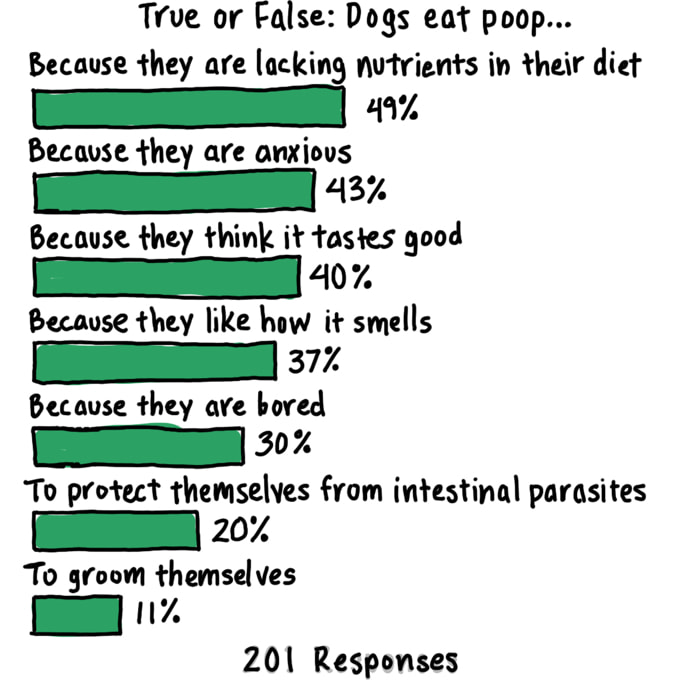
When we polled* dog owners recently, most thought it was because a dog is lacking nutrients (49%), they’re anxious (43%) or they just think it tastes good (40%).
Dogs are significantly more likely to eat the droppings of another species (e.g., horses, rabbits) than their own.
We held our noses and got to the bottom of the issue with the help of some experts.
While those in our poll thought this was the number-one reason for the behavior, it has actually never been proven. “It’s a myth dogs eat poop because they’re seeking nutrients they aren’t getting. There’s no evidence to back this,” says
Opens a new windowDr. Jo Gale, BVetMed CertLAS MRCVS, Senior Manager, Global Science Advocacy at Waltham Petcare Science Institute.
According to
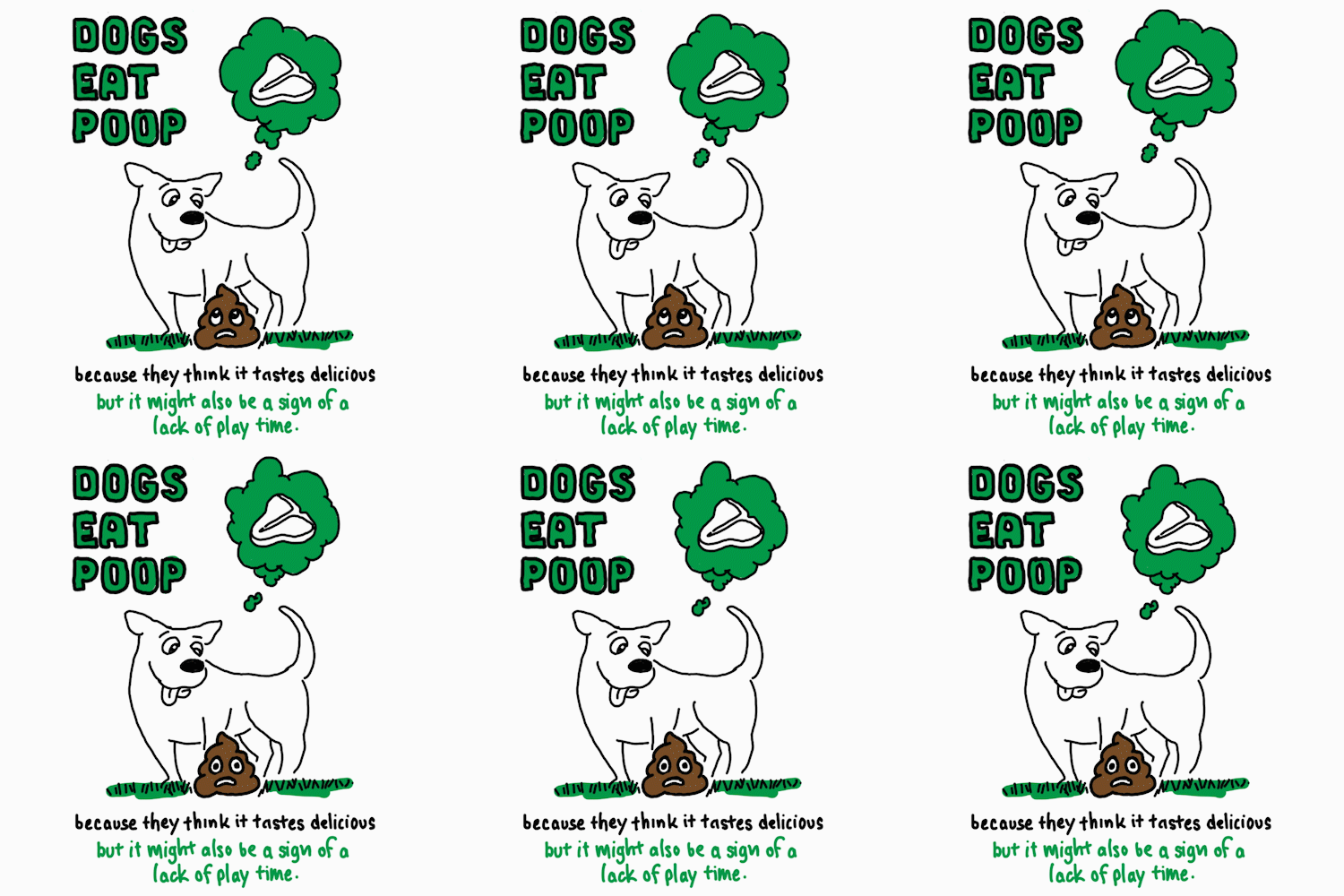
Opens a new windowDr. Tammie King, Applied Behavior Technical Leader at Waltham Petcare Science Institute, “It can occur where there is lack of environmental enrichment. You see this often in dogs who are kenneled and have a lack of opportunity to exhibit normal canine behavior.” So if you need another excuse to get out and play with your pooch, this is a good one.
Believe it or not, this is the main reason dogs eat poop. Dr. Jo Gale explains: “Dogs are scavengers by nature and use any opportunity to eat what they can, when they can. They consider it a ‘tasty snack.’” Dr. Tammie King adds that “[Dogs eating poop] is a learned behavior. They’ve done it, enjoyed it, and that behavior is repeated.”
We love our dogs so much that we’re willing to trust our best friends on this. Maybe we should come out with a line of doggie breath mints though. Hmm.
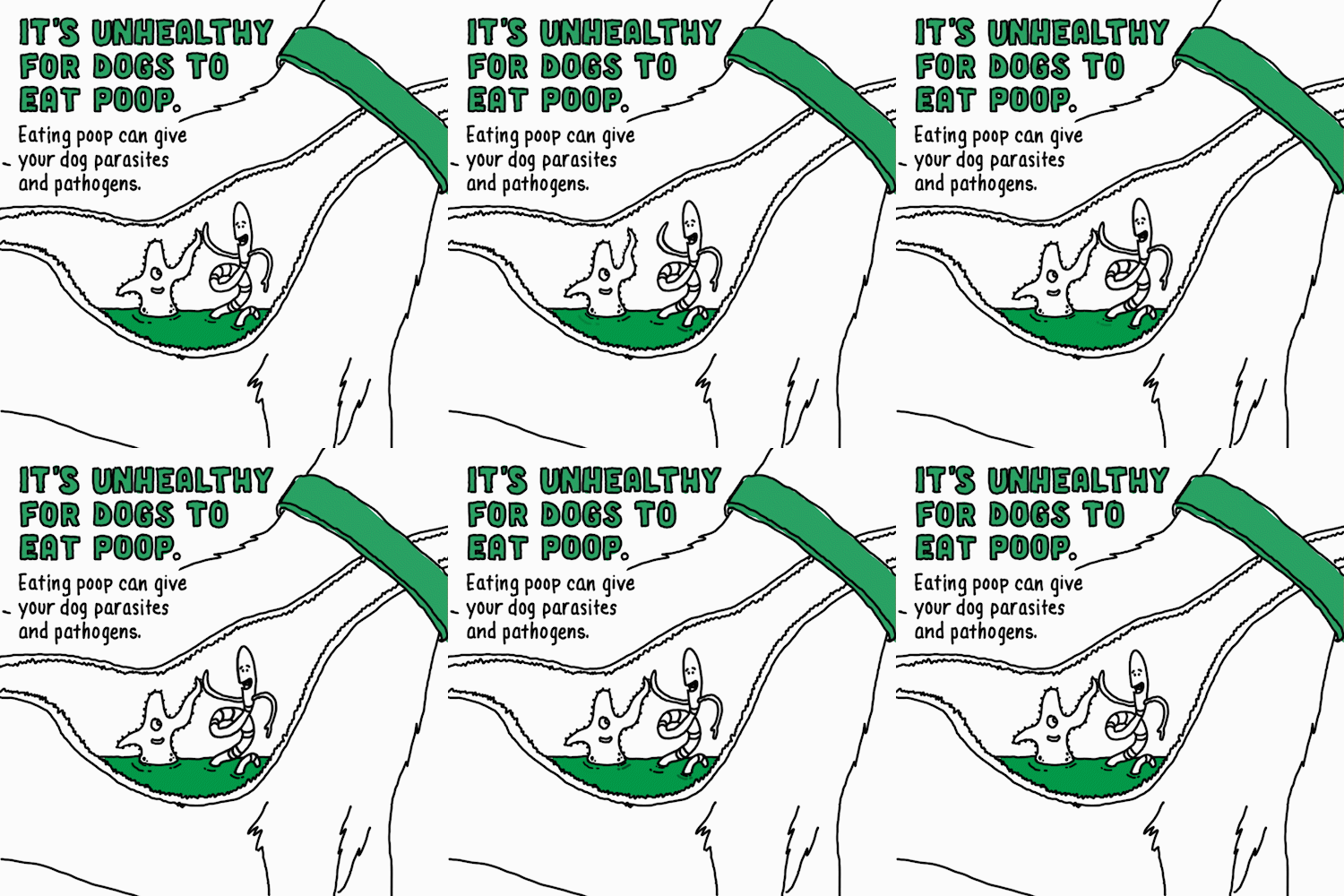
“Ingesting feces from any animal increases potential for ingesting parasites and pathogens,” cautions Opens a new windowDr. James Serpell BSc, Phd Professor of Humane Ethics & Animal Welfare at University of Pennsylvania School of Veterinary Medicine. He went on to say, “[It’s] not something humans should ignore, but it's not worth getting too excited about it.”
All the experts we consulted said that if your dog occasionally eats poop, it’s nothing to be overly alarmed by. Just keep an eye on the frequency and their overall health. And as always, make sure they’re getting a nutritious diet and plenty of exercise and attention. If you have any concerns contact your vet.
Despite dogs liking the taste of poop, we’re going to stick with the healthy range of more traditional flavors offered in all IAMS dog foods.
*Surveyed U.S. dog owners, age 18+
Sample Size: n=201
Fielded May 8 to May 10, 2020
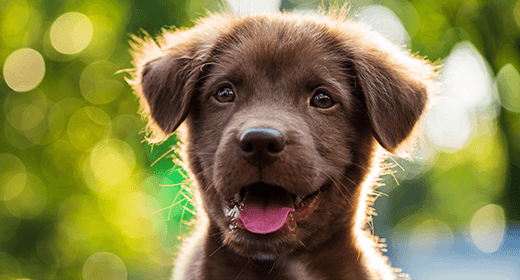
You’ll do anything to keep your puppy healthy and happy—IAMS™ is just the first step. Here’s some extra advice to help your puppy stay extra healthy.
Step 1: Begin with a play session and praise to relax your puppy. Then get on the same physical level as your puppy. With a large dog, kneel next to him while he's in the sitting position; with a small puppy, place him on a grooming table or a countertop.
Step 2: Place one hand over the top of the puppy's muzzle as shown. Hold the pill in your free hand and then gently open his mouth with that hand.
Step 3: Place the pill in the center of the tongue as far back as you're able to reach. Then close your puppy's mouth and hold it shut while you blow gently but quickly at his nose. This will cause your dog to swallow before he has a chance to spit the pill out. Give him a treat immediately afterward to ensure that the pill has really been swallowed. End each session with play and praise.
Just like you, your new puppy needs high-quality health care. Before you run into any dog health issues, ask a friend or your local humane society to recommend a veterinarian, then choose one with these factors in mind:
Once you've narrowed your choices, visit the veterinarian's office. Inspect the facility and talk to the doctor about your new puppy. If you like what you see and hear, arrange a time to bring your puppy in for an initial examination. It's a good idea to visit the veterinarian within the first three days after you bring your puppy home to make sure he's in good health. The veterinarian will probably check: