Enter a keyword below to search for articles and products.


DHA (docosahexaenoic acid) is an omega-3 fatty acid important for neural development of puppies. DHA is a major structural component of the brain, as well as the most abundant fatty acid in the brain. It plays a vital role in the development of a puppy’s central nervous system and retinal function.
To help your puppy be as smart and healthy as possible, DHA should be an essential component of your dog's diet. The DHA in IAMS™ ProActive Health™ Smart Puppy food helps encourage healthy brain development, which can make your puppy more trainable and help forge a stronger bond with you.
Common dietary DHA sources include fish (such as salmon, sardines, tuna and other seafood), eggs and organ meat. In pet foods, sources of DHA include fish, fish meal and fish oil.
Prior to weaning, puppies get DHA from their mothers. The puppy’s mother transfers DHA from her body tissues to her offspring during pregnancy and lactation.
After weaning, puppies can obtain DHA through their diet.
One IAMS study looked at beagle puppies whose mothers had been fed enhanced or typical dietary DHA from breeding on through weaning.* After weaning, puppies were fed the same diets as their mothers throughout the remainder of the study (up to 16 weeks of age). To evaluate the effect of diet on trainability, all puppies were taught to associate a symbol with a direction in a t-maze, with correct responses resulting in a food treat.
In the 30 days of testing, puppies from the enhanced-DHA group consistently outperformed the puppies from the typical-DHA group on the maze test. Results of the study indicated that puppies nourished on high DHA levels were more trainable.
*Data on file. The IAMS Company.


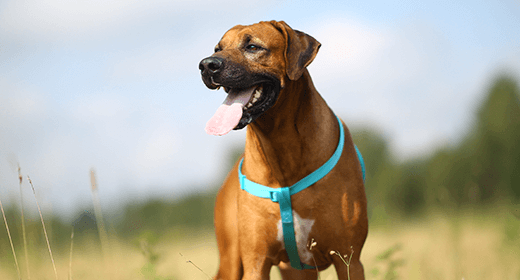
Physiological condition, rather than chronological age, determines whether a dog is mature. Aging begins when the body's systems start to slow down, when cells deteriorate faster than the body can repair them. Though large breeds tend to age faster than smaller breeds, the mature years generally begin at around 7 years (5 years for large breeds). If you feed your dog a diet designed to address the nutritional needs of his age, you can best maintain his overall health and well-being.
As your dog ages, it is important to detect and address with his veterinarian the telltale signs of aging or disease: a dull, dry coat and flaky skin, joint stiffness, energy loss, weight gain, increased water intake, digestive problems, and frequent constipation. These signs, among others, may be caused either by normal wear-and-tear or perhaps by the onset of disease. In any case, detecting and addressing them early may give your dog a greater chance to stay active and healthy.
When and how your dog responds to the aging process has a lot to do with genetics and environment, but nutrition plays an equally important role. The quality of food and its ability to maintain and nourish your dog's cells can help promote a long, healthy life.
As your dog ages and his systems become less efficient, he relies increasingly on the food you provide to make up for his body's shortfalls. According to Michael Hayek, PhD, an IAMS research nutritionist who specializes in geriatric nutrition, 'Aging dogs need the same nutrients as younger dogs; however, the quantity or the way the nutrients are provided may change.'