Enter a keyword below to search for articles and products.
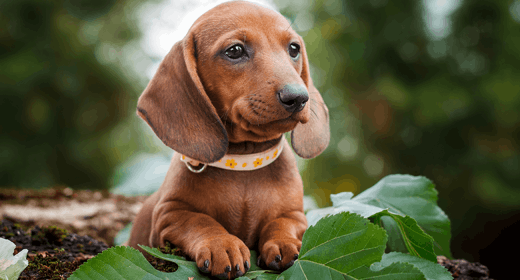
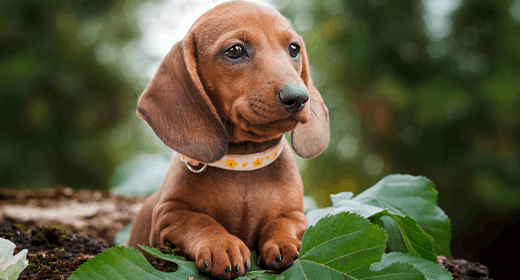
Small-breed dogs tend to have higher metabolism rates than their larger counterparts, which means they need a puppy feeding diet specifically designed for them. 'Small-breed dog food formulas are created to give your dog the right balance of nutrients,' says Debra Eldredge, DVM, a veterinarian in upstate New York and coauthor of The Dog Owner's Home Veterinary Handbook (Howell House). Here's what you need to know to feed your small-breed pooch.
The guidelines on the package are a great starting point, Eldredge says, but 'you have to customize [them] for your dog.' For instance, her family has three dogs who all weigh almost the same. But, one is getting twice as much food as the other two, and she's thin. 'She just burns it up,' Eldredge says. Your dog's breed and activity levels will affect how much food she needs.
Small-breed puppies, especially toy breeds, can be prone to hypoglycemia. To keep your dog’s blood sugar levels up, you might have to feed her more frequently and up the calories, Eldredge says.
Small-breed puppies grow quickly, so during the first six months, they need to eat more food and eat more frequently, generally three to four times a day. After six months, feeding two meals a day is usually sufficient. As your dog gets older and less active, her nutritional needs change, and she may need a formula for mature dogs. Her new food will generally have more protein and fewer calories.
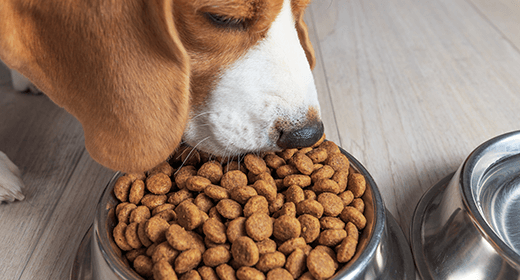
Smaller dogs have smaller mouths and teeth, so their food is usually made in a smaller bite size, which is easier for them to chew and swallow.
Don't leave your dog's food out all day. Instead, pick it up after 10 or 20 minutes, Eldredge says. If food is available all day, she may eat out of boredom.
With dog food, your pet is on a balanced diet. Feeding her human food may throw off that balance. The occasional taste of chicken or eggs is okay, but don't make it a daily habit.
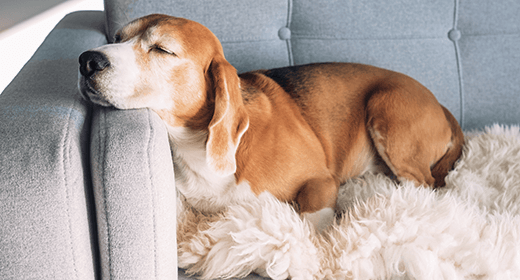
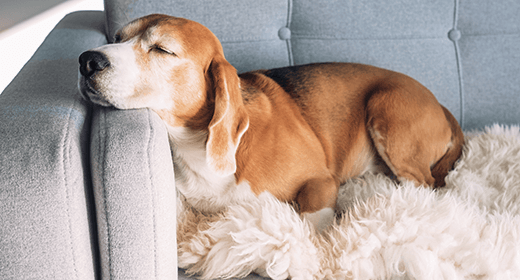
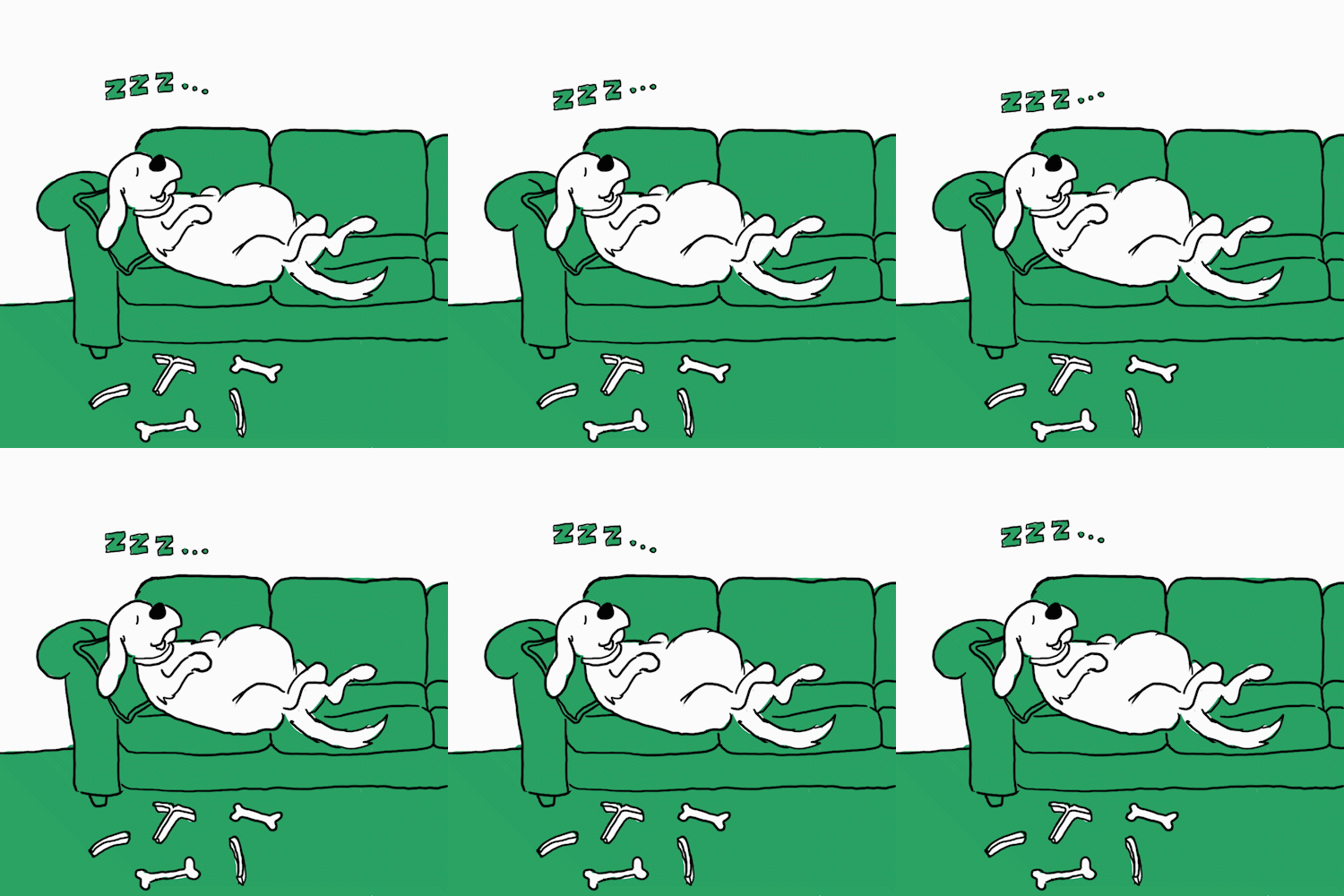
We asked dog owners* how many hours a day they think their adult dog sleeps. The answers averaged around 9.7 hours. Truth is, dogs normally sleep around 12-14 hours a day. (Cats sleep 12-16 hours, which is why it’s called a “catnap,” we presume.) “Normal” can depend on lots of things. Bigger breeds definitely need more z’s. Older dogs tire quicker and sleep more. Growing puppies need up to 20 hours a day. Being cute must really be tiresome.
But why do they sleep so much? We’re not going to let sleeping dogs lie; we’re getting to the answers.
Dogs spend less time in deep REM sleep, so they’re able to wake quickly and be ready to go — whether it’s responding to danger or the opening of a bag of chips. It also means they need to doze more often to make up for that lack of truly restful sleep.
In general, carnivores need more rest. “In their wild dog and wolf days, it was a hunt for food, bringing down large prey, then feasting,” says
Opens a new windowDr. Jo Gale, BVetMed CertLAS MRCVS, Senior Manager, Global Science Advocacy at Waltham Petcare Science Institute. “They’d spend a long time digesting and may not eat for a few days. There’s a tendency to conserve energy.” Just think about how you feel after eating a huge steak. Incoming meat coma. Goodbye, belt. Hello, sofa.
Yawn. When owners are out of the house, dogs often sleep simply because they’re bored. They’re not into books and haven’t quite figured out how to turn on the TV, so why not catch a few extra winks? Plus, they want to be super refreshed when you come back home in the evening.
Some dogs like to sleep longer and some dogs are just lazier than others. According to
Opens a new windowDr. Tammie King, Applied Behavior Technical Leader at Waltham Petcare Science Institute, “You might see more sleeping after intense exercise or they’ve gone to a pet sitter or boarding center due to high stimulation.” There’s usually no cause for concern unless they seem lethargic and lose interest in playing or eating, or begin listening to a lot of emo music.
Their wild days long gone, dogs have adapted their sleep schedules to match humans’ sleep schedules. Sort of. They still might get you up in the night or early morning before your alarm goes off. It’s best to exercise them in the morning and evening so they’re more tired — and have used the facilities — right before everyone else goes to sleep.
Now, the only question remaining is, what do you think your dog dreams about?
*Surveyed U.S. dog owners, age 18+
Sample Size: n=201
Fielded May 8-10, 2020