Enter a keyword below to search for articles and products.


Your small- or toy-breed puppy grows rapidly in the first months of their life: Their immune system is developing, their bones are growing and their muscles are getting stronger. With all this growth, they need the right mix of nutrients to support their development. To make sure your puppy is getting the proper nutrition to protect and maintain their health and well-being, keep these key points in mind.
Research shows that puppies need up to twice as much energy as adult dogs. Because they are growing so quickly at this stage, your small-but-mighty pup needs an energy-rich, nutrient-dense small-breed dog food like IAMS™ Puppy Small Breed. Puppies also need more protein than adult dogs. High-quality animal-based protein will help your puppy create new body tissue as they grow.
Aside from protein, make sure these other important nutrients and ingredients are a part of your puppy's diet:
These are important building blocks of nutrition. Look for them when you choose dry or canned dog food and when you select treats.
When it comes to feeding puppies, one size does not fit all. Small-breed puppies have higher metabolism rates per pound and reach their mature adult weight faster than larger-breed puppies. And small-breed puppies need high levels of protein, fat, calcium and phosphorus to support the growth and development of their bones, muscles and other tissues. So, giving your puppy a food that supports their breed size is the easiest way to make sure they’re getting the right balance of nutrients for their growth rate.
And remember: Small-breed puppies also have small mouths and stomachs! Make sure your puppy's food has small kibble for easy chewing. A nutrient-dense formula will help your puppy get a complete and balanced diet even though their stomach can only hold what seems like a small amount of food.
From the time your puppy is weaned until 4 months of age, you should feed your puppy two to three times a day. Check the food label guidelines to feed them the proper daily amount. After your puppy is 4 months old, feed them twice a day on a regular schedule. And make sure they always have access to fresh water, too!
A small-breed puppy reaches adult weight faster than larger breeds. You can start feeding an adult dog food, such as IAMS™ Adult Small Breed, when they are around 9 to 12 months old.
Your dog might not be thrilled about the change at first, but don't worry. You can help ease the transition by gradually introducing the adult food. Try mixing 25% of the new food with 75% of their puppy food, and then gradually change the proportions over the next three weeks until they are eating 100% adult food.

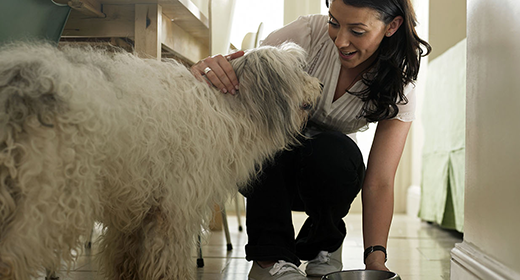
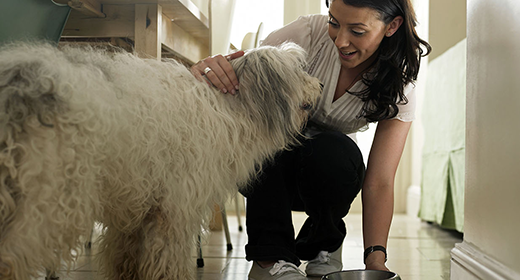
Dogs hit maturity around 7 years of age (5 years for larger dogs). It's not uncommon for them to live as long as 15 years. As your pet enters his golden years, his activity level might slow down and common conditions such as arthritis, diabetes, and kidney disease may arise. “It is so more important to monitor the eating habits of older pets,” stresses Tom Carpenter, DVM, president of the American Animal Hospital Association. “Generally, older pets do not need as much protein, sodium, and phosphorus. But your veterinarian needs to address this for your individual pet,” he says, adding that semiannual vet visits are recommended for an older animal.
Some mature dogs are prone to obesity. To test whether your dog is at a healthy weight, move your hands along his sides. If you can feel his ribs (but don't see them), he's doing okay. But if you feel a fat covering, or you visibly notice a rounded abdomen, he might be overweight. Exercise is still important for a senior dog, and if he's gained weight, you want to look for a low-fat weight-control food that contains vitamin-rich fish oils (IAMS™ ProActive Health™ Mature Adult is one good choice).
Other mature pets can become finicky eaters and lose weight as they age. 'Very old pets may actually need a more calorie-dense diet,' Carpenter says. Older dogs can lose their sense of smell and have a harder time chewing their food. To make mature dog food easier to eat, you can top their dry food with room-temperature wet food.
If your dog is gaining or losing a lot of weight, slightly decrease or increase his daily feedings. A sudden change in weight or appetite might be a sign of disease, so you should check with your vet. Water is also essential. 'Older pets are at a higher risk of dehydration,' Carpenter says. Provide a clean bowl with fresh water at all times.