Enter a keyword below to search for articles and products.
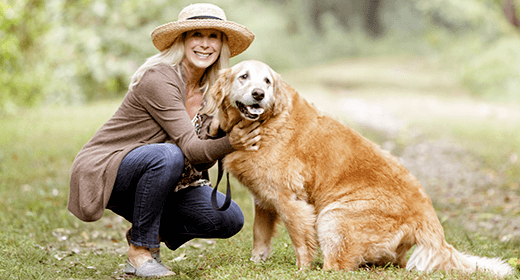
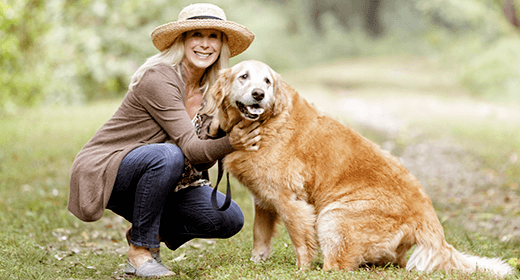
It depends on the breed of dog, but your pet's senior years generally begin at age 7. Louise Murray, DVM, director of the ASPCA's Bergh Memorial Animal Hospital in New York City and author of Vet Confidential (Ballantine, 2008), tells you what you need to know to keep your older dog spry and happy.
At this stage, Murray recommends taking your dog to the vet twice a year. 'So much can happen to an elderly dog,' she says. Your veterinarian can take blood annually to test liver and kidney functions. 'Discovering problems early is extremely important,' she says. Your vet can be on the lookout for conditions that often affect older dogs, such as anemia and arthritis.
Pay attention to what might be subtle changes in your dog's habits: Is she drinking more water or urinating larger amounts? These behaviors might indicate a liver or kidney problem. Have your dog's bowel movements shifted? This could indicate a digestive issue. Diabetes or digestive problems might cause your dog to eat more but still lose weight. Knowing the dog's patterns can help the veterinarian determine a course of treatment.
Continue to use preventive medicines.
Clean your dog's teeth daily. If she has tartar buildup, you might need to have her teeth professionally cleaned at your vet's office, which requires sedating your pet.
Your dog is probably less active, so steady, moderate exercise is best for her now. Don't turn her into a 'weekend warrior' who, after lying around on weekdays, accompanies you on a 10-mile hike on Saturdays. This is especially hard on an older dog's joints.
Your veterinarian might wish to put your dog on a senior diet, such as IAMS™ ProActive Health™ Senior Plus. These formulations contain nutrients specifically geared toward older-dog health.
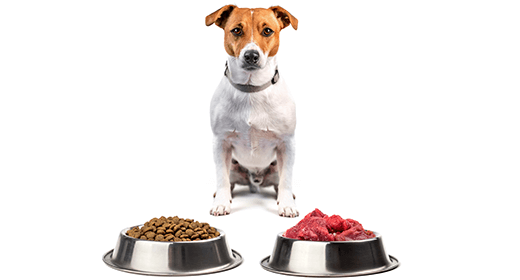
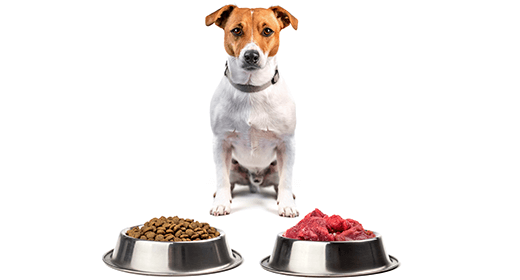
The energy requirements of a puppy can be nearly twice those of an adult dog. This means that a puppy might not have the stomach capacity to eat enough food to meet his needs unless the food is specially formulated.
When choosing a puppy food, select one that provides a highly digestible, nutrient-dense, 100% complete premium formula for growth. Such high-quality formulas contain the vitamins, minerals, protein, fat and carbohydrates your dog needs for sound and healthy development. With a premium formula, your puppy may have:
Puppies grow fastest during the first six months of life, and because growth rates differ among breed sizes, you need a formula designed to address the needs of your puppy’s breed or size.
No two dogs are alike. So when choosing your pet's food, you'll want to take into consideration the dog's breed, size, age, weight, and lifestyle. Full growth will happen at around 1 to 2 years, with the exact age determined by your dog's breed—small-breed dogs mature faster than large-breed dogs. “Grown dogs, especially ones who are more athletic, will start to eat more quantities in one feeding,” says Madan Khare, DVM. “You want to limit his feeding to one or two times a day, depending on his activity level.” Exact quantities should be determined by consulting your vet or by reading the package labels (just remember to split a daily serving in half if you choose to feed the dog twice a day).
When transitioning your dog from puppy food to premium adult food you want to do it gradually. “Never change a dog's diet abruptly,” Khare says. Here's a schedule for transitioning your pet from puppy food to an adult dog food:
Daily exercise and a diet packed with high-quality protein from chicken, lamb, or fish and essential nutrients will keep him happy and healthy throughout his lifetime. Premium dry pet food has all of the daily nutrition your pet needs. It helps promote healthy teeth and gums, too.
“When it comes to feeding your dog human food, I have three words,” Khare says. “No. No. No.” Interfering with your pet's food regimen by frequent change in diet or nutritionally inadequate human food can disturb the animal's digestive system.
Always remember to pick premium, tailor-made dog food based on the life stage and unique needs of your pet.