Enter a keyword below to search for articles and products.
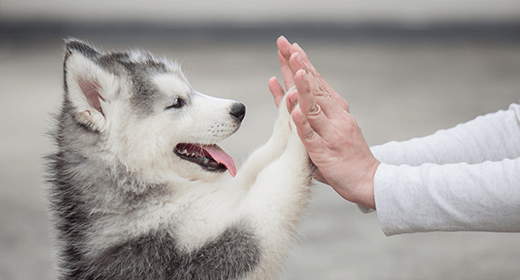
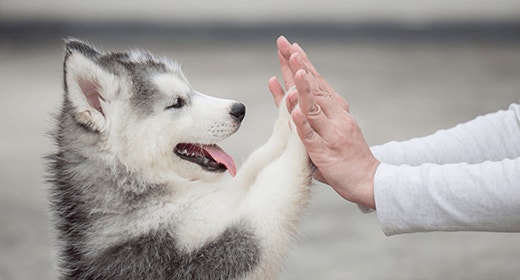
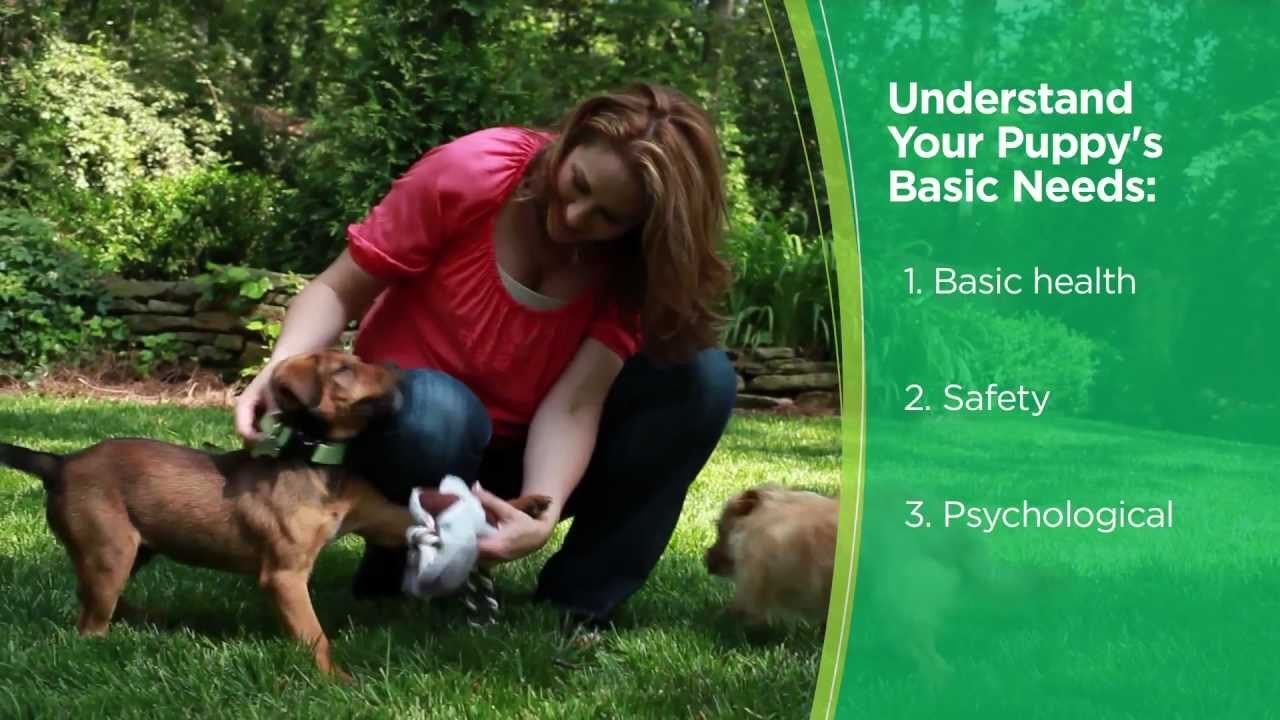
Watch as Veterinarian Dr. Katy Nelson shares all the basics of building a positive relationship with a puppy. You’ll learn everything from taking care of your puppy’s basic needs to socialization. When all is said and done you’ll learn how a happy puppy makes for a happy owner as well.
Hi, I'm Dr. Katy Nelson with IAMS, and today we're going to talk about how to take care of your puppy. First and foremost, you want to understand and meet your puppy's needs. Here they are in order of importance. Number one: basic health-- water, nutrition specifically formulated for puppies, and sleep. Also, immunizations and regular checkups are recommended. Number two: safety. As with small children, you need to keep your puppy in an environment that is safe for him. Puppies explore with their mouths, and they learn about different textures by gnawing. Also, chewing helps massage their gums. For your puppy's safety, keep things that he or she should not be chewing on out of reach. Number three: psychological. Your puppy's greatest psychological need is to be part of a group and be socialized with other dogs. However, to do this successfully, you need to be a guardian he can depend on. Once your puppy's basic needs are met, you want to understand the way he sees the world, so that you can build a strong relationship. Your puppy does not understand the world you live in, so you cannot expect him to. Two things you need to understand is that to them, everything is edible, and they will lunge at anything exciting—you, kids, guests, and other animals, until you train them not to. Praise him exuberantly to encourage the right behavior. Give him treats, pet him, play with him, and be stern to discourage the wrong behavior—ignore him, stop petting, or stop playing. Most importantly, be patient and consistent. Don't be harsh. Puppies have lots of energy, and it's healthy for them to use it. Periodically, helping your puppy release energy will minimize his urge to dig and chew on things. Spend time out in the yard making him run in short bursts. Go on walks or play fetch. Puppies are used to playing with their brothers and sisters. When they're separated, they're looking for their next playmate. Playing with your puppy will also make him more focused on you, improving your bond and making training easier. It teaches him new behaviors, self-control, and will help him gain self-confidence. Like play, socialization is also fundamental to raising your puppy. This is why socializing your puppy as soon as you bring him home is important for both of you. Socialization teaches your puppy to be calm in stimulating circumstances, and to obey when instructed. It also gets him used to being touched, handled, and even used to having hands and inedible things in and near his mouth, so that he behaves around other people, kids, and his veterinarian. Also, know that puppies are sensitive. They can read facial expressions and emotions. Be consistent about what things your puppy does that make you express happiness. Also, be careful not to give your puppy reason to think he's at blame for negative emotions you have from other areas of your life, like when you've had a bad day at work. Emotions are contagious. The happiest puppies tend to be in the most positive and loving households. I'm Dr. Katy Nelson with IAMS, and I hope that you found this helpful as you welcome your new addition to your family.
Between 25 and 40% of dogs are overweight, but often, owners don't know it until they take their dog to the veterinarian for another reason. Yet, even veterinarians can't tell if a dog is fat just by its weight. Ideal weight varies by breed, and quite widely within breeds. There's no ideal weight chart for all dogs!
You can judge your dog's condition by placing your hands on each side of his rib cage. Are the ribs protruding? Your dog may be too thin. Can you feel individual ribs easily, and is your dog's abdomen slightly tucked up when viewed from the side? That's the sign of ideal weight. If you can't feel the ribs easily, your dog has no waist, and his abdomen drags, he's too fat. Your veterinarian can help you further evaluate your dog's weight.
Before beginning any weight loss program with your dog, discuss it with your veterinarian.
You can begin your dog's weight-loss program by reducing caloric intake by 25% of his maintenance intake, and then decrease it by 10% increments every two to three weeks until a 1% weight loss per week is achieved. This means that, if your dog weighs 15 pounds, a 1% loss would be about 2-1/2 ounces.
If you feed one large meal a day or keep food available at all times, try dividing the daily ration into several small meals (at least two meals a day) and pick up what has not been eaten 30 minutes after each meal.
Dogs gain weight for the same reason that people do—they eat more calories than they use. Today's dogs share another problem with their parents: lack of activity. Most parents are gone all day and come home too tired to play with the dog.
Also, as dogs age, or after they are spayed or neutered, their metabolism might slow causing them to require less food.
Another reason for weight gain is frequent, high-calorie treats. Sometimes, more than one family member is feeding the dog, and the dog sure isn't telling!
Losing weight isn't easy. Changing habits is the key. Here are some ways you can help:
Determine who feeds the dog what and when. (Don't be embarrassed to admit you give your dog treats. Dogs are expert beggars.)
Substitute affection for treats. Give a pat or throw a ball when he noses your hand.
Take your dog for a walk more often. Even 10 minutes a day can help.
Feed him more often. It takes energy to digest food. Dividing your dog's daily ration into two or three feedings will help.
Reducing your dog's regular food amount by 25% should bring results.
If your dog is more than 15% overweight, your veterinarian might recommend a special food. Diet foods should be low in fat (under 20% of calories from fat).
Your goal is to help your dog be healthier, so select his food carefully. Some diet foods just add fiber to help the dog feel full. This can result in reduced digestibility, large stool volume, frequent trips to the backyard, and decreased skin and coat condition because the dog isn't getting enough fat and nutrients.
Find a food, such as IAMS™ ProActive Health™ Adult Healthy Weight, that has normal fiber levels to keep your dog's digestive system working properly. It should have high-quality protein so your dog doesn't lose muscle tone and essential fatty acids to help keep his skin flexible and coat glossy throughout the dieting process. After your dog reaches ideal weight, select a maintenance food to keep weight steady.'