Enter a keyword below to search for articles and products.
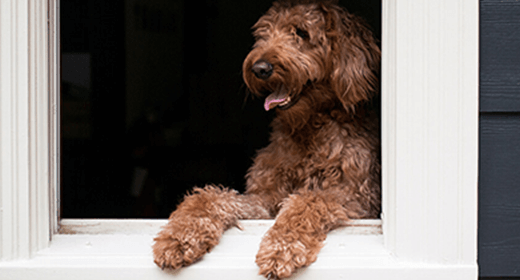
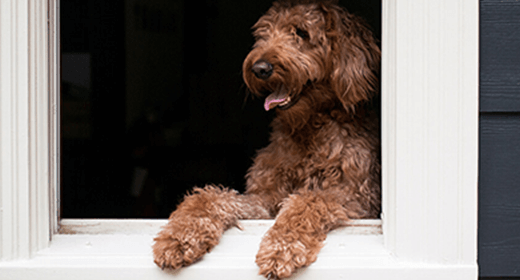
Pregnancy and nursing are not only responsible for many changes in a dog's body, but for changes in her lifestyle as well. If your dog is pregnant or nursing, pay special attention to her changing nutritional needs as she carries, delivers and nurses her puppies.
If you're planning to breed your female dog, it’s important to assess her body condition well in advance of breeding. Because of the physical demands of pregnancy and nursing, a dog with less-than-ideal health can experience problems:
Be sure to feed the proper amounts of a complete and balanced diet. This will support the mother's healthy weight and body condition before breeding and help maintain her health and that of her babies throughout pregnancy and lactation.
The gestation period for dogs is nine weeks. Pregnant dogs gain weight only slightly until about the sixth week, and then gain weight rapidly.
The energy requirements of pregnant dogs are reflected in the pattern of weight gain. Pregnant dogs will need to consume 25% to 50% more than their normal food intake by the end of pregnancy, but energy requirements do not increase until about the sixth week.
The best diet for pregnant and nursing dogs is a high-quality, nutrient-dense pet food formulated for all life stages or for growth. Although puppy diets are generally recommended for pregnant or nursing dogs, large-breed puppy formulas may not be appropriate for this use due to their adjusted energy and mineral content.
Pregnant dogs lose weight after giving birth, but their nutritional needs increase dramatically. Depending on litter size, nursing dogs might need two to three times their normal food requirement to nourish their pups. Be sure your nursing mom has plenty of water so she can generate the milk volume she needs to feed the litter.
To help your nursing dog get enough nutrition, you can try several tactics:
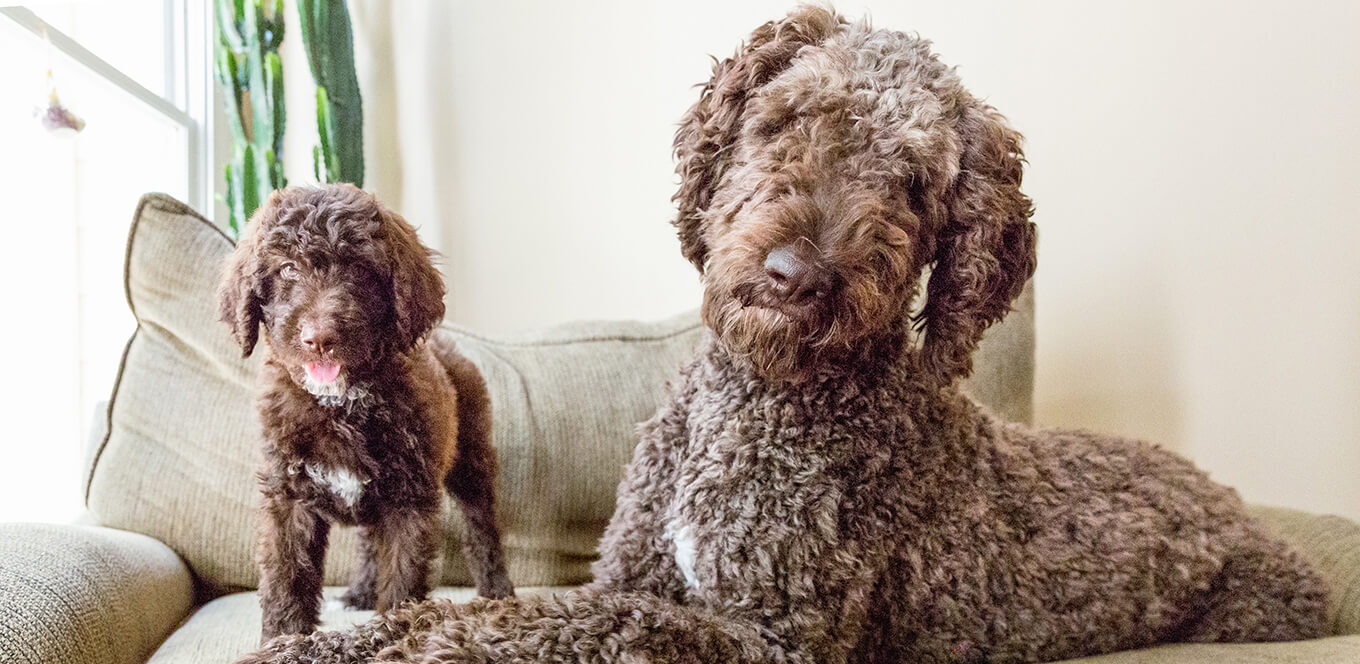
By four to five weeks after birth, most puppies are showing an interest in their mother’s food. Gradually, the puppies will begin eating more solid food and nursing less. At the same time, the nursing mother will usually begin eating less. Most puppies are completely weaned around age 7 to 8 weeks. By this time, the mother's energy requirement is back to normal, and she should be eating her normal pre-pregnancy diet.
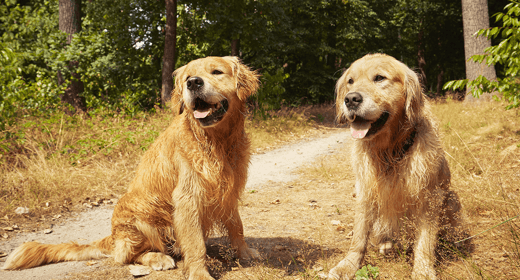
Whether your dog is a big sweetie, a big weirdo or a big athlete, here’s what you need to know about taking care of your big dog.
First, all big dogs start out as little dogs. But pretty soon they grow up — and so does their appetite, their toys, their dog bowls, the vet bill and their need for speed.
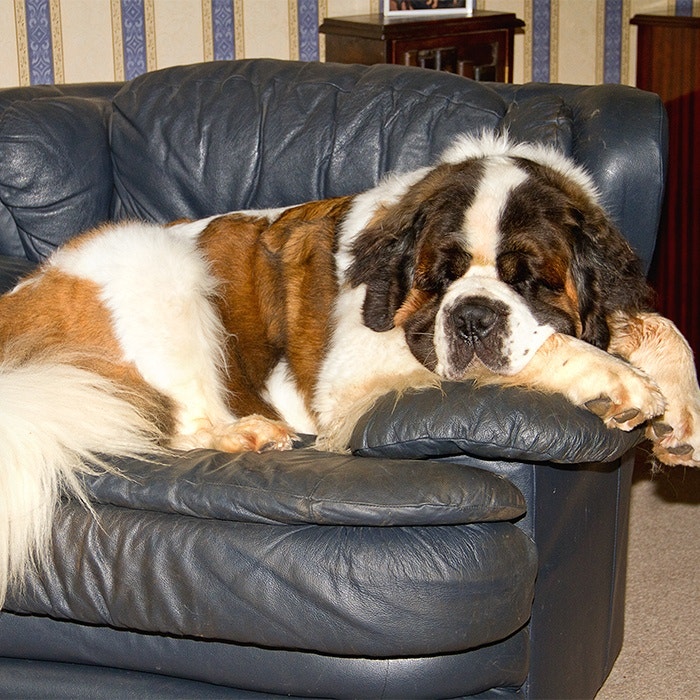
He started to grow.
And pretty soon
he was bigger than
the recliner.
Sometimes it can take more than two years for them to reach their full size.
And you won’t like to think about it too much, but their life spans are shorter, too: about 10 to 12 years.
No wonder
you'll let him push
you off the bed
at night.
If a large dog gets too much food as a pup, they’re at a higher risk of growing too quickly, which can cause joint trouble.
For large breeds, being overweight is especially problematic. All that extra weight can be a lot for the joints to carry around.
Keep your good old dog healthy by practicing portion control and feeding nutritious food like IAMS™ Mature Adult Large Breed.
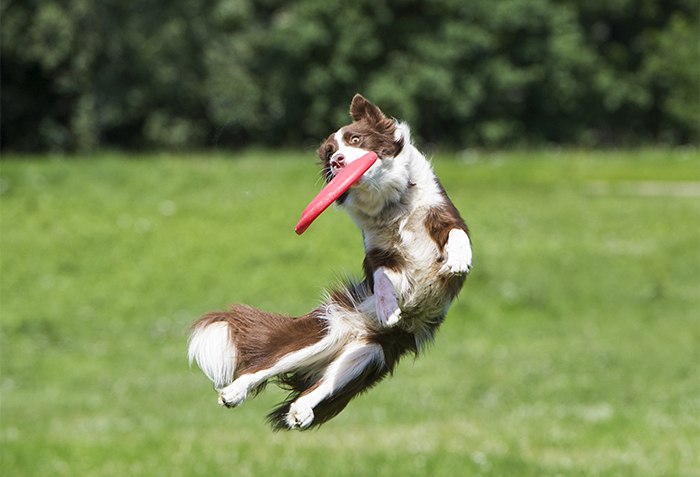
How will she catch
a screaming
15-mile-an-hour
Frisbee in midair
if she has knee trouble.
Back in the day, large-breed dogs were especially energetic. They were working dogs, herders, hunters, cart pullers and people protectors.
Who are we to deny their evolution?
Make sure your dog gets exercise every day.
How do you accomplish this? Walk, walk and more walk. And add in some running, jumping, chasing, hiking, fetching, dog-park visiting, swimming and even agility courses.
Repeat this mantra:
'I am the alpha.'
When it comes to training, think of it this way: The bigger the dog, the harder it is to hide behavior problems. And if you can’t control your super-sized soulmate, they could inadvertently cause damage or hurt someone.
Living large is all
about biting the
wind and living
that sweet,
sweet life.