Enter a keyword below to search for articles and products.
Taking care of your new puppy can be overwhelming, but with these tips and lots of love, you’ll be a great puppy parent in no time.
Just like a baby, a puppy's body is fragile. Avoid picking up your puppy unless absolutely necessary. If you must, be careful and use these steps:
Step 1: Place one hand under your puppy's rump, and place your other hand under his chest.
Step 2: Lift with both arms. With a small adult dog, use the puppy technique. For larger dogs, wrap both arms around his legs, draw him to your chest, and lift.
Before you bring your puppy home, be sure you have the following supplies:
Keeping your puppy safe in your yard requires good fencing. There are several options to choose from, and the one you should pick will depend on your puppy's personality, your property, and your budget. Here are some of the options you should consider:
The ideal time to bring home a new puppy is when the house is quiet. Discourage friends from stopping by and don't allow overnight guests. First, establish a daily routine and follow these steps:
Step 1: Before bringing him in the house, take him to the designated potty area in your yard and spend a few minutes there. If he goes, praise him. Be sure to take him to this spot each time he potties.
Step 2: Take him to the room with his crate. This restricted area will serve as his new 'den' for several days. Put bedding and chew toys in the crate, leave the door open, and line the area outside of the crate with newspaper in case of an accident. Let him investigate the crate and the room. If he chews or urinates on his bedding, permanently remove it from the crate.
Step 3: Observe and interact with your puppy while he's getting used to his new den. This will help forge a sense of 'pack' and establish you as the pack leader.
Don't treat a puppy as young as 6 to 12 weeks like an adult dog. Treat him the same way you would an infant, with patience, constant supervision, and a gentle touch. The way you interact with your puppy at this age is critical to his socialization. Use these tips:
Ideally, your kids should help you choose your puppy. When you bring him home, don't let them play with him constantly. Puppies need a lot of rest, just like a growing child. Limit puppy-children play sessions to 15- to 30-minute periods, two to three times a day.
Meeting Resident Pets
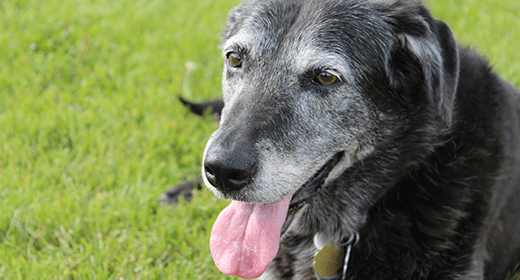
As dogs age, changes occur in the way their bodies function, so it makes sense that what they eat also might need to change. The following list of health issues might be more common in aging pets.
Decreased Immune System Function
Throughout a dog’s life, a process called peroxidation occurs. Peroxidation is a normal process that the body uses to destroy cells that outlive their usefulness and to kill germs, parasites, etc. This process, however, also can destroy or damage healthy cells. As your dog ages, the damage caused by peroxidation accumulates, which, in turn, increases the risk of certain problems, such as infections.
Antioxidants are naturally occurring nutrients that help maintain overall health by neutralizing the peroxidation process of cellular molecules. Some antioxidants, such as vitamin E, beta-carotene, and lutein, are naturally occurring nutrients.
Recent research sponsored by The IAMS™ Company found that dogs fed a diet rich in antioxidants such as vitamin E, lutein, or beta-carotene had improved immune responses and vaccine recognition. This might be especially important in senior dog care; IAMS research has found that as dogs age, immune responses can decrease.
More Frequent Intestinal Problems
Older dogs might have higher numbers of unfavorable bacteria and lower numbers of beneficial bacteria in their intestines, which can result in clinical signs of gastrointestinal problems (e.g., diarrhea).
Feeding a diet containing fructooligosaccharides (FOS), a unique fiber source that helps nutritionally maintain healthy intestinal bacterial populations, promotes growth of beneficial bacteria. Beet pulp, a moderably fermentable fiber source, also helps maintain intestinal health by providing energy for the cells lining the intestine and promoting small, firm stools.
Different dogs show signs of aging at different times, and much of this variation is associated with size. Larger dogs generally appear 'old' sooner than smaller dogs. The table below lists the age at which various groups of dogs should be transitioned to senior foods, such as IAMS™ ProActive Health™ Senior Plus.
| Weight Range | Age to Begin Transition |
|---|---|
| More than 90 lbs | 5 years |
| 51 to 90 lbs | 6 years |
| 21 to 50 lbs | 7 years |
| Up to 20 lbs | 7 years |