Enter a keyword below to search for articles and products.
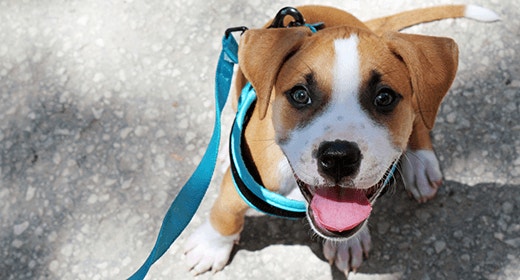
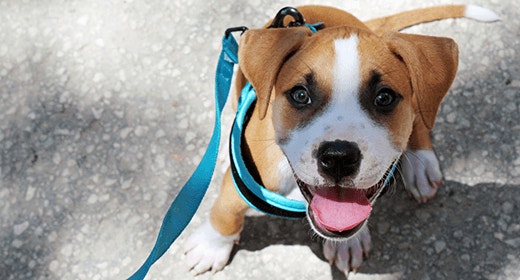
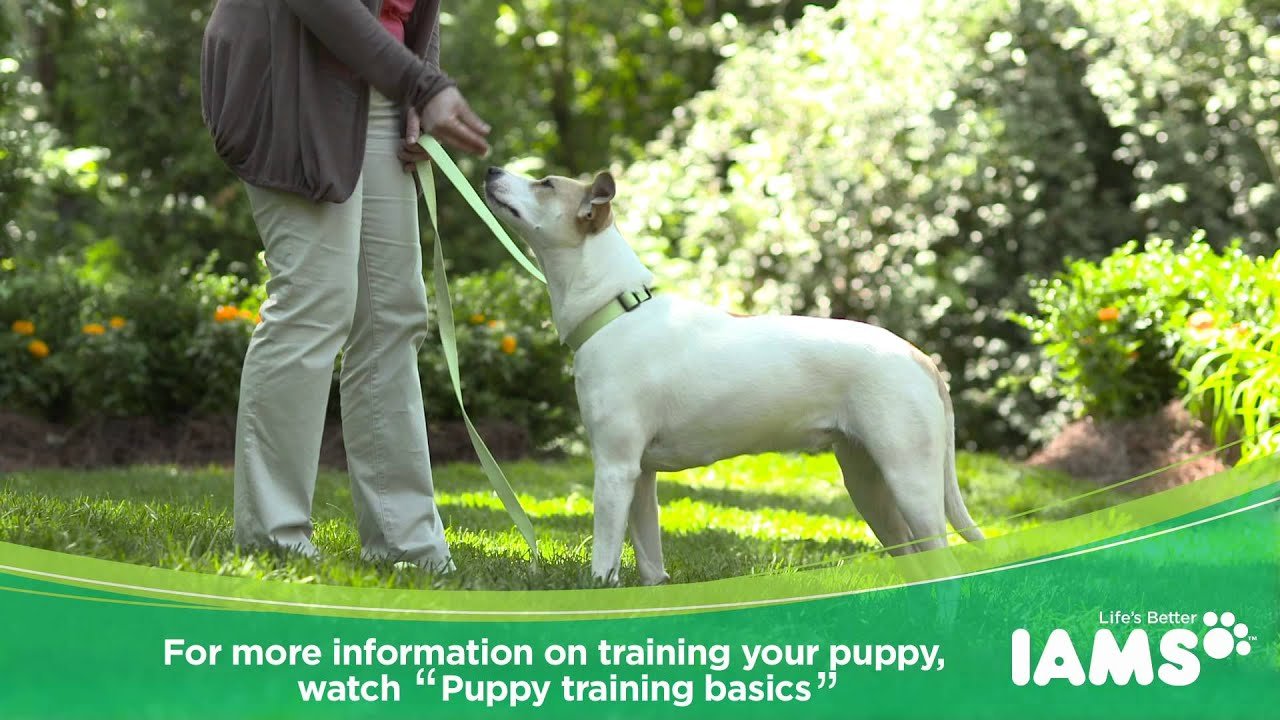
You want to take your new puppy out for a stroll; now, all you need to do is train him to walk on a leash. Watch as Expert Pet Trainer Kathy Santo show you how to walk your new family member.
Hi, I'm Kathy Santo with IAMS, and today we're going to talk about how to leash train your puppy. Once your puppy is around eight weeks old, you can begin leash training. The first thing you'll need is a collar or harness that fits your puppy appropriately, never too lose or too tight. You should be able to fit two fingers between the collar and your puppy's neck. When deciding between using a collar or a harness, there are a few things to consider. Does your puppy have any respiratory issues? Does your puppy pull when being walked on leash? Use a harness or head halter if your puppy pulls on leash, or has respiratory problems. Before you can jump right into training, you'll need to get your puppy used to wearing a collar and having the added weight of a leash. The best thing to do is have him wear the collar or harness and leash around the house, so he becomes used to the feeling. Be sure to keep an eye on your puppy to make sure he doesn't get trapped, caught, or accidentally injured. If your puppy is noticeably struggling, or looks scared, start off with a shoelace, or a small piece of rope, so he can get used to dragging only a little something around. This will help him get used to the added presence and weight of a collar and leash. Now for walking on a leash. The leash should have some slack, because when you put pressure on a dog, their natural reflex is to move or pull in the opposite direction. If you find that your puppy is afraid of walking with the leash, try placing treats along the route you know you'll be walking, to give him the notion that good times are ahead. That way, he learns to focus on what's ahead of him with curiosity, and not fear. As you begin walking your puppy, you will notice that your pace will sometimes have to be faster than you expect to retain slack in the leash. The more you work with your puppy, the quicker you'll be able to train him to slow down, while maintaining the needed slack. As you walk around, begin incorporating specific commands for your puppy. Basic commands include sit, stay, and heel, or let's go. Do your best to remain consistent with your commands, and guide your puppy through the learning process. For example, when you say sit, guide your puppy to sit until the command is recognized by the puppy. When you say heel, make sure your puppy is obeying your command before you start walking again. When your puppy starts to move ahead too quickly, come to a complete stop and wait for him to cease pulling before going forward. Practice his stop and go, never allowing your puppy to dictate your pace. If your puppy continues to pull on his leash, ask him to change directions, while saying 'turn.' This will condition your puppy to always look for you for direction, instead of him feeling like he can dictate where the two of you go next. I also like to run backward, and then switch to a different direction. This gets your puppy excited about chasing you. Remember to reward your puppy when he does the right thing, so that he begins to understand what you're asking him for. If your puppy still isn't catching on, try upgrading your treats, practicing in an area with fewer distractions, or working on more basic commands. Leash training takes time and patience. Both you and your puppy may get frustrated during the learning process. Do your best to avoid tugging. It's not fair to correct them for something they don't understand. As your dog enters adolescence, and clearly knows the difference between right and wrong, it's OK to give a slight occasional tug on his leash, if he insists on being difficult. If you remain patient and consistent with your puppy, he'll be leash trained in no time. I'm Kathy Santo with IAMS, and I hope that you found this helpful as you welcome your new addition to your family.
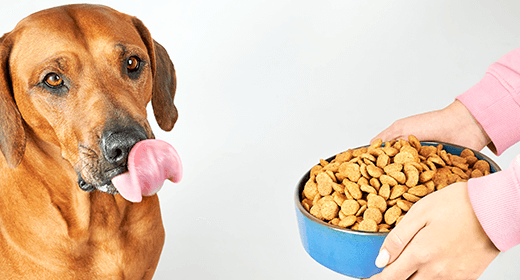
Even if a pet food is formulated to provide all of the essential nutrients required by a dog, it is of little value if the animal will not eat it. Quality pet foods are carefully formulated not only to be highly nutritious but also to be highly palatable.
Palatability is a term used to describe how well a dog likes the taste, smell, and texture of a food. A premium dog-food manufacturer spends a considerable amount of time conducting controlled feeding studies to determine the right combination of ingredients and processing techniques to produce a nutritious, palatable food.
There are two ways to test and measure the palatability of a dog food:
First Bite: The first palatability test is called the “first bite” preference. This measures the dog's first impression of a food's aroma and appearance.
Total Volume: Because the novelty of a new diet can cause highs and lows in first-bite tests, a second test is conducted called “total volume” measurement. Total volume determines the staying power or ability of a diet to maintain the animal's interest over time. This is the dog’s overall choice of a food based on taste, texture, and nutrition for the entire test period.
In order to obtain and interpret accurate results, palatability studies must be performed by experienced animal technicians and the data analyzed by research nutritionists. Feeding studies are conducted by offering an animal two bowls of food at the same time. Each bowl contains a different diet that has been carefully weighed and recorded.
The technician observes which food the dog chooses to eat first, and then records that as the first-bite preference. After a specific time period, bowls are removed and any remaining food is weighed and recorded. Diets also are switched from left to right each day of the study to ensure that dogs are not eating one diet simply out of habit.
The total-volume measurement is determined by calculating the difference between the beginning and ending weights of each food. This procedure is repeated using the same two diets with the same group of dogs for five days. At the end of the five-day study, all observations and data are compiled and analyzed to determine the overall palatability of each diet.
Dogs are attracted by not only the taste of a food, but also to its sight, aroma, and texture. Dogs are particularly interested in the smell of food.
Liquid digest is simply protein that is enzymatically broken down into amino acids, which are the building blocks of protein. The enzymatic process reduces large protein pieces to smaller protein pieces and free amino acids. By adding small amounts of acid, the enzymatic or digestive reaction is stopped and a stable liquid ingredient is produced. After a dry-food formula is cooked, formed into kibbles, and dried, the liquid digest is sprayed evenly on the outside of the dry kibbles. This is called “enrobing.” Not only does the liquid digest make the food highly palatable, but it also adds to the overall digestibility of the food.
Yes. We use liquid digest made from chicken to enhance the palatability of dry foods and to contribute to the nutritional value of the diet. Some pet foods include flavor enhancers, such as onion powder, which simply mask the aroma and taste of the ingredients and provide no nutritional benefits to the animal.