Enter a keyword below to search for articles and products.
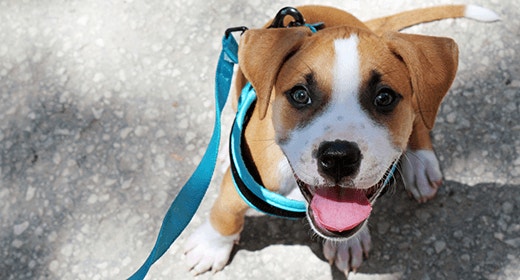
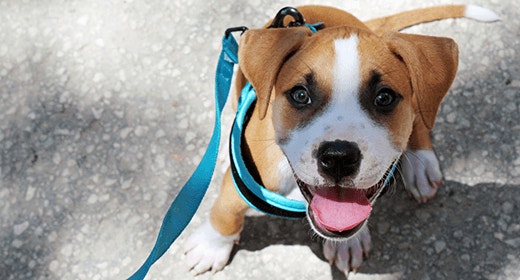
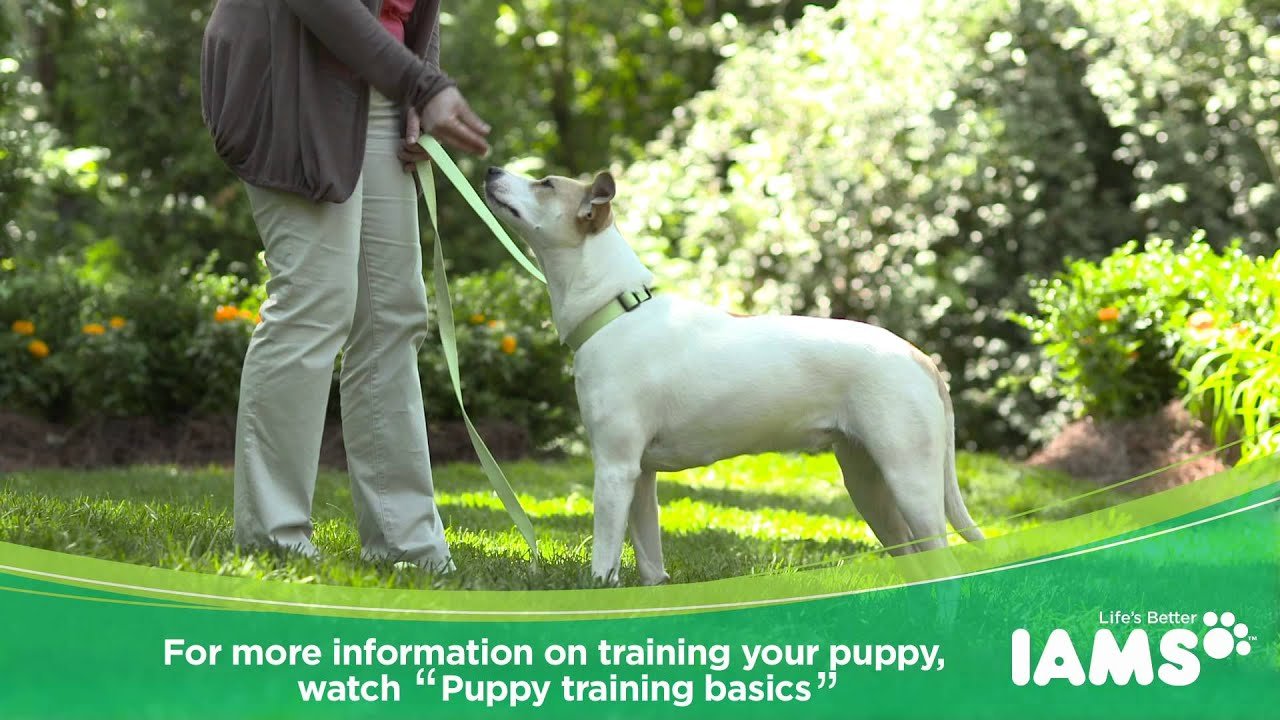
You want to take your new puppy out for a stroll; now, all you need to do is train him to walk on a leash. Watch as Expert Pet Trainer Kathy Santo show you how to walk your new family member.
Hi, I'm Kathy Santo with IAMS, and today we're going to talk about how to leash train your puppy. Once your puppy is around eight weeks old, you can begin leash training. The first thing you'll need is a collar or harness that fits your puppy appropriately, never too lose or too tight. You should be able to fit two fingers between the collar and your puppy's neck. When deciding between using a collar or a harness, there are a few things to consider. Does your puppy have any respiratory issues? Does your puppy pull when being walked on leash? Use a harness or head halter if your puppy pulls on leash, or has respiratory problems. Before you can jump right into training, you'll need to get your puppy used to wearing a collar and having the added weight of a leash. The best thing to do is have him wear the collar or harness and leash around the house, so he becomes used to the feeling. Be sure to keep an eye on your puppy to make sure he doesn't get trapped, caught, or accidentally injured. If your puppy is noticeably struggling, or looks scared, start off with a shoelace, or a small piece of rope, so he can get used to dragging only a little something around. This will help him get used to the added presence and weight of a collar and leash. Now for walking on a leash. The leash should have some slack, because when you put pressure on a dog, their natural reflex is to move or pull in the opposite direction. If you find that your puppy is afraid of walking with the leash, try placing treats along the route you know you'll be walking, to give him the notion that good times are ahead. That way, he learns to focus on what's ahead of him with curiosity, and not fear. As you begin walking your puppy, you will notice that your pace will sometimes have to be faster than you expect to retain slack in the leash. The more you work with your puppy, the quicker you'll be able to train him to slow down, while maintaining the needed slack. As you walk around, begin incorporating specific commands for your puppy. Basic commands include sit, stay, and heel, or let's go. Do your best to remain consistent with your commands, and guide your puppy through the learning process. For example, when you say sit, guide your puppy to sit until the command is recognized by the puppy. When you say heel, make sure your puppy is obeying your command before you start walking again. When your puppy starts to move ahead too quickly, come to a complete stop and wait for him to cease pulling before going forward. Practice his stop and go, never allowing your puppy to dictate your pace. If your puppy continues to pull on his leash, ask him to change directions, while saying 'turn.' This will condition your puppy to always look for you for direction, instead of him feeling like he can dictate where the two of you go next. I also like to run backward, and then switch to a different direction. This gets your puppy excited about chasing you. Remember to reward your puppy when he does the right thing, so that he begins to understand what you're asking him for. If your puppy still isn't catching on, try upgrading your treats, practicing in an area with fewer distractions, or working on more basic commands. Leash training takes time and patience. Both you and your puppy may get frustrated during the learning process. Do your best to avoid tugging. It's not fair to correct them for something they don't understand. As your dog enters adolescence, and clearly knows the difference between right and wrong, it's OK to give a slight occasional tug on his leash, if he insists on being difficult. If you remain patient and consistent with your puppy, he'll be leash trained in no time. I'm Kathy Santo with IAMS, and I hope that you found this helpful as you welcome your new addition to your family.
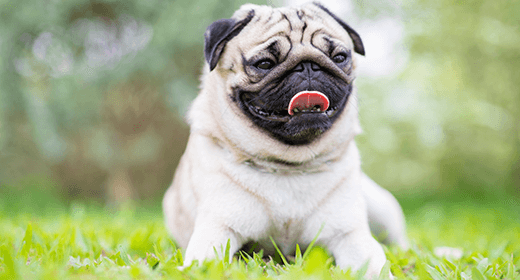
Pugs are naturally lazy and have a tendency to become obese very easily! So pug parents need to make it a point to walk their pugs regularly. Take them for a walk 1-2 times a day or play with them at home. But limit their exercise in hot and humid weather as they do tend to experience breathing difficulties.
Grooming a pug requires you to trim their hair and bathe them at least once a month. After bathing your pug with a mild shampoo, you must dry their hair quickly and properly or the skin folds that remain wet can become smelly and cause skin infections.
While pugs are a clever breed, they are strong-willed as well. Reward-based training is a great way to train your pug. Make sure that everyone in your family follows the same training practices so that your pug does not get confused.
While pug food can vary depending on their age, size, and health conditions, all pugs need complete and balanced meals that are tailor-made to meet their unique needs. You could feed them a premium recipe like IAMS™ Proactive Health™ Adult Pug to keep them slim and healthy. IAMS™ Adult Pug recipe is a blend of beet pulp and prebiotics (FOS) to support healthy digestion, L-Carnitine to support a healthy metabolism, and Omega 6 & 3 fatty acids to support skin and coat health. It is best to split their daily allowance into two meals.
Recommended pug food guide -
| SIZE OF PUG | RECOMMENDED DAILY FEEDING (G) |
|---|---|
| 1-2 kg | 30-45 |
| 2-4 kg | 45-80 |
| 4-6 kg | 80-105 |
| 6-8 kg | 105-130 |
| 8-10 kg | 130-155 |
Pugs are prone to a lot of health problems, more than other breeds. Common health issues include breathing problems, a range of eye problems, skin infections, Pug Dog Encephalitis (PDE), hemivertebrae, and hypothyroidism.
SOME FACTS ABOUT PUG DOG CARE
Pugs are easy to care for but put on weight easily. Also, their short muzzles make it difficult for them to breathe, especially in hot and humid weather. Because of this, pugs also tend to snore, so consider this if you are a light sleeper.
Pugs are intelligent creatures and very loving, making them a popular choice across the world. But do your research before taking the leap. Although they are cute and cuddly, caring for a pug dog needs commitment, so it's important to go into it fully prepared to do the work (and fall in love!)