Enter a keyword below to search for articles and products.


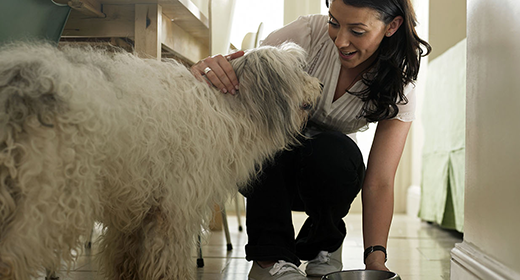
Healthy joints and proper weight are especially important for dogs that grow to be more than 50 pounds. But not all large- and giant-breed adult dogs have the same nutritional needs. Is your dog getting proper exercise? Is she about to have puppies? Special conditions can dramatically affect your dog’s nutritional demands. Giving her a food specially formulated for her large size, life stage and activity level is the easiest way to make sure she’s getting the nutrients she needs.
To address the special needs of your large- or giant-breed dog, look for these features:
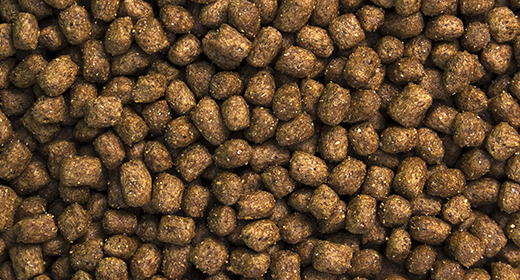
These components are key to good nutrition. Look for them in treats, wet dog food, or dry dog food, such as IAMS™ ProActive Health™ Adult Large Breed.
Joint health is a big concern for owners of large- and giant-breed dogs. A large- or giant-breed formula that contains high-quality protein can help nourish healthy joints. Vitamins and minerals help promote the production of cartilage. Also, keeping your dog at a healthy weight will help minimize joint stress.
Dogs with lower activity levels and dogs that have been neutered or spayed are all prone to weight gain. Controlling your dog’s weight is an important step toward protecting against the health effects of excess weight, such as diabetes or joint health problems. If you use a weight-management food, look for these characteristics:
Pregnant dogs have substantial nutrition requirements. Starting in the seventh week of her pregnancy, a mother dog will need to increase her energy intake up to 50% by the time she gives birth and increase it even more when she starts nursing her puppies. Because she may lose her appetite at times, it's important that she eats a nutrient-dense food. A complete, balanced puppy formula can give her the extra nutrients she needs. But avoid puppy food created for large and giant breeds; these formulas contain specially adjusted levels of energy and minerals that may not be sufficient for a pregnant or nursing dog.
Dogs who grow to be more than 50 pounds are considered mature or senior at age 5 or 6, which is earlier than small-breed dogs. So, it’s critical to make a proactive transition to a specially formulated mature diet, such as IAMS™ ProActive Health™ Mature Adult Large Breed, to help keep your dog healthy and active as she ages.



DHA (docosahexaenoic acid) is an omega-3 fatty acid important for neural development of puppies. DHA is a major structural component of the brain, as well as the most abundant fatty acid in the brain. It plays a vital role in the development of a puppy’s central nervous system and retinal function.
To help your puppy be as smart and healthy as possible, DHA should be an essential component of your dog's diet. The DHA in IAMS™ ProActive Health™ Smart Puppy food helps encourage healthy brain development, which can make your puppy more trainable and help forge a stronger bond with you.
Common dietary DHA sources include fish (such as salmon, sardines, tuna and other seafood), eggs and organ meat. In pet foods, sources of DHA include fish, fish meal and fish oil.
Prior to weaning, puppies get DHA from their mothers. The puppy’s mother transfers DHA from her body tissues to her offspring during pregnancy and lactation.
After weaning, puppies can obtain DHA through their diet.
One IAMS study looked at beagle puppies whose mothers had been fed enhanced or typical dietary DHA from breeding on through weaning.* After weaning, puppies were fed the same diets as their mothers throughout the remainder of the study (up to 16 weeks of age). To evaluate the effect of diet on trainability, all puppies were taught to associate a symbol with a direction in a t-maze, with correct responses resulting in a food treat.
In the 30 days of testing, puppies from the enhanced-DHA group consistently outperformed the puppies from the typical-DHA group on the maze test. Results of the study indicated that puppies nourished on high DHA levels were more trainable.
*Data on file. The IAMS Company.