Enter a keyword below to search for articles and products.
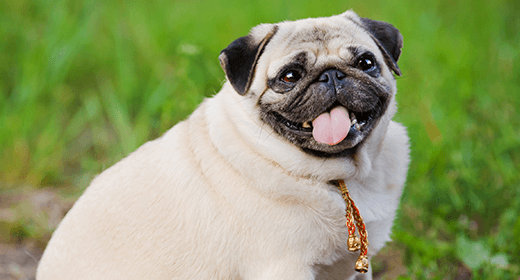
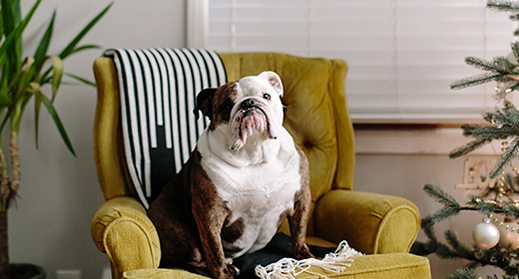
By now we all know obesity is unhealthy—for both people and pets. But do you know just how many health problems it can cause for your dog? Diabetes, bone and joint damage, decreased liver function, heart disease, increased blood pressure, and a heightened risk of cancer are just a few of the serious health issues caused by obesity. That’s a scary list. Protect your pooch by taking a proactive approach to keeping the pounds off. Here are some ways to do it.
Dogs do better with a controlled amount of food on a schedule. While some dogs can handle eating from an always-full and ever-present dog bowl, most will overeat if food is always available.
There are lots of dog foods out there, all offering something different. When it comes to keeping obesity in check, IAMS™ ProActive Health™ Adult Weight Control and IAMS Healthy Naturals™ Weight Management with Chicken formulas are great choices.
Your dog’s your pal, so it’s difficult not to share your tasty bacon or a bite of steak with him when he gives you those big, pleading eyes. But trust us—it’s worth it to resist. Feeding Fido “people food” ups his food and fat intake significantly. Plus, it creates bad habits: A dog that’s not fed from the table won’t learn to beg.
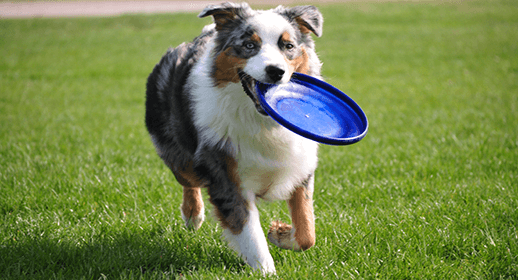
Obviously, a great way to keep your dog trim and fit is with some good exercise sessions. When you don’t have a lot of time, do short sessions of fetch or tug-of-war. Take it to the next level by jogging with your dog, tossing the Frisbee®, or starting agility training. And here’s a bonus: A dog that gets enough exercise is less likely to act out.
Of course you want to reward your dog when he’s good—but don’t forget that those treats can add up. Pay attention to the calorie and fat content of the treats you give. More importantly, take note of how many goodies you’re doling out—and how often.
Most of the time, a dog is overweight because he’s taking in more calories than he’s burning. But it is possible that there is a larger problem at work. If you’ve tried maintaining your dog’s diet and increasing exercise and still aren’t seeing results, talk to your veterinarian about a possible thyroid or other metabolic disorder.
Don’t get discouraged if you slip up every once in a while or don’t see results right away. Battling obesity is done day to day—it’s about forming good habits and being disciplined. By following the tips above and showing a little dedication, you’ll be on your way to having a healthier, happier dog.
The energy requirements of a puppy can be nearly twice those of an adult dog. This means that a puppy might not have the stomach capacity to eat enough food to meet his needs unless the food is specially formulated.
When choosing a puppy food, select one that provides a highly digestible, nutrient-dense, 100% complete premium formula for growth. Such high-quality formulas contain the vitamins, minerals, protein, fat and carbohydrates your dog needs for sound and healthy development. With a premium formula, your puppy may have:
Puppies grow fastest during the first six months of life, and because growth rates differ among breed sizes, you need a formula designed to address the needs of your puppy’s breed or size.
No two dogs are alike. So when choosing your pet's food, you'll want to take into consideration the dog's breed, size, age, weight, and lifestyle. Full growth will happen at around 1 to 2 years, with the exact age determined by your dog's breed—small-breed dogs mature faster than large-breed dogs. “Grown dogs, especially ones who are more athletic, will start to eat more quantities in one feeding,” says Madan Khare, DVM. “You want to limit his feeding to one or two times a day, depending on his activity level.” Exact quantities should be determined by consulting your vet or by reading the package labels (just remember to split a daily serving in half if you choose to feed the dog twice a day).
When transitioning your dog from puppy food to premium adult food you want to do it gradually. “Never change a dog's diet abruptly,” Khare says. Here's a schedule for transitioning your pet from puppy food to an adult dog food:
Daily exercise and a diet packed with high-quality protein from chicken, lamb, or fish and essential nutrients will keep him happy and healthy throughout his lifetime. Premium dry pet food has all of the daily nutrition your pet needs. It helps promote healthy teeth and gums, too.
“When it comes to feeding your dog human food, I have three words,” Khare says. “No. No. No.” Interfering with your pet's food regimen by frequent change in diet or nutritionally inadequate human food can disturb the animal's digestive system.
Always remember to pick premium, tailor-made dog food based on the life stage and unique needs of your pet.