Enter a keyword below to search for articles and products.
Diet plays an important role in the endurance potential of canine athletes. The Alaskan sled dog might be considered the ultimate canine athlete, sometimes pulling a sled more than 1,000 miles in subzero temperatures. Providing a well-balanced diet is essential to meet the special needs of dogs in such nutritional-stress situations. Not only should the diet fed to these dogs be high in protein, but it also should be high in fat, which serves as the major energy source for exercising muscles.
A high-fat diet can help muscles burn fat more efficiently. During sustained exercise, fatty-acid oxidation is the primary source of energy for the muscles. Increasing the efficiency of fat metabolism spares the body’s use of carbohydrates, and because most dogs have in excess of 10 to 50 times more energy stored in fat than in muscle glycogen (carbohydrate), this might boost the animal's exercise performance.
IAMS™ studies1 have shown that in trained sled dogs as in ordinary dogs, exercise performance was enhanced by switching from a low-fat to a high-fat diet (from 25 to 65% of calories from fat), as indicated by increased:
When dogs were switched back to a low-fat diet, all of these criteria decreased to their previous values.
These results indicated that by increasing the availability of fat stores and capacity to metabolize fat for energy, a high-fat diet promotes exercise endurance in canine athletes.
1 Reynolds AJ, et al. “The effect of diet on sled dog performance, oxidative capacity, skeletal muscle microstructure, and muscle glycogen metabolism.” Recent Advances in Canine and Feline Nutritional Research: Proceedings of the 1996 IAMS International Nutrition Symposium. Carey DP, Norton SA, Bolser SM, eds. Wilmington, OH. 1996. 181–198.
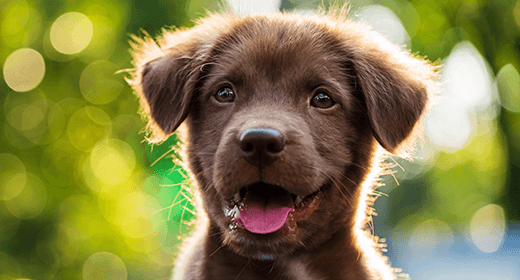
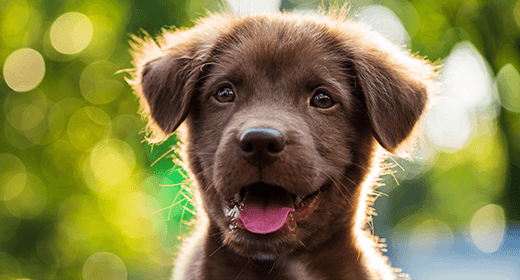
You’ll do anything to keep your puppy healthy and happy—IAMS™ is just the first step. Here’s some extra advice to help your puppy stay extra healthy.
Step 1: Begin with a play session and praise to relax your puppy. Then get on the same physical level as your puppy. With a large dog, kneel next to him while he's in the sitting position; with a small puppy, place him on a grooming table or a countertop.
Step 2: Place one hand over the top of the puppy's muzzle as shown. Hold the pill in your free hand and then gently open his mouth with that hand.
Step 3: Place the pill in the center of the tongue as far back as you're able to reach. Then close your puppy's mouth and hold it shut while you blow gently but quickly at his nose. This will cause your dog to swallow before he has a chance to spit the pill out. Give him a treat immediately afterward to ensure that the pill has really been swallowed. End each session with play and praise.
Just like you, your new puppy needs high-quality health care. Before you run into any dog health issues, ask a friend or your local humane society to recommend a veterinarian, then choose one with these factors in mind:
Once you've narrowed your choices, visit the veterinarian's office. Inspect the facility and talk to the doctor about your new puppy. If you like what you see and hear, arrange a time to bring your puppy in for an initial examination. It's a good idea to visit the veterinarian within the first three days after you bring your puppy home to make sure he's in good health. The veterinarian will probably check: