Enter a keyword below to search for articles and products.
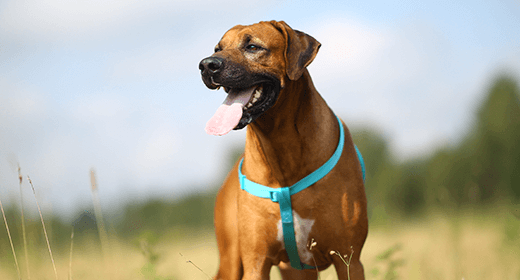
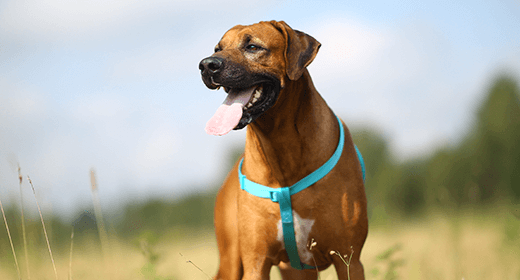
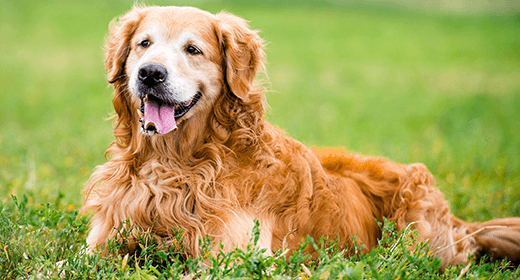
Physiological condition, rather than chronological age, determines whether a dog is mature. Aging begins when the body's systems start to slow down, when cells deteriorate faster than the body can repair them. Though large breeds tend to age faster than smaller breeds, the mature years generally begin at around 7 years (5 years for large breeds). If you feed your dog a diet designed to address the nutritional needs of his age, you can best maintain his overall health and well-being.
As your dog ages, it is important to detect and address with his veterinarian the telltale signs of aging or disease: a dull, dry coat and flaky skin, joint stiffness, energy loss, weight gain, increased water intake, digestive problems, and frequent constipation. These signs, among others, may be caused either by normal wear-and-tear or perhaps by the onset of disease. In any case, detecting and addressing them early may give your dog a greater chance to stay active and healthy.
When and how your dog responds to the aging process has a lot to do with genetics and environment, but nutrition plays an equally important role. The quality of food and its ability to maintain and nourish your dog's cells can help promote a long, healthy life.
As your dog ages and his systems become less efficient, he relies increasingly on the food you provide to make up for his body's shortfalls. According to Michael Hayek, PhD, an IAMS research nutritionist who specializes in geriatric nutrition, 'Aging dogs need the same nutrients as younger dogs; however, the quantity or the way the nutrients are provided may change.'
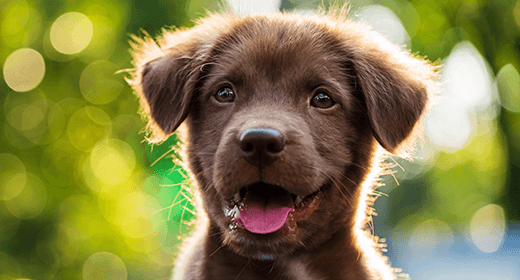
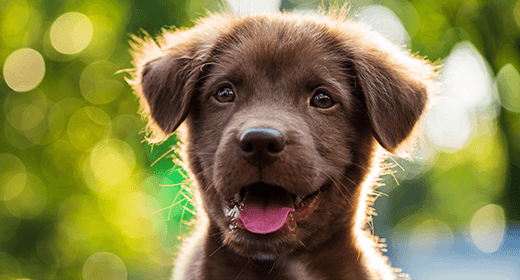
You’ll do anything to keep your puppy healthy and happy—IAMS™ is just the first step. Here’s some extra advice to help your puppy stay extra healthy.
Step 1: Begin with a play session and praise to relax your puppy. Then get on the same physical level as your puppy. With a large dog, kneel next to him while he's in the sitting position; with a small puppy, place him on a grooming table or a countertop.
Step 2: Place one hand over the top of the puppy's muzzle as shown. Hold the pill in your free hand and then gently open his mouth with that hand.
Step 3: Place the pill in the center of the tongue as far back as you're able to reach. Then close your puppy's mouth and hold it shut while you blow gently but quickly at his nose. This will cause your dog to swallow before he has a chance to spit the pill out. Give him a treat immediately afterward to ensure that the pill has really been swallowed. End each session with play and praise.
Just like you, your new puppy needs high-quality health care. Before you run into any dog health issues, ask a friend or your local humane society to recommend a veterinarian, then choose one with these factors in mind:
Once you've narrowed your choices, visit the veterinarian's office. Inspect the facility and talk to the doctor about your new puppy. If you like what you see and hear, arrange a time to bring your puppy in for an initial examination. It's a good idea to visit the veterinarian within the first three days after you bring your puppy home to make sure he's in good health. The veterinarian will probably check: