Enter a keyword below to search for articles and products.
Fiber is a type of carbohydrate that isn't digested by a cat's gastrointestinal tract. It is important for cat health, because it provides bulk to move food through. Some types of fiber can be fermented (broken down by bacteria) in the system. This process creates short-chain fatty acids (SCFA), which are an important energy source for the cells lining the intestinal tract.
Today, people are more aware of fiber and its role in their diet. Studies showing the beneficial effects of higher fiber levels in humans influence the way many people think about their own food and that of their pets. Some manufacturers now apply the recommendations of human nutritionists and make high-fiber diets for cats, but cats have a much shorter digestive tract than we do. And unlike humans, cats are carnivorous, so their nutritional needs are better satisfied with meat rather than plant matter. Therefore, cats have different dietary needs than humans. For more than 60 years, companion animal nutritionists at IAMS™ have been studying diets to meet the special nutritional needs of cats.
IAMS Company research shows the optimal crude fiber level for healthy cats ranges from 1.4% to 3.5%. At these levels, nutrient breakdown is maximized. In unique situations, such as hairballs, higher fiber levels may be beneficial.
An important characteristic of fiber is its fermentability, or how well it can be broken down by bacteria in the intestine. This breakdown produces short-chain fatty acids, which provide energy to the intestines. Fiber varies in fermentability. Fiber sources used in pet foods include cellulose, which is poorly fermentable; beet pulp, which is moderately fermentable; and gums and pectin, which can be highly fermentable. Research has shown that moderate levels of moderately fermentable fiber, such as beet pulp, provide the benefits of energy for the intestinal lining and bulk, without the negative effects of excessive stool or gas and, therefore, are beneficial in cat diets.
High levels of poorly fermentable fiber are used in some weight-reduction pet foods to dilute the calories in a serving. IAMS Company research shows that high fiber levels can make it harder to digest other nutrients in the food and, in turn, reduce the nutritional quality of a cat's diet. Your cat making more trips to the litter box can be a result.
When choosing a pet food, fiber is an important consideration, but remember that the needs of cats are not the same as those of humans. A moderate level of moderately fermentable fiber, such as beet pulp, provides proven nutritional benefits for cats. Cat diets containing high levels of poorly fermentable fiber dilute calories and deprive cats of the nutrients they need.
All IAMS products are made with levels of moderately fermentable fiber needed to promote intestinal health. And all IAMS foods contain the moderately fermentable fiber system, which is the exclusive property of IAMS Company and is protected by U.S. Patent No. 5,616,569 for Pet Food Products Containing Fermentable Fibers and Process for Treating Gastrointestinal Disorders.
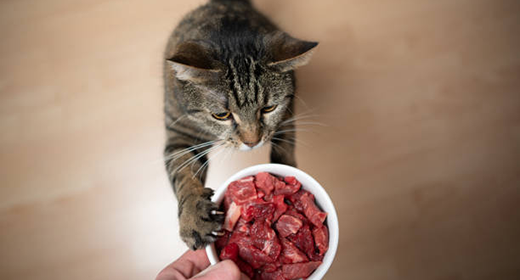
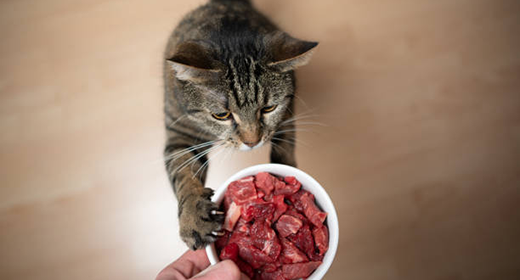
Every kitten food has protein, but here are some important facts about the different types of protein to help you choose the right food for your kitten. It is important to remember that the source of protein is vitally important to kittens because one of the principle nutritional philosophies is that kittens are best fed as carnivores.
Some pertinent facts when listening to the claims and advertising of various manufacturers:
1. Recommended kitten food protein levels are established by nutrition experts from around the world and published as NRCs (Nutrient Reference Charts). These protein requirement levels are determined by meeting the animal’s need for essential amino acids, the building blocks of protein; and by monitoring/calculating the nitrogen balance (a comparison between the intake of nitrogen in the diet and the losses through urine, feces, and evaporation from the skin and mouth). Nitrogen balance has been the recognized method of determining protein requirements for many decades. Variations in levels from what has been established for many years should be validated by convincing research. If the change in level isn’t backed by supporting evidence of a tangible benefit, then there may be hazards. Studies in several species have found a link between diets with high protein levels (greater than 40% protein), bone loss, and urinary tract stones.
2. Protein from plant sources may elevate the amount of protein, but may not be as beneficial as animal-based sources of protein in kitten food because of lower digestibility, effects on muscle-to-fat body composition ratio, and the range of amino acids they provide.
3. There are only three sources of energy in any kitten food diet–fat, protein, and carbohydrate (starch). If the amount of one element is raised, the amount of one or two of the others must be lowered to maintain a proper energy level in the food for your kitten’s life stage and lifestyle. A balance of nutrients is important to your kitten because each of the nutrient groups supplies something very specific for the kitten’s body. Excess protein above your kitten’s actual needs cannot be stored for future use and will be converted into fat.