Enter a keyword below to search for articles and products.
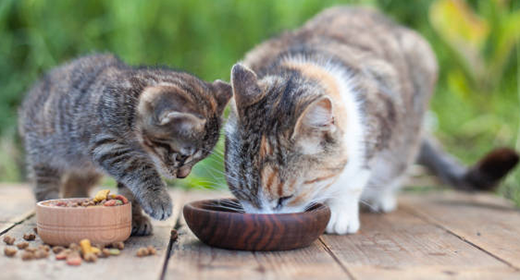
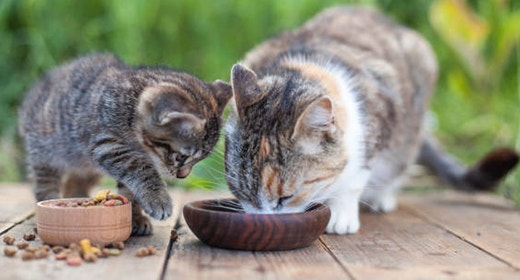
Compared with humans, your favorite feline needs a high-fat, high-protein diet with certain animal nutrients.
Cats usually eat many small meals throughout the day, so they easily adopt a free-choice feeding schedule to maintain their normal body weight. Dry foods, such as IAMS™ Proactive Health™ Healthy Adult - Chicken, are best suited for free-choice feeding because they stay fresh longer.
Cats need nutrients from animal-based protein sources. Providing the vitamins, minerals, protein, and other components found in a complete and balanced pet food can lead to a long and healthy life for your cat. It is important to avoid supplementing your cat's diet, as doing so may lead to a variety of health problems. When selecting a pet food, look for ones that offer the following nutrients:
Animal protein from meat, poultry, fish, or egg sources to maintain strong muscular structure, vital organs, antibodies, and more
Taurine, an amino acid found in meat sources such as chicken and fish, but not in plant proteins, to maintain healthy eyes, prevent heart disease, and promote healthy reproduction, fetal growth, and development
Essential vitamins and minerals such as vitamin A, which can be found pre-formed only in animal tissues, and vitamin E to help support the immune system
A precise balance of fatty acids to help promote excellent skin and coat health
A fiber source, such as beet pulp, that will help maintain your cat's digestive system health.
Pregnant or Lactating Cats
A cat's energy intake should be increased gradually by up to 50% over her maintenance intake through pregnancy. You can use kitten food to provide nutritional support during the last few weeks of gestation.
After birth, the mother cat's energy needs increase by 50% to 75% over normal in the first week to twice normal the second week and to three times during the third week. The third and fourth weeks are the most demanding because kittens are still consuming milk and have not begun to eat dry food. Once kittens begin weaning, the mother cat should be tapered back to normal food portions to avoid unnecessary weight gain.
Avoiding Obesity
Food and energy requirements may vary for your adult cat. In general, indoor cats have less opportunity or need to exercise than outdoor cats. As a result, indoor cats are more prone to obesity, and regular exercise should be encouraged. You may want to control your cat's portions.
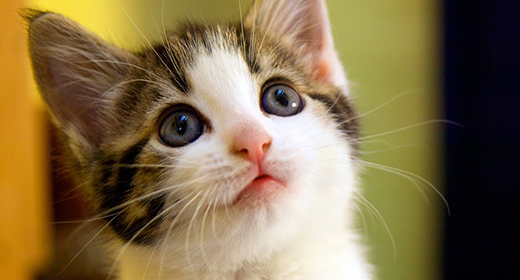
Hi, I'm Caitlin Lewis, Community Outreach Manager for the Humane Society of Greater Dayton, on behalf of IAMS. Wanting to adopt a cat or kitten, but not sure where to start or what to expect? Caitlin Lewis, Community Outreach Manager for the Humane Society of Greater Dayton, explains what you should do before you adopt a kitten or cat, including how to choose a cat personality that meshes with your family. Plus, you’ll learn about the adoption process and how to prep your home to make your new cat feel welcome. Hi, I'm Caitlin Lewis, Community Outreach Manager for the Humane Society of Greater Dayton, on behalf of IAMS. Wanting to adopt a cat or kitten, but not sure where to start or what to expect? Well, we're here to talk about everything you need to think about and do before, during, and after a cat adoption, in order to have a great experience for you and to provide a great home for your new pet. Research is a vital part of pet adoption. So we encourage prospective adopters to make several visits to their local animal organizations during the process.
Utilize their websites, so you can clearly understand the needs of your prospective pet, before making this important decision. Before heading to the shelter, you'll want to identify which cat breed would best fit your lifestyle. Fewer than 10% of the world's cats, both in and out of shelters, are purebred. The majority, common house cats, have charmed their way into becoming the number-one most popular pet in the United States. Before heading to the shelter, there are a couple of final considerations for you and your family. If yours is a full-time working household, it is recommended that you pass up kittens and adolescents, cats less than 18 months old, in favor of a more low-key adult, whose energy needs will be easier to meet. If you're a novice cat owner, think twice about excessive cats—excessively shy, aggressive, or demanding—for they may provide too great of a challenge for your first experience. Is coat color or pattern important? By all means, choose a cat who attracts you. But remember that the gorgeous calico hiding at the back of her cage may well go into prolonged hiding once she is released into your home. A cat that is social and relaxed at the shelter usually has the ease to meet the stresses that life throws her way. Consider the whole cat, not just one element. Your best bet is the friendly outgoing cat, who offers an outstretched paw through the cage bars, and who nuzzles and purrs when you hold him in your arms. This profile is a particularly good choice for families with young children. A cat in your life can add warmth, humor, and peace of mind. A cat can teach your child empathy for others, while keeping her secrets. If you can make the commitment, a cat is waiting to enhance your life in ways only a kindred spirit can. Loving pets of all shapes and sizes are waiting in animal shelters, hoping to find a permanent home. But there are many misconceptions about shelter pets. Shelter animals can make wonderful lifelong companions, if only given the chance. People often think shelters contain only the rejects, pets that have a health or behavior problem. This is not true. Shelters are filled with animals that have been surrendered by their owners because of divorce, owner illness, allergies, new babies, and inexperienced owners. Most shelter pets would like nothing more than a chance at a happy life and their own family to share it with. There are so many reasons for adopting from a shelter. Shelters have all types of pets, mixed breeds, purebreds, young and old. Regardless of the shape, size, or breed, most shelter pets are vet checked, healthy, and ready for their new homes, and will likely save you money, too. Adoption fees for shelter pets are typically less expensive than those you would find at a pet store or a breeder. Initial vet checks, vaccines, de-worming, and spay/neuter surgery are already included as part of the cost. You also get literature on caring for your new cat or kitten, plus support and guidance from shelter staff if you have questions. Pet adoption is an exciting but also time-consuming process. It's always best to call ahead to the animal shelter and find out what documents you need to bring with you. Typical items include: Picture identification with your current address If you're renting, bring your lease or a letter from your landlord. It must state that you are permitted to have pets and how many. Your landlord's contact information should also be displayed. If you own your home, you might be requested to provide proof of ownership, references. Have a list of references handy, including their phone numbers, and ask them for permission before using them as a reference. If you've had pets before, including a veterinary reference is a good idea. Cash, debit card, or credit card for paying the adoption fee. Smaller shelters or rescue organizations sometimes don't accept credit cards. Ask before if you're unsure. Everyone in your family. Many shelters require that every person in your household meet the pet you may be adopting. This is to ensure that everyone gets along and agrees to the adoption. Once you've introduced a new cat to the family, you want to make sure they feel at home as quickly as possible. Cats’ ideal refuge is a place where they can go and be with their things: a soft bed, food and water, a scratching post, and plenty of toys. Their area should be away from the rest of the house and out of the line of traffic. Finding just the right cat or kitten for you or your family is a rewarding experience. When that is coupled with bringing them home from a shelter, it is a double reward. By doing your homework and with a little patience, you'll have her home in no time. Let's recap. Do your research. Identify what type of cat would suit your family and lifestyle. Consider adopting from a shelter. And lastly, find out what you'll need to bring to the shelter. I'm Caitlin Lewis, on behalf of IAMS.