Enter a keyword below to search for articles and products.
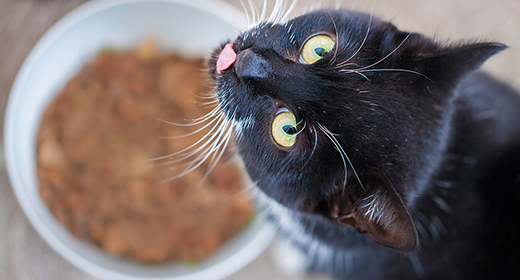
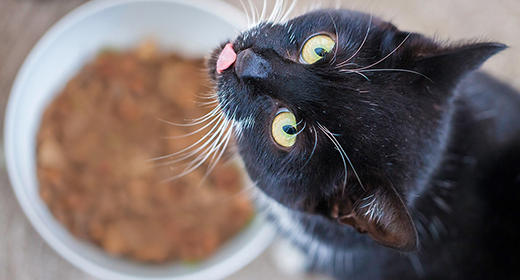
Do you know what’s in your cat’s food? And more importantly, do you know how those nutrients affect your cat’s health, including their muscles, skin, coat and nails, digestion, bone growth and so much more?
As the old adage goes, “You are what you eat,” so it stands to reason that by feeding your cat high-quality ingredients, their overall health will be positively impacted.
So, what’s in your cat’s food? Simply put, cat food nutrients are divided into four subcategories: protein, carbohydrates, fats, and vitamins and minerals. Learn more about each of these — and how they can affect your cat’s health.
Protein is best known for supplying amino acids, or protein subunits, to build hair, skin, nails, muscles, tendons, ligaments and cartilage.
Common cat food protein sources include meat, chicken, fish and some plant ingredients like corn gluten and soybean meal.
Cats and kittens are true carnivores and need essential amino acids. One of these, taurine, is not found in plant protein sources such as soybean meal — which means your cat needs a protein source from meat to stay healthy.
Carbohydrates (also known as starches [sugars]) and fibers provide energy and bulk, respectively. Plants and grains like wheat and corn are common carbohydrate sources.
Starches are made up of various types of sugar, such as glucose or fructose. Through digestion, cats can easily convert sugar into usable energy.
Fiber provides bulk to move food through your cat’s gastrointestinal tract, aiding in healthy digestion. Some types of fiber, such as vegetable gums and beet pulp, are fermented by bacteria in your cat’s intestines, creating short-chain fatty acids that serve as an important source of energy for the cells lining your cat’s intestinal tract.
Though it sometimes gets a bad rap, fat fulfills many vital bodily functions. Fat helps your cat maintain their body temperature, control inflammation and more. It is the primary form of stored energy in the body, providing twice as much energy as carbohydrates or proteins.
Fats are found in meats, fish and plant oils, such as flax and vegetable oils.
Fats also provide omega-6 and omega-3 fatty acids, which are important fat subunits. Omega-6 fatty acids are essential for skin and coat maintenance and proper membrane structure. Omega-3 fatty acids have also been shown to affect coat quality and skin health.
Nutrition tip: All IAMS™ dry foods contain an optimal ratio of omega-6 and omega-3 fatty acids to help support a healthy skin and coat.
Vitamins are responsible for promoting bone growth, blood clotting, energy production and oxidant protection in your cat.
Vitamins A, D, E and K require fat for absorption into the body, while vitamins such as the B-complex vitamins and vitamin C need water to be absorbed into the body.
Minerals provide skeletal support and aid in nerve transmission and muscle contractions.
Feeding your cat a high-quality, nutritionally complete diet is crucial. When choosing a cat food, make sure to read the label and look for optimal sources of protein, carbohydrates, fat, and vitamins and minerals. These building blocks will help ensure your cat lives a long and healthy life.


Cats are creatures of habit and can resist diet change. It's important to completely stop feeding your cat from the table. This is best accomplished by removing the cat from the kitchen during mealtimes. Be persistent when offering dry food. Your cat may refuse to eat for several meals before deciding to give the food a try. Heating food in the microwave increases the aroma of the food and will often entice a cat to eat. Another alternative is to try mixing some wet food with the dry food, or topping it with a sauce or gravy specifically formulated for pets. Be assured that your cat eats to meet an energy need and will eventually begin to eat unless there is an underlying medical issue.
Keep in mind that your cat's stool should be small and firm. Most cases of constipation are temporary and due to dietary interruptions. Loose stools also are often temporary and can be due to dietary interruptions, as well as many other things, including an abrupt change in diet, overeating, parasites, medication, eating table scraps, viral or bacterial infections, and stress. If constipation or diarrhea persists, however, it is important to consult a veterinarian.