Enter a keyword below to search for articles and products.
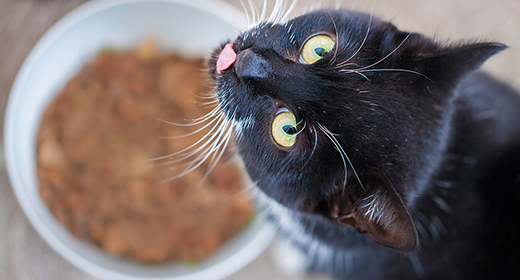
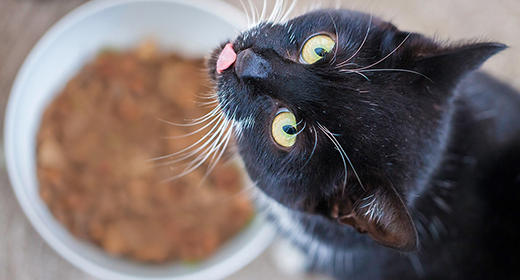
Do you know what’s in your cat’s food? And more importantly, do you know how those nutrients affect your cat’s health, including their muscles, skin, coat and nails, digestion, bone growth and so much more?
As the old adage goes, “You are what you eat,” so it stands to reason that by feeding your cat high-quality ingredients, their overall health will be positively impacted.
So, what’s in your cat’s food? Simply put, cat food nutrients are divided into four subcategories: protein, carbohydrates, fats, and vitamins and minerals. Learn more about each of these — and how they can affect your cat’s health.
Protein is best known for supplying amino acids, or protein subunits, to build hair, skin, nails, muscles, tendons, ligaments and cartilage.
Common cat food protein sources include meat, chicken, fish and some plant ingredients like corn gluten and soybean meal.
Cats and kittens are true carnivores and need essential amino acids. One of these, taurine, is not found in plant protein sources such as soybean meal — which means your cat needs a protein source from meat to stay healthy.
Carbohydrates (also known as starches [sugars]) and fibers provide energy and bulk, respectively. Plants and grains like wheat and corn are common carbohydrate sources.
Starches are made up of various types of sugar, such as glucose or fructose. Through digestion, cats can easily convert sugar into usable energy.
Fiber provides bulk to move food through your cat’s gastrointestinal tract, aiding in healthy digestion. Some types of fiber, such as vegetable gums and beet pulp, are fermented by bacteria in your cat’s intestines, creating short-chain fatty acids that serve as an important source of energy for the cells lining your cat’s intestinal tract.
Though it sometimes gets a bad rap, fat fulfills many vital bodily functions. Fat helps your cat maintain their body temperature, control inflammation and more. It is the primary form of stored energy in the body, providing twice as much energy as carbohydrates or proteins.
Fats are found in meats, fish and plant oils, such as flax and vegetable oils.
Fats also provide omega-6 and omega-3 fatty acids, which are important fat subunits. Omega-6 fatty acids are essential for skin and coat maintenance and proper membrane structure. Omega-3 fatty acids have also been shown to affect coat quality and skin health.
Nutrition tip: All IAMS™ dry foods contain an optimal ratio of omega-6 and omega-3 fatty acids to help support a healthy skin and coat.
Vitamins are responsible for promoting bone growth, blood clotting, energy production and oxidant protection in your cat.
Vitamins A, D, E and K require fat for absorption into the body, while vitamins such as the B-complex vitamins and vitamin C need water to be absorbed into the body.
Minerals provide skeletal support and aid in nerve transmission and muscle contractions.
Feeding your cat a high-quality, nutritionally complete diet is crucial. When choosing a cat food, make sure to read the label and look for optimal sources of protein, carbohydrates, fat, and vitamins and minerals. These building blocks will help ensure your cat lives a long and healthy life.
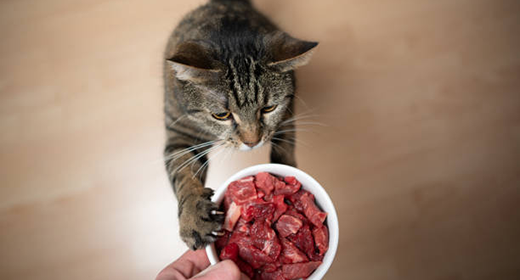
Every kitten food has protein, but here are some important facts about the different types of protein to help you choose the right food for your kitten. It is important to remember that the source of protein is vitally important to kittens because one of the principle nutritional philosophies is that kittens are best fed as carnivores.
Some pertinent facts when listening to the claims and advertising of various manufacturers:
1. Recommended kitten food protein levels are established by nutrition experts from around the world and published as NRCs (Nutrient Reference Charts). These protein requirement levels are determined by meeting the animal’s need for essential amino acids, the building blocks of protein; and by monitoring/calculating the nitrogen balance (a comparison between the intake of nitrogen in the diet and the losses through urine, feces, and evaporation from the skin and mouth). Nitrogen balance has been the recognized method of determining protein requirements for many decades. Variations in levels from what has been established for many years should be validated by convincing research. If the change in level isn’t backed by supporting evidence of a tangible benefit, then there may be hazards. Studies in several species have found a link between diets with high protein levels (greater than 40% protein), bone loss, and urinary tract stones.
2. Protein from plant sources may elevate the amount of protein, but may not be as beneficial as animal-based sources of protein in kitten food because of lower digestibility, effects on muscle-to-fat body composition ratio, and the range of amino acids they provide.
3. There are only three sources of energy in any kitten food diet–fat, protein, and carbohydrate (starch). If the amount of one element is raised, the amount of one or two of the others must be lowered to maintain a proper energy level in the food for your kitten’s life stage and lifestyle. A balance of nutrients is important to your kitten because each of the nutrient groups supplies something very specific for the kitten’s body. Excess protein above your kitten’s actual needs cannot be stored for future use and will be converted into fat.